

Upon arriving at the place from which we’d been posting breathtaking mountain photos, I had a mental breakdown in our 2×2 metre room with a shared kitchen for 40 people and one mouse.
“I want to go home. What was I thinking!” I screamed during our first hours in the staff accommodation in the forest above Banff, where we were supposed to spend 2.5 months.
This is the honest, unfiltered story of working in Canada that we never shared alongside those gorgeous Instagram shots. If you’re considering a work holiday visa Canada adventure, read on — because the reality of working in Canada is far from the fairy tale you might imagine.
The end of illusions came fast, along with the first tears
I don’t like conflict. I hate asking for money. I hate telling people unpleasant things. And honestly, I’d rather avoid all uncomfortable situations altogether. But life doesn’t work that way. The problem is, back home it was easy for me to avoid these conflicts, to live in my bubble. My comfort zone bubble burst when Lukáš and I stepped off the plane in Calgary in June 2016.
Suddenly we became immigrants with non-Canadian education, a funny accent, and barely any usable experience. And that illusion of an idyllic life we’d imagined vanished the moment we arrived in the mountain town of Banff.
Even with good English, you’re just cheap labour
Because as foreigners, even with good English, you’re suddenly just cheap labour with a one-year work permit. If you think you’ll find a great office job in the mountains, forget about it.
You’ve got a university degree, a well-paid job, you’re climbing the corporate ladder back home, posing in tailored clothes with a Starbucks in hand, feeling like you’ve made it. Here you’re nothing. And if you don’t speak good English, you’re absolutely nothing.
Your European degree means nothing here — deal with it
On the other hand, if you have practical skills — if you’re a hairdresser, painter, or electrician — you have a much better chance of finding work (especially if you speak English!). But I belong to the category of people with a degree who can speak English but otherwise can’t really do anything. And when I arrived, I was too scared to even speak.
How we became hotel cleaners
We found our jobs from back home. The only thing we could arrange in advance — including accommodation — was cleaning at a hotel, recommended by a Czech woman who’d worked there for a year. Given the room prices in Banff, our zero experience abroad, and the fear of the unknown, I still think it was a good decision. The first two weeks proved that our gym fitness only partially saved us from the insane exhaustion of carrying dozens of kilos of bed linen up and down the stairs.
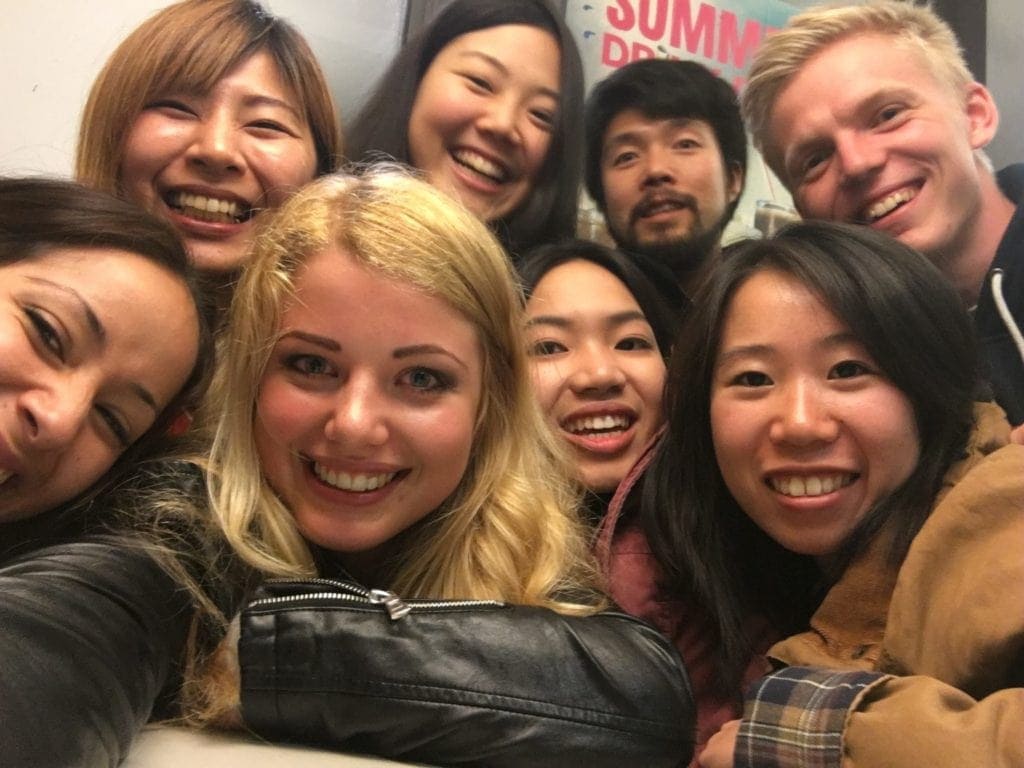
What also became clear was that manual work clears your head, and most employees had university degrees from their home countries. A Japanese biochemist had arrived in the country just nine months earlier, knowing only “yes” and “no,” and managed to learn decent English in four months — first working as a waitress, then joining us in Banff.
Our brains were degenerating in conversations about green brushes
But a month passed and our brains started to fade, to degenerate. Even though I was still doing my online work for clients back home, the constant conversations about stains on freshly washed sheets seemed to be eating my brain cells.
“The front desk manager asked me to check if anyone would like to try working at reception too. They don’t have enough people and you already know the hotel,” our little Vietnamese cleaning manager told us at one of the regular absurd meetings where we collectively discussed cleaning issues — like whether it’s better to use a green or white brush on the toilet. “Based on my experience, when the toilet smells, use the green brush.” It’s still our favourite quote, from the mouth of the most determined cleaner, a Vietnamese woman named Sophie.
And so, without Lukáš knowing, I signed us both up.
How I dreaded the front desk
I hate phone calls. I used to deliberately not answer them. Text me, email me — that’s what I’d say in my head. I generally hate speaking in front of people. With people. Paradoxically, everyone seems to think I’m an extrovert. I find that quite comical.
And at the front desk, all you do is talk. But the prospect of talking was still much better than cleaning. And finding a different job in Banff seemed complicated — not because there weren’t any, but because we wanted to work at the same place, ideally with accommodation included. At least that’s what we told ourselves.
Lukáš has his first front desk shift before me. So when he comes back after 15 hours and I’ve got my shift the next day, I’m reading his notes and the manual over and over so I don’t mess anything up. I even google what the outdated RoomMaster 2000 software looks like, trying to find any YouTube video that might help. Lukáš laughs at me.
“They’ll teach you everything on the job.”
“You’re good at everything, it’s easy for you to say.” I’m fuming like a madwoman, studying the manual late into the night and again in the morning.

“Excuse me? I can’t understand you.” Emily slammed the phone down.
“When I can’t understand them, I just hang up. I’m not going to waste my time.” The front desk manager explains to me in a crisp British accent, gazing out at the rain, saying it reminds her of home. I’m only half listening, staring at the phone like it’s my worst enemy.
And then when it rings again, no one’s around to save me.
“I’d like to book a double suite for November 23rd, four nights,” says some Canadian who told me his name, but I didn’t manage to write it down.
“Sure, give me your number, I’ll verify the availability and call you back.” I reply. He dictates the number and I triumphantly hang up, thrilled it wasn’t that terrible!
Then I realise I wrote the number down wrong.
And then the terror began
It’s the middle of summer. I don’t even know how it’s possible — it’s already nearing the end, but we don’t have enough money for the trip we’d planned. Although we were paid only half a dollar less for cleaning than for reception work, we got too few hours from cleaning — not the promised 40 hours a week, but only about 30. That was barely enough to cover food, phone, insurance, and our trips around Banff. Only with the reception job did we finally get a paycheque that allowed us to save something. We were literally stuck. We decided to stay longer — until the end of September.
I was afraid my remote clients would fire me
I don’t know what day it is. I’m at work 15 hours a day, and when I’m not working at the hotel, I’m handling remote work from bed. I’m scared that the hotel job is starting to negatively affect my performance. But I can’t really do much about it. I dedicate every free minute to work and try not to miss anything. I get up at 6 AM, work on my laptop until nine, then go to the hotel, and some days I don’t get back until 11 PM. I lie in bed with my legs up because they’re so swollen I can’t sleep.
It turns out we’re handling the front desk well. Better than the Canadian woman who’s there full-time. After four shifts, Emily can already leave us on our own, knowing nothing will go wrong. Cindy, the Canadian, has done 20 shifts and still can’t manage it. But the fact that we’re working at reception doesn’t sit well with the Vietnamese side of the cleaning crew. Especially after Lukáš becomes a supervisor.
The Vietnamese manager tried to destroy us
We stop getting consecutive days off, even though we ask for them. We haven’t been on a trip in two weeks. We’re not allowed to work together. On days when we have front desk shifts, we’re made to stay longer than usual. And one stretch, we work more than a week straight without a day off. We’re tired. We’re exhausted. Tears well up with every step through the hotel. I’m not in the mood to chat. And that’s apparently a problem at work.
“Are you okay?”
“Yes.”
“The girls say you’re not talking to them.”
“I’m tired. I’ve been working seven days straight.”
“Did they do something to you?”
“I’m tired.”
“They think you’re angry.”
“I’m not in the mood to chat. I’m tired.” The little Vietnamese woman interrogates me, then goes to interrogate Lukáš too. She’s like a broken record. The fact that she’d been deliberately keeping us three hours late doesn’t seem to matter. I ask the others if they complained about me.
“What? No. You just look tired.” Says Saori, the Japanese woman with a biochemistry degree.
Emily calls us in. The sneaky little Vietnamese manager Kim is already waiting for us.
We started to understand we couldn’t stay
“When I brought you to reception, it was on the condition that this job wouldn’t affect your other work.” We get a lecture about how we’re great help, but if we can’t handle it, we need to stop working at reception. They both explain that they care about us.
The fact that Kim made us work 7 days straight isn’t a problem, but our reception shifts — where we just stand or sit and talk — apparently is. It makes no sense. We stare at them as if they’ve turned into aliens, but I immediately see the truth. Kim doesn’t want us at the front desk. She doesn’t want us succeeding there. If our work was hard before, now the real nightmare began.
It was somewhat baffling, because losing two employees at once during peak season wasn’t something she could really afford. And yet Kim did everything to make it happen. Lukáš was the favourite; I took the brunt of it.
“She’s trying to turn us against each other,” we tell our friend who’d been working there for his second year. His expression immediately tells us this isn’t the first time.
“I didn’t want to tell you because you wouldn’t have believed me,” adds a Slovak woman we’d barely spoken to — because Kim had done everything to make us think the worst of her. It turned out that separating couples and friends was Kim’s favourite tactic.
“One day you’re friends, the next day you’re nothing.” And this applied to the other Vietnamese woman too, who had been our best friend — until Lukáš became supervisor. Then she stopped talking to us. Not only that, hatred radiated from every word she exchanged with us.
We tried to explain things first
So we went to Emily to explain our side of the story.
“You’re not the first to tell me something like this.”
“What should we do?”
“I don’t want to tell you to leave, because I need you here. But in my opinion, nothing can be done. You should leave — but first talk to management and tell them everything.”
To go or not to go, that was the question. Lukáš wanted to stay — not because he longed to, but he believed we could tough it out for another month and a half. But I was already in a bad place mentally. And let’s be honest, I was the one bearing the brunt of Kim’s hostility.
Do whatever you want, I’m going to be a mountain guide
“I’m leaving, do whatever you want.” And so Lukáš and I agreed to quit. What Lukáš didn’t expect was that I’d find us a new job within 2 hours. And that in 4 hours, we’d be sitting in an interview.
Míša was our saviour. We owe her the best month and a half in Canada.
I didn’t really care what we’d be doing — I just wanted out. I replied to every job advert I could find, and then it occurred to me to post in a group for Czechs and Slovaks in Banff. Míša from Lake Louise replied. I called her, and she said she might have work for us — could we come over? From the conversation, it sounded like some kind of reception work. How wrong I was.
“You don’t want to work in Lake Louise.”
“Yes, I do.” Lukáš drove grumpily the entire forty minutes to Lake Louise. My impulsiveness was irritating him. He dislikes change even more than I do, although he’s far better at adapting. So he said nothing. He knew it was good for us, even if he didn’t like the rush.
We clicked immediately. Míša warned us about the downsides of Lake Louise. The main downside — isolation from bars — sounded like paradise to us, because it meant we wouldn’t have to turn down pub invitations every week. Our joy at this “terrible downside” was a sign that this was the right move. We simply prefer hiking mountains.
It turned out we’d be working as mountain guides. Have I mentioned that I hate public speaking?
We had to learn about 80 pages of text in a few days
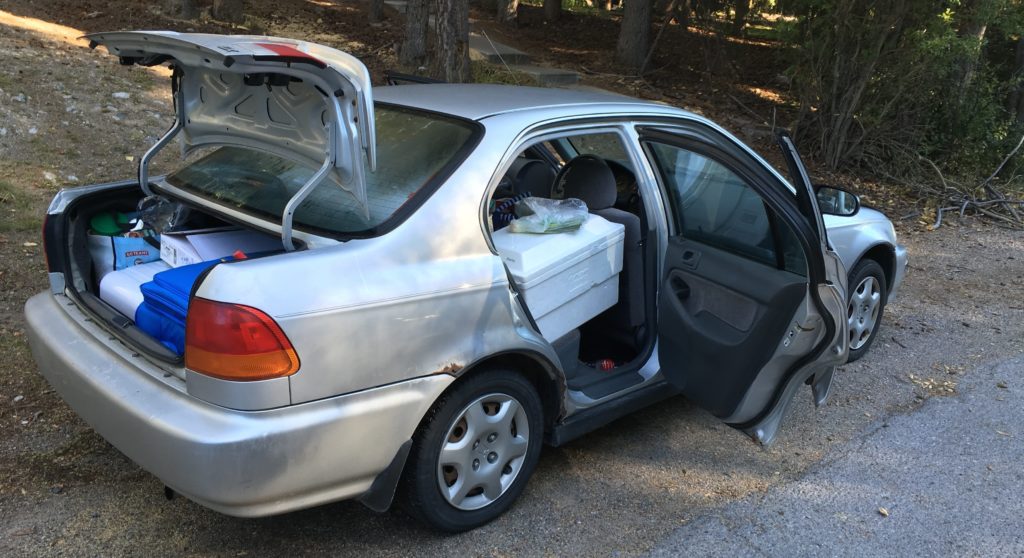
We packed our car to bursting point and at the end of the week, we moved to Lake Louise. Two days of training, and on the third day we were supposed to guide our first group. I stared at the materials. I read them top to bottom and none of it made sense. There were about eighty pages, and I thought I’d be lucky just to get through them all by then, let alone memorise anything. In the next two days, we were expected to master the basics about bears, elk, moose, caribou, strange birds I didn’t even know the names of, rodents with the same problem, trees, flowers, and mountains.
Panic.
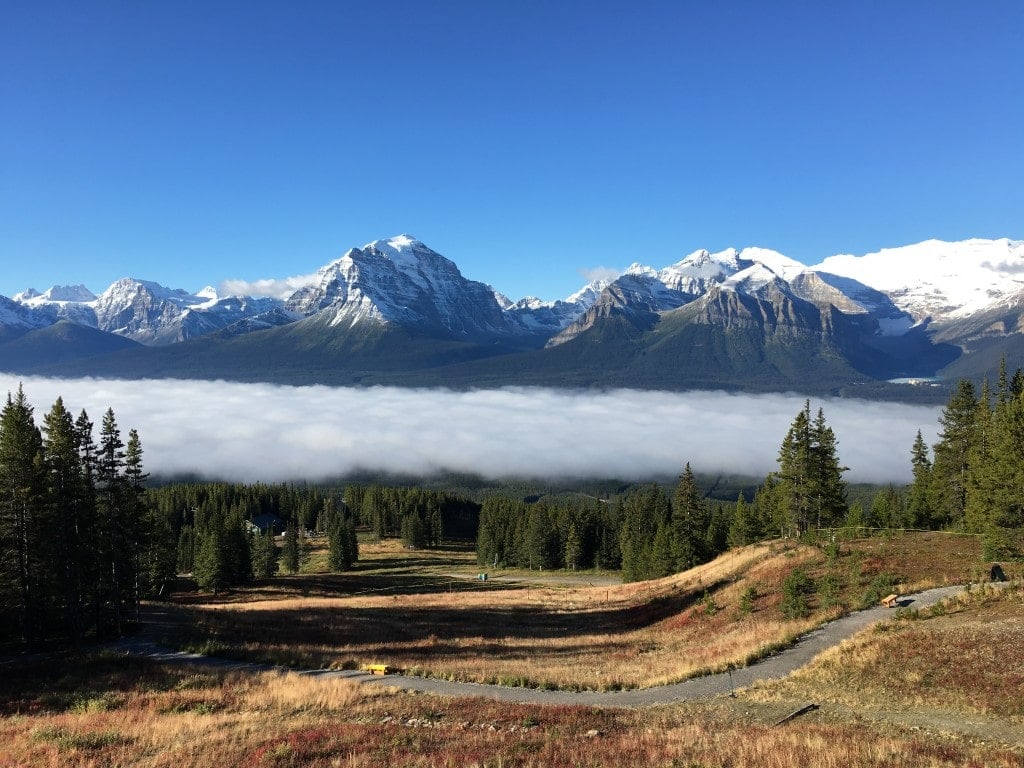
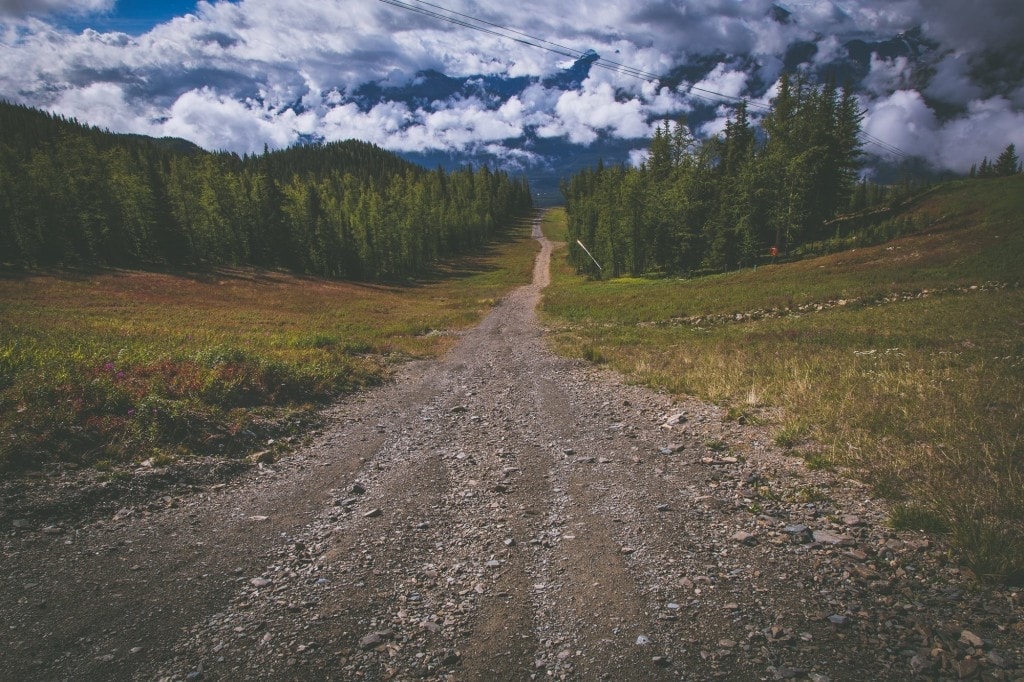
But the panic faded when we first rode up to the interpretation centre where we’d spend the next month and a half. Clouds hovered just beneath the mountain peaks, bumping into each other, forming a blanket. Such a beautiful blanket! The sight of the sun licking the glacier above the lake named after a British princess (Princess Louise Caroline Alberta), whose name is also borne by the province (Alberta) where we worked.
After two days of training, we had to guide our first group
The two training days were over and Kai stood before us and asked: “So who’s going?” In reality, the morning plan had been to wait one more day. So we were shocked — we weren’t ready, we’d been enjoying the relief that neither of us would have to guide just yet. Especially after watching how Kai did it. We felt like we could never match that.
We were both on the schedule as Shift 3, so the day before we’d agreed that Lukáš would go if needed, because I was terrified out of my mind. But now it looked like he didn’t want to either. I took a deep breath. Once. Twice. Three times.
“I’ll go.” Lukáš stares at me. And in that second, I realise that although everyone thinks I take after my dad, my strongest qualities come from you, Mum. My mum once told me she’s actually brave — because even when she’s absolutely terrified of something, even having nightmares about it, she does it anyway. And in this moment, and in many moments still to come in Canada, I realise I’m exactly the same. And I discover the first quality about myself that I truly like.
“I’ll go.” Lukáš responds. And tells me I don’t have to. That he’ll go.
Kai decides we should both go.
Our first big success in Canada
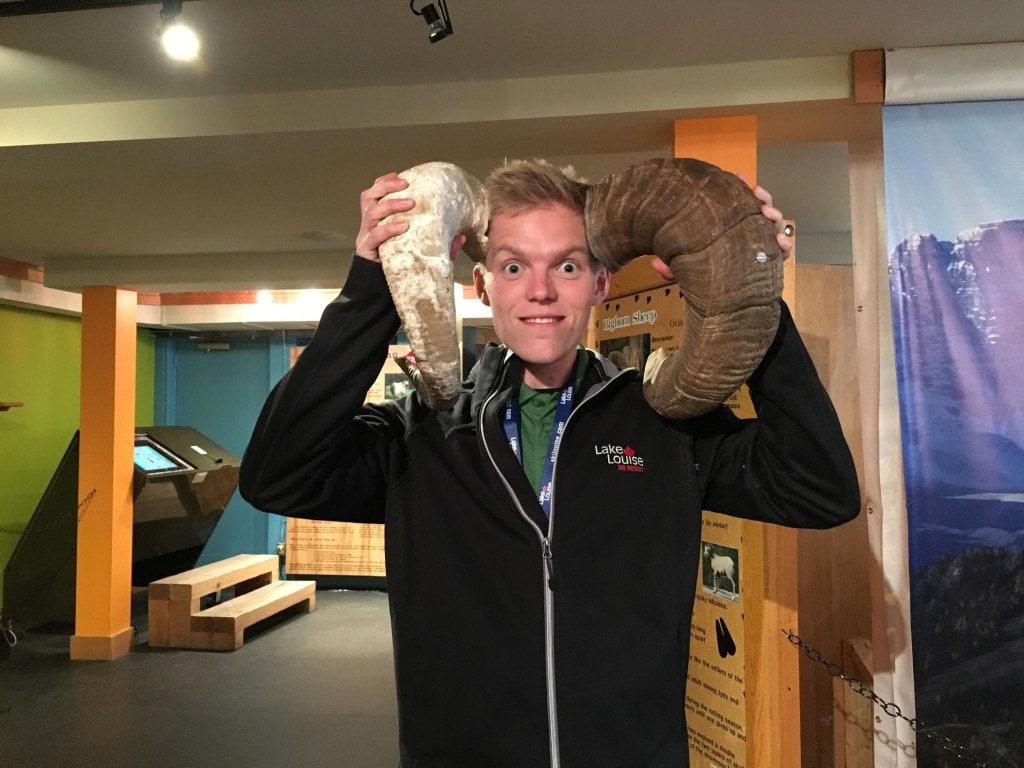
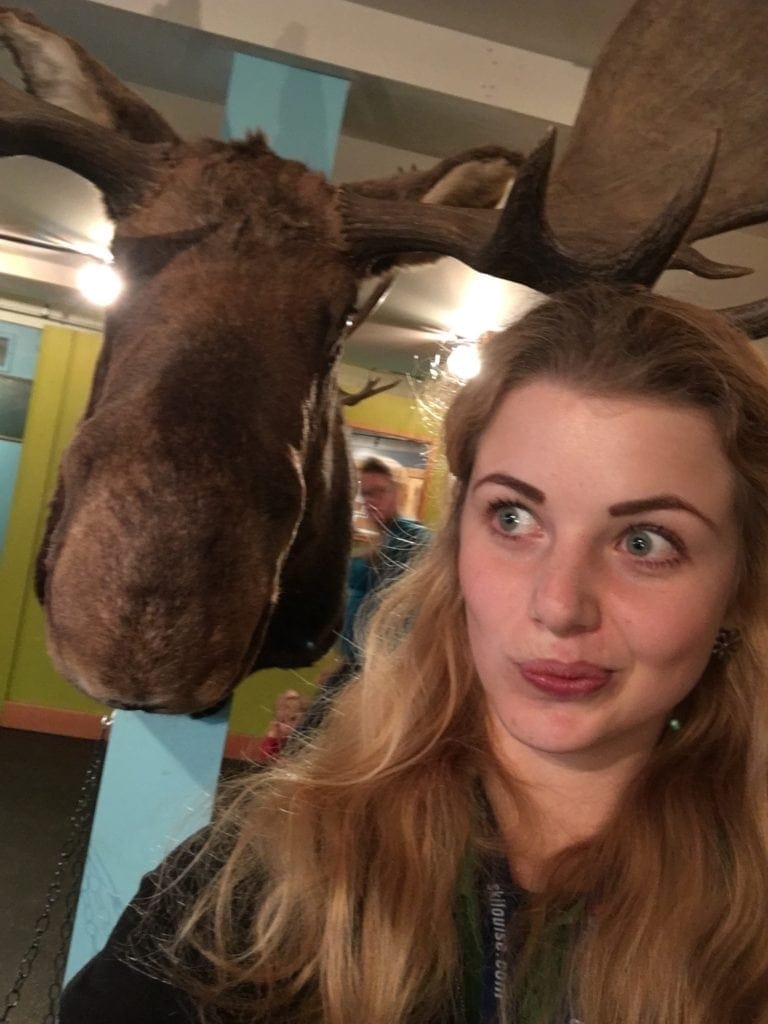
And it was brilliant. Our group was small — just four people. Lukáš and I silently divided up the stops with a glance and stayed in sync so we wouldn’t talk over each other. I was proud of us. We’re a good team. And our group rewarded us with a generous tip, then wrote an amazingly positive comment on the feedback cards we had for that purpose. Only later did we learn that Melissa, another guide, had waited several weeks before she dared to lead her first hike.
The best month in Canada
That day marked the beginning of the happiest chapter in Canada. The staff accommodation consisted of small flats where we had a large room and kitchen, sharing just two bathrooms with three other people. For the first time, we had colleagues we actually wanted to spend time with after work. And even though we worked more than ten hours a day during the first two weeks, it felt like nothing. Suddenly we saw the Rockies from a completely different perspective. Knowledge about the local flora and fauna deepened our love for Banff and Lake Louise. We started to feel like the mountains were our home.


How everything went back to the same old ways
But the season ended and we set off on our rainy road trip across Canada and America, finishing in New York before flying back home. Although I’d promised myself I’d travel around more and spend time meaningfully, everything suddenly fell back into the old routine. The first week I told myself I could lounge on the sofa with my laptop because, honestly, I was exhausted from a month of travelling — but one week turned into two, and two into three months.
We went on exactly two trips.
We thought we already knew Canada. Now I laugh at that
It was time to fly back. As early as November, we’d bought flights to Calgary, where we planned to stay. We felt like everything would be easier now. We already knew Canada. But we knew summer in Canada. We knew the mountains. We knew working in Banff National Park, where summer demand for workers is high. We were heading to Calgary, where thousands had recently lost their jobs, skyscrapers had emptied, and a bustling city had turned into a ghost town.
True, it was slowly recovering, but there were still plenty of unemployed people. And let’s be honest — who would you rather hire? A Ukrainian or a Brit? And how do you think Canadians decide? A Canadian or a European? There are even studies showing that with a Canadian name and identical experience, you get 60% more interview invitations. But we saw it simply.
No job and no money. Will we survive?
We’d arranged to stay with a friend — a small flat in her building. We flew to England for a week before returning to Canada, only to learn the day before our flight that we couldn’t move in yet.
We were nervous. No job. No accommodation. With slim chances that the money in our Canadian account would last more than two weeks. All affordable places were booked out and Calgary was reporting -29°C. Once again, the Czech-Slovak community saved us. After we posted in the group, within hours we had replies from several families and couples offering us a place to stay. We saved a few numbers before boarding the plane and had already arranged for a Slovak couple to pick us up at the airport.


Out of 600 emails sent, only 2 interview invitations came back
We were lucky in our misfortune, because at Martin’s place — where we stayed the first two nights — they’d just let someone go at work, so Lukáš started working from the very first week. Our flat was habitable within two days and everything seemed to be on the right track. But I couldn’t find a job for the life of me.
From interview to interview, I was handing out CVs everywhere, sending them from morning till night, but out of about 600, only two interview invitations came back. Eventually I got into fundraising. A three-round interview process where I had to learn a speech for the second round.
How I made a fool of myself in -20°C
Have I mentioned how much I hate public speaking?
If I had to push the boundaries of my comfort zone several times in Canada, nothing gave me more than my week of convincing people on the street at -20°C to adopt a child from Africa on the spot. Calling out to people, making a fool of myself, trying not to freeze. It was hard enough just to get people to stop.
It seemed almost unbelievable that they’d stop long enough for me to deliver my entire rehearsed speech, but getting them — pushing them — to actually adopt a child? I consider that an art. An art I’d barely manage in a pleasant +20°C, but an art I definitely couldn’t master in -20°C.
Not only did I come home after eight hours with pain all over my body, but I was also mentally drained. Drained from talking. Drained from every moment of pushing people into something they didn’t want. And that was the part that told me I couldn’t do this. I didn’t want to push people into something they didn’t want, even though I admired the people I worked with. But it was too much for me.

The first big test
If you follow our Facebook posts, you know I once wrote about how to quit a job you’ve only just started. This was my first test. It’s not pleasant, but I had to be honest — and honesty is what they appreciated. We parted on good terms, and I still consider that week something that toughened me up more than any other experience.
And then I stumbled again
But I couldn’t afford to be without work for long. I rewrote my CV a thousand times, restructured it, highlighted my painfully short Starbucks experience, and taught myself latte art from YouTube and by practising the hand movements with imaginary milk in the air (you’ll be surprised, but my first heart actually turned out great). Two days later, I started as a barista at Olly Fresco.

When your employer watches you on cameras
So I’d love to give you a happy ending, but that didn’t happen. It turned out the manager/owner at Olly Fresco liked to shout at his employees and watch their every move on cameras — so if there was nothing to do, you’d better find at least some pseudo-activity to pretend you’re busy. After two days there, I was desperately unhappy. Not just because of the manager, but also the level and quality of service. The owner wanted speed over quality and to save every penny. When I discovered he was serving expired milk, I decided to leave.
Did I mention that during the interview he told me he was looking for someone long-term? At least a year? And that he repeated it every day, hoping I wouldn’t leave after a month? That’s exactly what I did. I found a café/bakery in a high-rise in downtown Calgary, just five minutes from our flat — compared to the half-hour drive or hour-long bus ride to Olly Fresco — so it was an easy choice.
I’m sure you can imagine how I felt knowing I had to tell him I was leaving. I felt sick about it, couldn’t sleep. I didn’t know whether to say it in the morning or after work. But I knew I had to say it.
I took a deep breath.
A deep breath is more powerful than you think. Now we’re stabilised. This certainly won’t be the last obstacle. I’m happy at work. After work I have plenty of time for my own projects, and on Monday we’re launching a social media campaign for our café/bakery too. (Don’t think I don’t sometimes fall asleep at four in the afternoon from sheer exhaustion. But with a smile on my face.) And what’s next for us? We’ll see.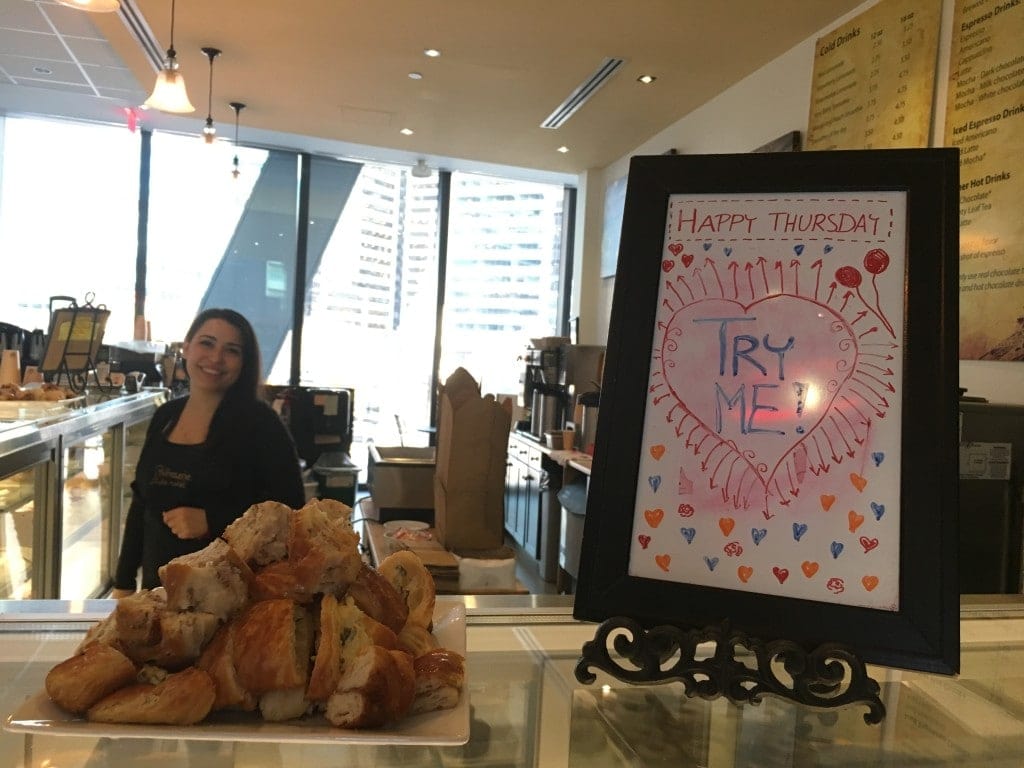
When I was back in Prague reviewing dozens of CVs for nanoSPACE, I’d always set aside the one that included experience from abroad. And they invariably turned out to be the candidate who far surpassed the rest — in energy, mental resilience, and drive. Life abroad isn’t a fairy tale. It’s hard work. Beautiful hard work. You’ll probably experience both the best and worst moments of your life. But it’s worth it.
Tips and Tricks for Your Vacation
Don’t Overpay for Flights
Search for flights on Kayak. It’s our favorite search engine because it scans the websites of all airlines and always finds the cheapest connection.
Book Your Accommodation Smartly
The best experiences we’ve had when looking for accommodation (from Alaska to Morocco) are with Booking.com, where hotels, apartments, and entire houses are usually the cheapest and most widely available.
Don’t Forget Travel Insurance
Good travel insurance will protect you against illness, accidents, theft, or flight cancellations. We’ve had a few hospital visits abroad, so we know how important it is to have proper insurance arranged.
Where we insure ourselves: SafetyWing (best for everyone) and TrueTraveller (for extra-long trips).
Why don’t we recommend any Czech insurance company? Because they have too many restrictions. They set limits on the number of days abroad, travel insurance via a credit card often requires you to pay medical expenses only with that card, and they frequently limit the number of returns to the Czech Republic.
Find the Best Experiences
Get Your Guide is a huge online marketplace where you can book guided walks, trips, skip-the-line tickets, tours, and much more. We always find some extra fun there!


