

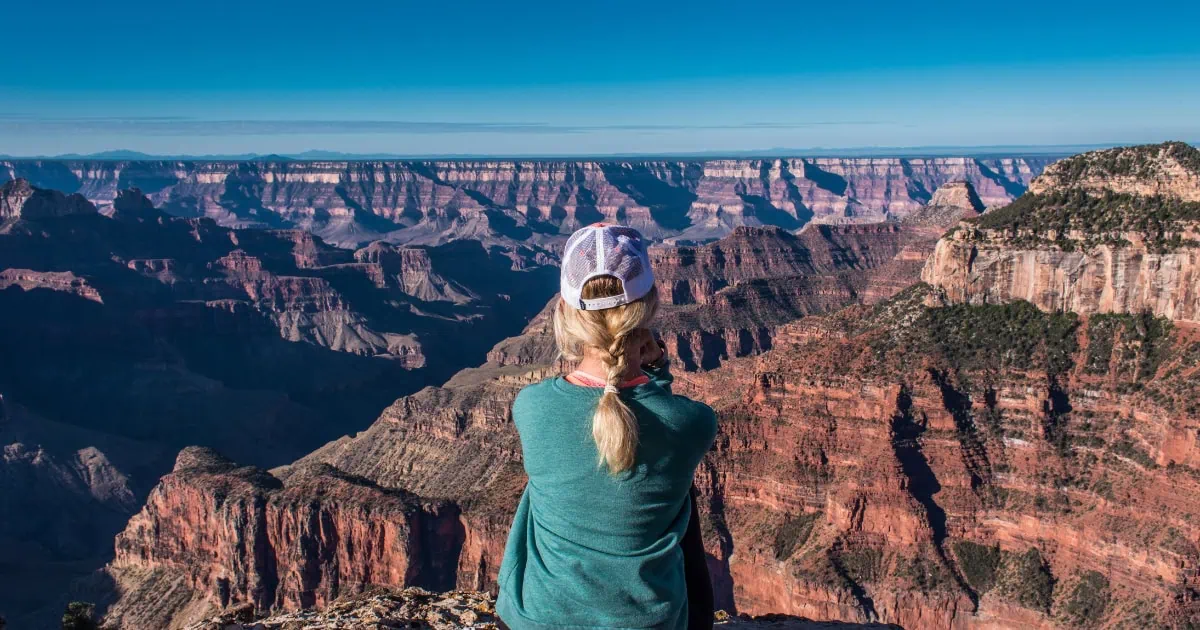
You’re standing on the edge and your brain refuses to process what it sees. It simply doesn’t make sense. No photo, no video, no National Geographic documentary can prepare you for this moment. The Grand Canyon is so enormous, so deep, and so surreally colourful that when you first look down, you forget to breathe for a split second. And then you start laughing, because what else can you do when nature creates something this absurdly beautiful? 😁
I’ve visited the Grand Canyon 4 times now — and each time was a completely different experience. The first time, we drove from Las Vegas as a day trip and thought that would be enough. It wasn’t. The second time, we spent three days here and honestly? We could have stayed a week. Grand Canyon National Park is a place you’ll want to return to. The third time, I came with my husband and finally saw what I’d missed before. But even that wasn’t enough.
In this article, you’ll find 15 Grand Canyon things to do and see — from iconic viewpoints on the South Rim to challenging hikes, helicopter flights, rafting on the Colorado River, and the legendary Havasu Falls. I’ll tell you when the best time to visit is, where to stay, how much it all costs, and what to watch out for so you can enjoy the Grand Canyon in Arizona to the fullest and stress-free.
TL;DR
- The Grand Canyon is arguably the most impressive natural wonder in all of America — 446 km (277 miles) long, up to 29 km (18 miles) wide, and over 1,800 metres (6,000 feet) deep. Photos don’t do it even a tenth of the justice.
- South Rim is the most accessible and most visited section — open year-round and well connected by road. Most tourists head here.
- North Rim is quieter and roughly 300 metres (1,000 feet) higher — open only from mid-May to mid-October. Fewer crowds, wilder atmosphere.
- Best time to visit is spring (March–May) and autumn (September–November) — pleasant temperatures and fewer crowds.
- Entrance fee to Grand Canyon National Park is $35 (~€32) per car for 7 days, or free with the annual America the Beautiful Pass ($80 / ~€73).
- Accommodation right at the canyon sells out months in advance — book as early as possible, ideally 3–6 months ahead.
- Bright Angel Trail and South Kaibab Trail are the two most famous hikes — do not hike to the bottom and back in a single day unless you’re extremely fit and experienced.
- Havasu Falls requires a permit from the Havasupai Tribe and planning months to a year ahead. But it’s absolutely worth it.
- A helicopter flight over the canyon is an unforgettable experience (from around $200 / €183).
- The South Rim is easily reachable by car from Las Vegas (~4.5 hrs), Phoenix (~3.5 hrs), or Flagstaff (~1.5 hrs).
When to visit the Grand Canyon and how to get there
The Grand Canyon is open year-round — at least the South Rim. But that doesn’t mean it doesn’t matter when you arrive. Weather, tourist crowds, and the availability of attractions change dramatically by season. Here’s an overview so you know what you’re getting into.
Best time to visit the Grand Canyon
Spring (March–May) and autumn (September–November) are the ideal months. Temperatures on the canyon rim (the South Rim sits at an elevation of about 2,100 m / 7,000 ft) hover around a pleasant 15–22 °C (59–72 °F), there are significantly fewer tourists than in summer, and the light is gorgeous for photos — especially at sunrise and sunset.
Summer (June–August) is absolute chaos. Grand Canyon National Park receives over 6 million visitors per year, and the majority come in summer. On the rim it’ll be around 30 °C (86 °F), but down by the Colorado River, temperatures can easily climb to 45 °C (113 °F). If you’re planning a hike into the canyon, summer is dangerous — every year, rescue services evacuate dozens of dehydrated tourists. I’d avoid it if at all possible. 😅
Winter (December–February) has its own magic. The South Rim covered in snow looks absolutely magical, and you’ll have the place nearly to yourself. Temperatures around freezing or slightly below, occasional snow, but restaurants and accommodation on the South Rim remain open. The North Rim is closed in winter.
How to get to the Grand Canyon
By car — the most practical option. Distances from nearby cities:
- Las Vegas → South Rim: approx. 4.5 hours (440 km / 275 miles)
- Phoenix → South Rim: approx. 3.5 hours (360 km / 225 miles)
- Flagstaff → South Rim: approx. 1.5 hours (130 km / 80 miles)
- Page (Horseshoe Bend, Antelope Canyon) → South Rim: approx. 2.5 hours (210 km / 130 miles)
My husband and I have had consistently great experiences with RentalCars, which we use all over the world. A car in Arizona is practically a necessity if you don’t want to rely on organised tours. And let me say right now — the Grand Canyon is just one stop on an amazing road trip through US national parks, so rent a car and enjoy the whole journey.
By air — you can fly into Phoenix (PHX) or Las Vegas (LAS), both of which have direct flights from Europe. British Airways, Virgin Atlantic, and several other carriers offer direct routes from London. For cheap flights, we recommend searching on Skyscanner or Google Flights — we regularly find great deals there.
Shuttle bus from Flagstaff to the South Rim runs in season (Groome Transportation, around $38 / €35 one way), but personally I’d always choose a car — the flexibility is priceless.
Where to stay near the Grand Canyon + how much it costs
Accommodation near the Grand Canyon is a chapter unto itself. If you want to stay right on the canyon rim (and trust me, you do — sunrise from a room overlooking the abyss is something you’ll never forget), you need to plan well ahead. The most popular lodges sell out 6–13 months in advance. That’s not an exaggeration, that’s reality.
Accommodation in Grand Canyon Village (South Rim)
You can stay right inside the park, but you’ll usually need to book a year or more in advance. Options include Highland Grand Canyon Glamping or Grand Canyon Glamping Tents Perfect for Arizona Vacations.
Accommodation outside the park
If you can’t secure accommodation inside the park (which is likely), the nearest alternatives are:
- Tusayan (south entrance, 3 km from the gate) — Holiday Inn Resort. The advantage is proximity; the downside is higher prices and a touristy bubble.
- Williams (95 km / 60 miles south) — significantly cheaper. We recommend Best Western Plus Inn of Williams. A charming little town on the historic Route 66. The historic Grand Canyon Railway also runs from here directly into the park.
- Flagstaff (130 km / 80 miles south) — a university town with the best selection of restaurants and bars in the area. Check availability at Little America Hotel Flagstaff.
How much does the Grand Canyon cost overall?
A realistic budget for 3 days / 2 nights for two people (mid-range):
- Park entrance fee: $35 (~€32) per car for 7 days
- Accommodation (2 nights, Tusayan): ~$400 (~€366)
- Food (3 days): ~$150–200 (~€137–183)
- Petrol from Las Vegas and back: ~$80 (~€73)
- Total for two: ~$665–715 (~€609–655)
If you add a helicopter flight, budget an extra $200–350 per person.
💡 TIP: If you plan to visit more US national parks (Yellowstone, Yosemite, Zion…), get the America the Beautiful Pass for $80 (~€73) — it’s valid for a year and covers entry to all national parks. It pays for itself after just two parks.
South Rim: 8 places you must see and things to do
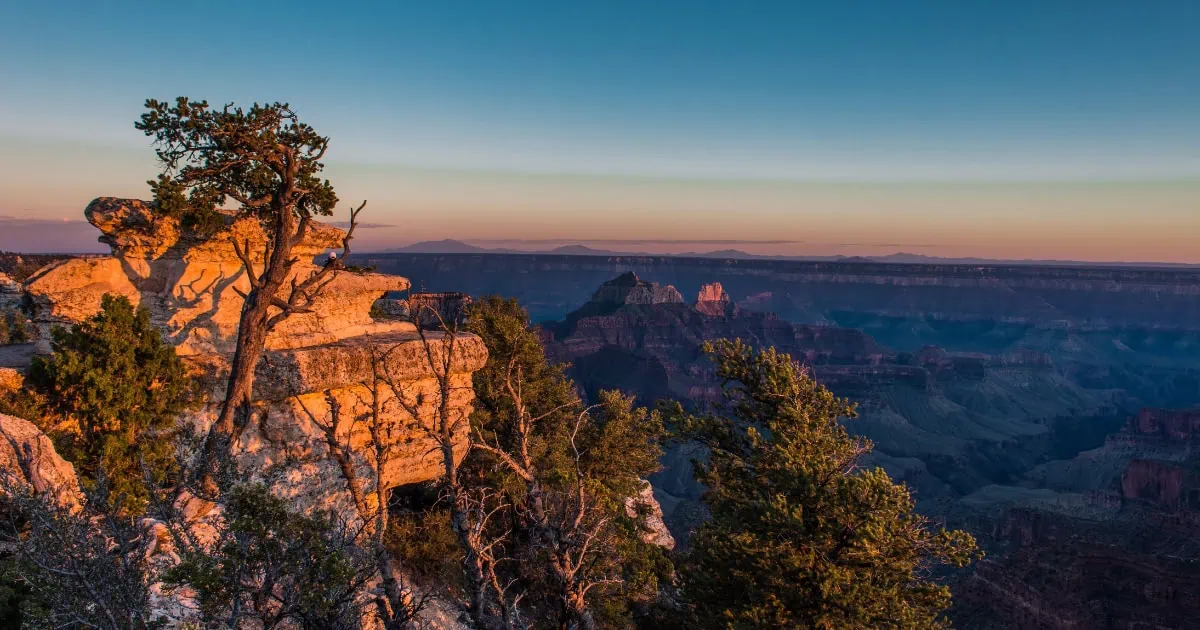
The South Rim is the heart of the Grand Canyon — 90% of visitors head here, and for good reason. It has the best-developed infrastructure, the easiest access, iconic viewpoints, and the two most famous hiking trails. In Grand Canyon Village you’ll find the visitor centre, restaurants, shops, and free shuttle buses that run along the rim. Let’s look at 8 places and experiences you shouldn’t miss on the South Rim.
1. Mather Point — the first view that takes your breath away
Mather Point is probably where you’ll see the Grand Canyon for the first time. It’s just a few minutes’ walk from the main visitor centre and is the most accessible viewpoint on the entire South Rim. It’s also arguably the most photogenic.
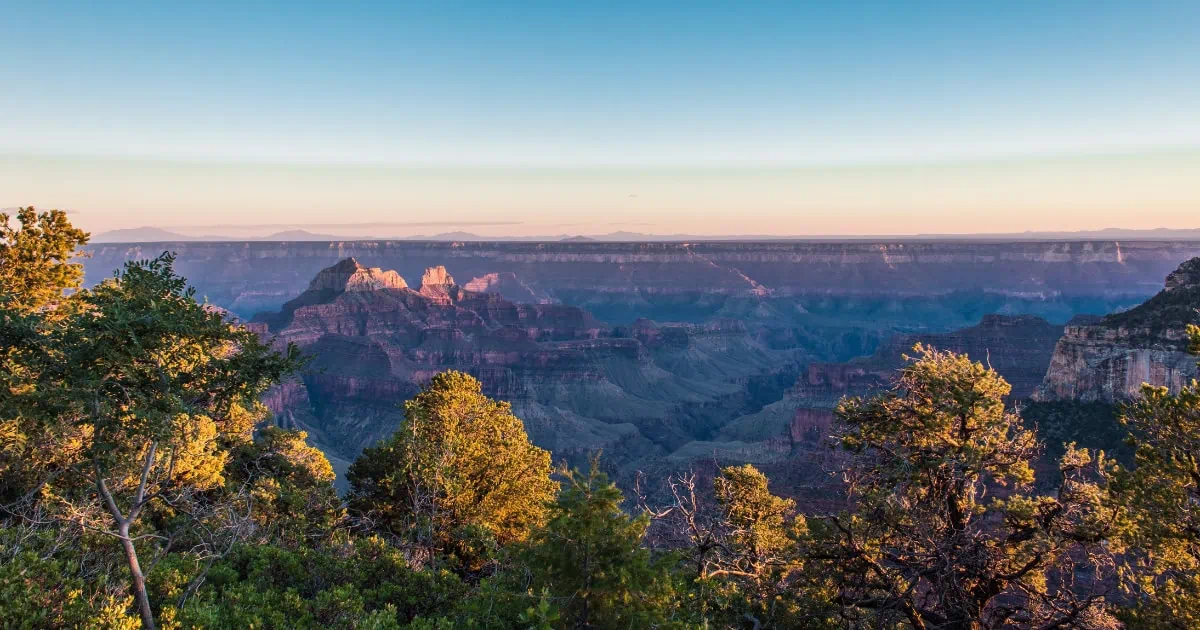
Come for sunrise. Seriously. Waking up in the dark isn’t fun, but when the first rays touch the red and orange layers of the canyon, you’ll understand why people cry with emotion here. The colours change literally every minute — from purple through pink to fiery orange. My husband and I stood here with coffee in hand and simply stayed silent, because words are unnecessary at moments like these. ☺️
If you arrive during the day, Mather Point will be full of tourists with selfie sticks. No matter — the canyon is so enormous that you’ll always find a little stretch of edge just for yourself. From Mather Point, the Rim Trail leads along the canyon’s edge, a paved path you can comfortably walk to reach all the other viewpoints.
2. Bright Angel Trail — a legendary hike into the heart of the canyon
Bright Angel Trail is the most famous trail in the Grand Canyon and one of the most iconic hikes in all of America. It starts right at Bright Angel Lodge on the South Rim and descends 1,340 metres (4,400 feet) to the Colorado River at the canyon floor.
Important warning right away: Do not hike to the bottom and back in a single day. The park service strongly advises against it, and we agree. The descent is easy, but the climb back up in the dry heat with 1,340 metres of elevation gain is brutal. Every year, rescue teams help hundreds of people who thought they could handle it. 😅
If you just want a taste, head to 1.5-Mile Resthouse (about 3 km / 2 miles round trip, 1.5–2 hours) or 3-Mile Resthouse (about 10 km / 6 miles round trip, 4–6 hours). Both stops have shade and drinking water in season. You’ll get an amazing view down into the canyon and the feeling that you’ve truly “dipped” below the rim.
For those who want the full experience — an overnight stay at Phantom Ranch or camping at the canyon floor (Indian Garden Campground / Bright Angel Campground) is unforgettable. You’ll need a backcountry permit, which must be applied for months in advance. For the hike, bring proper hiking boots, at least 3 litres of water per person, and salty snacks. Inside the canyon it’s significantly hotter than on the rim — sometimes 15–20 °C warmer.
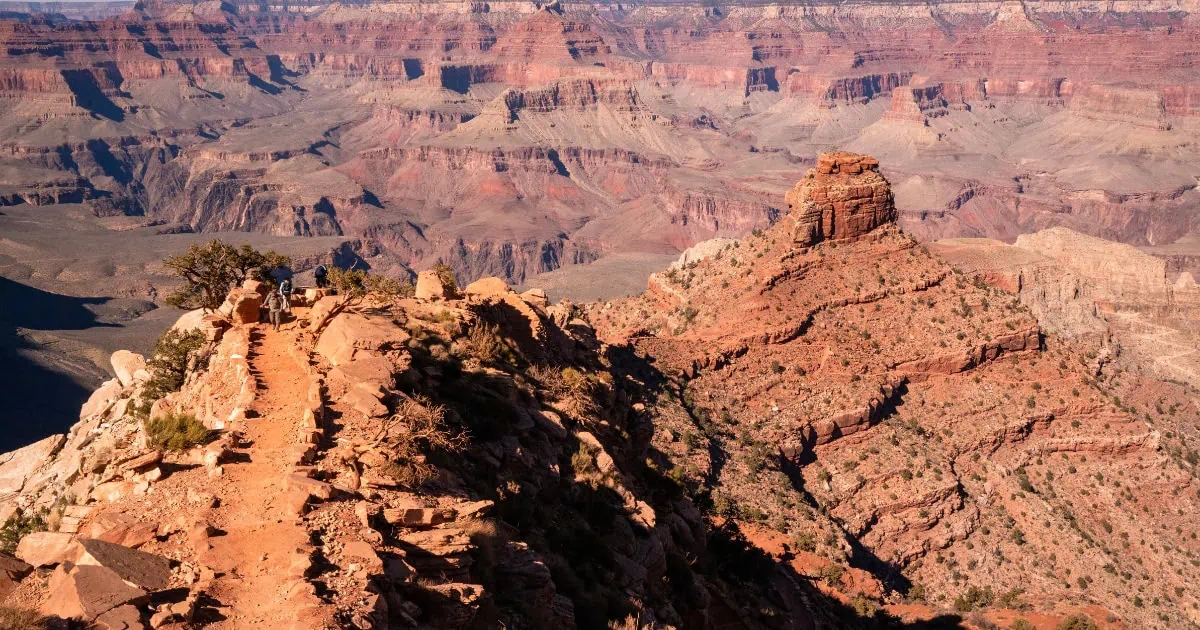
3. South Kaibab Trail — a wilder, more dramatic alternative
If Bright Angel Trail is the “main street,” South Kaibab Trail is the wild, untamed version. The trail follows a ridge with no shade whatsoever and no water — but the views are a level more intense because you’re walking along an exposed spine with panoramic views on both sides of the canyon.
The most popular destination is Ooh Aah Point (about 3 km / 2 miles round trip, 1–2 hours) — and it’s named for exactly the reason you’d expect. When you reach the platform and see the canyon opening around you in every direction, you really do say “oooh” and “aaah.” Another excellent stop is Cedar Ridge (5 km / 3 miles round trip, 2–4 hours) with a small plateau where you can sit and absorb the sheer enormity around you.
Key rule: South Kaibab has no drinking water anywhere along the trail. Bring more than you think you’ll need. And start early in the morning — by 10 am in summer, the sun blazes down here so fiercely it looks like Mars.
South Kaibab is steeper than Bright Angel in one direction, which is why the popular combination for multi-day hikers is to descend via South Kaibab and climb back up via Bright Angel. If you’re only planning a single-day hike into the canyon, South Kaibab to Ooh Aah Point or Cedar Ridge is an absolute must.
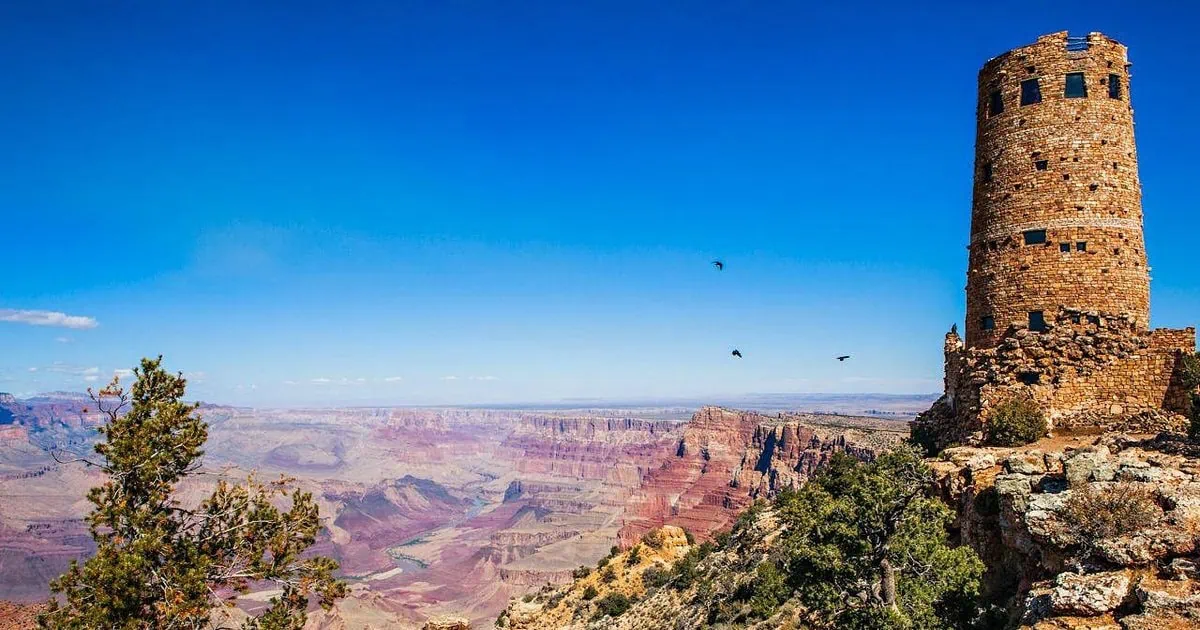
4. Desert View and Watchtower — a view to the end of the world
Desert View sits at the eastern end of the South Rim, about 40 km (25 miles) from Grand Canyon Village. And although that means an extra half-hour’s drive, I’ll be honest — it’s one of the most beautiful spots in the entire park.
The centrepiece is the Desert View Watchtower, a stone tower built in 1932 designed by architect Mary Colter, inspired by Native American structures. You climb the stairs to the top and a 360° panorama opens up that includes the canyon, the Colorado River, the Painted Desert, and on clear days even the distant Navajo Mountain. It’s a different Grand Canyon than from Mather Point — less red, more golden, and infinitely vast.
Tip: If you’re arriving from the east (from Page or Monument Valley), enter the park through the Desert View Entrance. You’ll pay your entrance fee here and immediately be greeted by this view. On your return from Desert View back to the Village, stop at the viewpoints along Desert View Drive — Lipan Point and Grandview Point are fantastic and most tourists skip them.
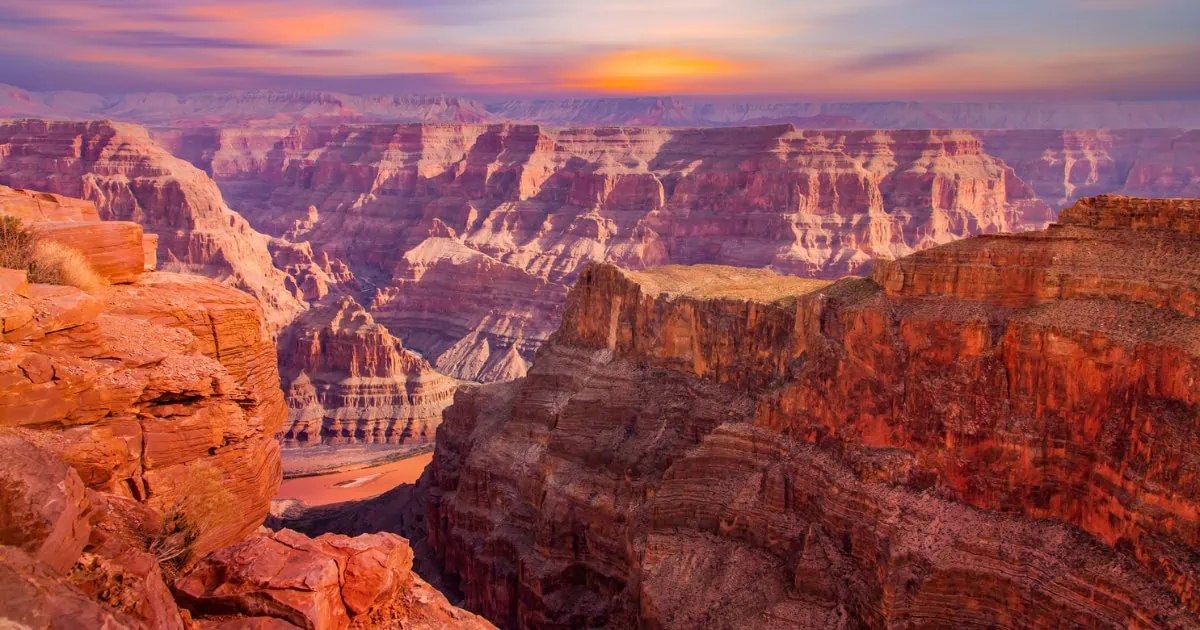
5. Hermit Road — 11 km of viewpoints without cars
Hermit Road (formerly West Rim Drive) is an 11 km (7-mile) road running from Grand Canyon Village westward to Hermits Rest. From March to November it’s closed to private vehicles — only free shuttle buses run here, which is actually an advantage, because you hop off at each stop, soak in the views, and ride on.
Best stops along Hermit Road:
- Hopi Point — the best spot on the entire South Rim for sunset. Wide panoramic views with the Colorado River visible far below. Arrive at least 30 minutes before sunset to get a good spot.
- Powell Point — a quieter viewpoint with a memorial to John Wesley Powell, the first person to run the canyon by boat.
- The Abyss — here the canyon edge plunges 900 metres (3,000 feet) almost vertically. The name is fitting.
- Hermits Rest — the final stop, a stone building designed by Mary Colter with a small refreshment stand. A lovely place to rest.
You can walk the entire Hermit Road along the Rim Trail — it’s about 3 hours of comfortable walking with viewpoints at every step. Walk one way and take the shuttle back. The ideal afternoon programme.
6. Helicopter flight — the Grand Canyon from a bird’s eye view
This is one of those experiences where you think “it’s expensive” — and then, as you fly over the endless labyrinth of red rocks and the Colorado River looks like a silver thread kilometres below you, you think “why didn’t I do this sooner?” ☺️ You can easily book through GetYourGuide, which is probably the most convenient platform for booking unique experiences in America.
Helicopter flights over the Grand Canyon depart from either Tusayan (near the park’s south entrance) or Las Vegas. From Tusayan, you fly directly over the canyon; flights last 25–50 minutes and prices start at around $200–350 per person (~€183–320). From Las Vegas, flights are longer and pricier (from $300), but some include a landing on the canyon floor.
Recommendation: If you’re at the South Rim, go from Tusayan — shorter transfer, more time over the canyon. Book in advance, especially in season, as flights fill up quickly.
7. Rim Trail — an easy walk with epic views
Not everyone wants to descend into the canyon and push their limits. And that’s absolutely fine, because the Rim Trail offers some of the best views on the entire South Rim and is truly accessible for everyone — including families with pushchairs and wheelchair users (most sections are paved and barrier-free).
The Rim Trail runs 21 km (13 miles) along the canyon edge from the South Kaibab Trailhead in the east to Hermits Rest in the west. You don’t have to walk the whole thing — just pick a section. Our favourite is Mather Point → Yavapai Geology Museum → Bright Angel Lodge (about 4 km / 2.5 miles, an hour’s comfortable walk). The Yavapai Museum has a glass-walled viewing area overlooking the canyon and excellent geological exhibits — you’ll learn how that billion-year history of layers actually works.
A walk along the Rim Trail is perfect for your first day to soak up the atmosphere and get your bearings.
8. Yavapai Geology Museum — understand what you’re actually seeing
This is a place most tourists skip, and that’s a shame. The Yavapai Geology Museum sits on the very edge of the canyon (literally — from the glass-walled hall you look straight down) and in 20–30 minutes will explain what you’re seeing. Those colourful layers aren’t just pretty — each has a name, an age, and a story. The oldest rocks at the bottom of the canyon are nearly 2 billion years old. Two. Billion. That number is so mind-boggling it’s worth pausing over for a moment.
Entry is free. The Grand Canyon map you pick up here shows all the trails, viewpoints, and shuttle stops at a glance.
North Rim: 3 reasons to make the journey
The North Rim is the “other side” of the Grand Canyon — and although it’s only about 16 km (10 miles) from the South Rim as the crow flies, by car it’s 350 km (215 miles) and 4–5 hours of driving. This deters most tourists, which means only about 10% of visitors make it here. And that’s precisely why the North Rim is so magical. It’s quiet, wild, and you feel like you have the canyon all to yourself. It’s open only from 15 May to 15 October — outside season, the access road is closed due to snow.
9. Bright Angel Point (North Rim) — serenity and majesty
Bright Angel Point on the North Rim is a short, easy walk (about 800 metres / half a mile) from Grand Canyon Lodge to a rocky promontory from which you gaze into the canyon from an entirely different perspective than from the South Rim. The North Rim sits roughly 300 metres (1,000 feet) higher, so the view is even deeper and more dramatic.
What surprised me most? The forest. On the North Rim grow tall pines, firs, and aspens — it’s an almost alpine atmosphere, and then suddenly the forest ends and you’re standing above an abyss. The contrast is utterly unexpected and gorgeous.
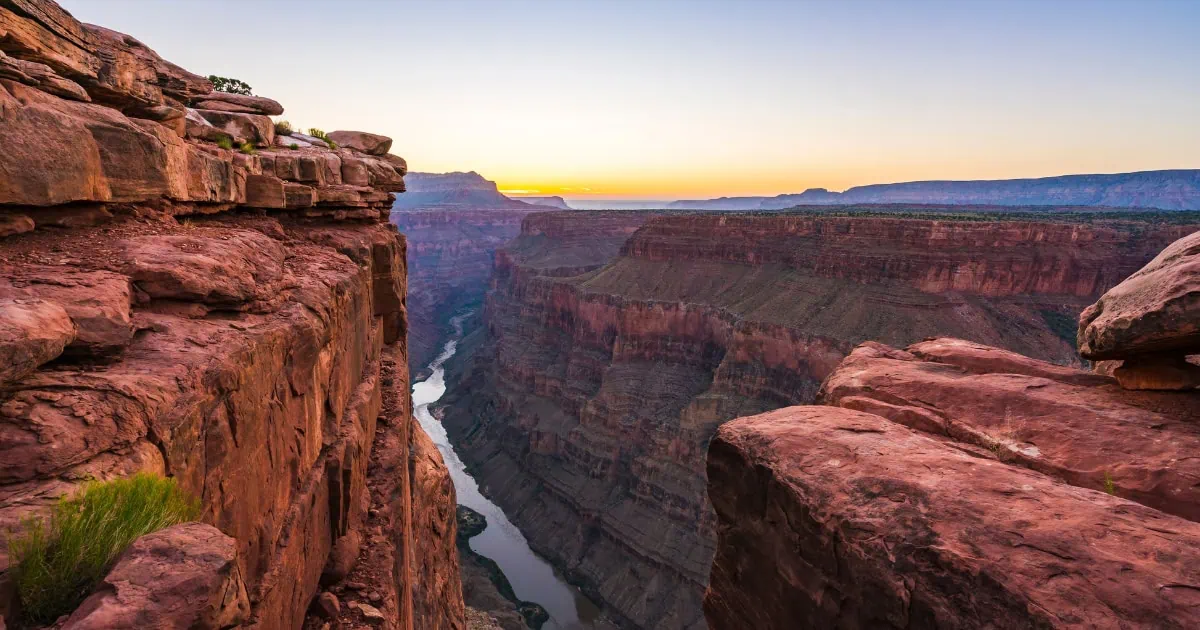
10. Cape Royal and Point Imperial — the best viewpoints on the North Rim
If you visit the North Rim, you absolutely must drive Cape Royal Drive — a 37 km (23-mile) scenic road that leads to two of the finest viewpoints.
Point Imperial (2,683 m / 8,803 ft) is the highest point in the entire Grand Canyon, and the view from here encompasses the Painted Desert, Marble Canyon, and distant Navajo Country. It’s indescribable — like looking out at the entire world.
Cape Royal is at the end of the road and offers a 360° panorama with a view of Angels Window — a natural stone arch through which you can see the Colorado River. The short trail (1.5 km / 1 mile round trip) is easy and accessible.
The whole Cape Royal Drive will take you 2–3 hours with stops. The road is paved and comfortable.
11. North Kaibab Trail — for the bold hikers
North Kaibab Trail is the only maintained trail from the North Rim to the canyon floor. It’s longer and less trafficked than the southern trails — the descent to the bottom is 22.5 km (14 miles) one way. For a single-day taster, head to Coconino Overlook (2.4 km / 1.5 miles round trip) or Supai Tunnel (6 km / 4 miles round trip).
The boldest hikers combine North Kaibab with South Kaibab or Bright Angel as the Rim-to-Rim trek — a crossing of the canyon from one side to the other. It’s 34–37 km (21–23 miles) depending on the combination, with over 3,000 metres (10,000 feet) of total elevation change, and requires at least one night at the bottom (Phantom Ranch or campground). It’s considered one of the best hikes in the world. One day, we want to do it. 😁
Beyond the park: 4 experiences worth the trip
The Grand Canyon doesn’t end at the national park boundary. In the surrounding area, you’ll find places that are equally (if not more) awe-inspiring and offer experiences you won’t find inside the park itself.
12. Havasu Falls — the most beautiful waterfall in America
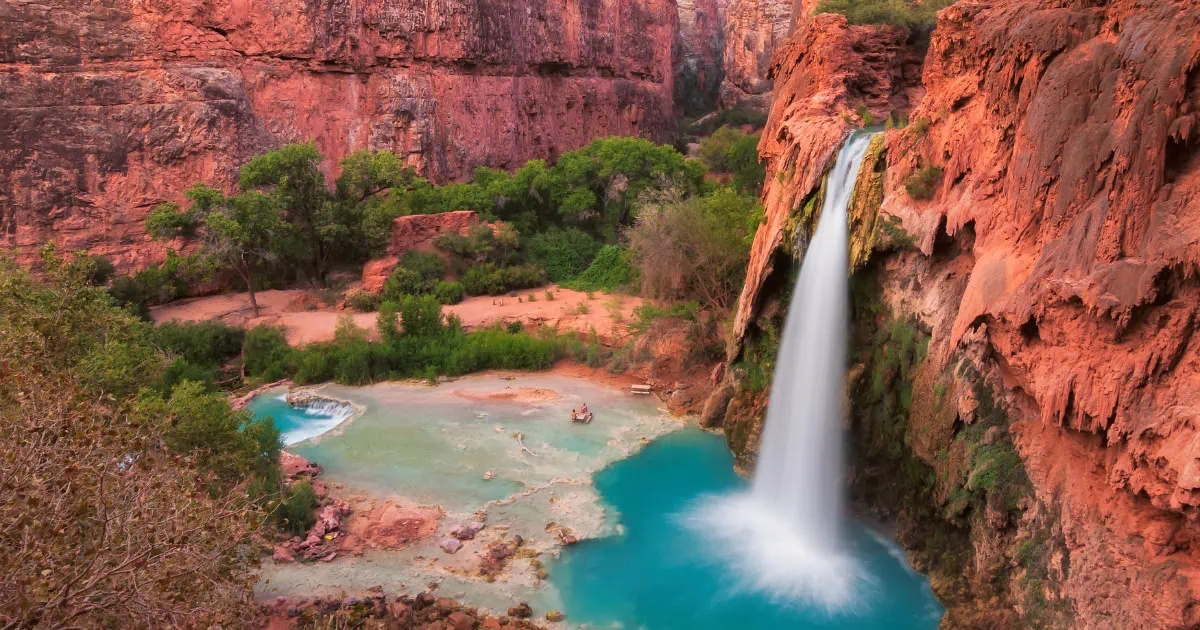
Havasu Falls is every traveller’s dream — a turquoise waterfall plunging into pools surrounded by red rocks, all hidden in a side canyon. It looks like Photoshop, but it’s real. And getting there is an adventure in itself.
Havasu Falls lies on the territory of the Havasupai Tribe, and access is only possible with a permit sold online — it usually opens in February for the entire year and sells out within minutes. Literally. You’ll need to be at your computer at the exact opening time and hope for the best. The permit costs around $400 per person (~€366), which includes camping for 3 nights.
You reach the waterfalls via a 16 km (10-mile) hike from the village of Supai. The trail is beautiful but demanding — especially the return climb. Alternatively, you can arrange a mule or helicopter for baggage transport.
Is it worth it? Absolutely yes. Havasu Falls, Mooney Falls, and Beaver Falls are among the most beautiful natural wonders we’ve ever seen. But plan at least a year ahead.
13. Grand Canyon Skywalk (West Rim) — a glass bridge over the abyss
The Skywalk is a horseshoe-shaped glass viewing platform that juts 20 metres (65 feet) out over the canyon edge on the West Rim — managed by the Hualapai Tribe (not the national park). You stand on glass with 1,200 metres (4,000 feet) of void beneath your feet.
Honestly? Opinions are very divided. Admission is around $75–90 per person (~€69–82), and you need to get to the West Rim (190 km / 120 miles from Las Vegas, 400 km / 250 miles from the South Rim). You can’t bring your own camera or phone onto the Skywalk (they sell photos for extra money). And the canyon at the West Rim isn’t as deep or colourful as in the national park.
My verdict: If you’re short on time and based in Las Vegas, it’s an interesting day trip. If you’re heading to the South Rim, skip the Skywalk — you’ll see far more beautiful places in the park and without the commercial add-ons.
14. Rafting the Colorado River — the Grand Canyon from below
If you want to experience the Grand Canyon from its most intimate perspective, rafting the Colorado River is the ultimate adventure (easily bookable through GetYourGuide). You look up at the canyon walls from below and truly grasp the depth — it’s literally a different world from the rim.
Options are divided into:
- Half-day/full-day smooth water rafting from Lee’s Ferry or the West Rim — calm water, suitable for families. From ~$100 (~€92).
- Multi-day whitewater rafting — 3–18 days on wild rapids. A full-canyon expedition (226 miles / 364 km) takes 12–18 days and costs from $2,500 to $5,000+ (~€2,290–4,580+). Reservations are made one to two years in advance.
Even the one-day version is worth it — you’ll navigate gentle rapids, have lunch on beaches, and see the canyon as John Wesley Powell saw it in 1869.
15. Horseshoe Bend and Antelope Canyon — the perfect combination
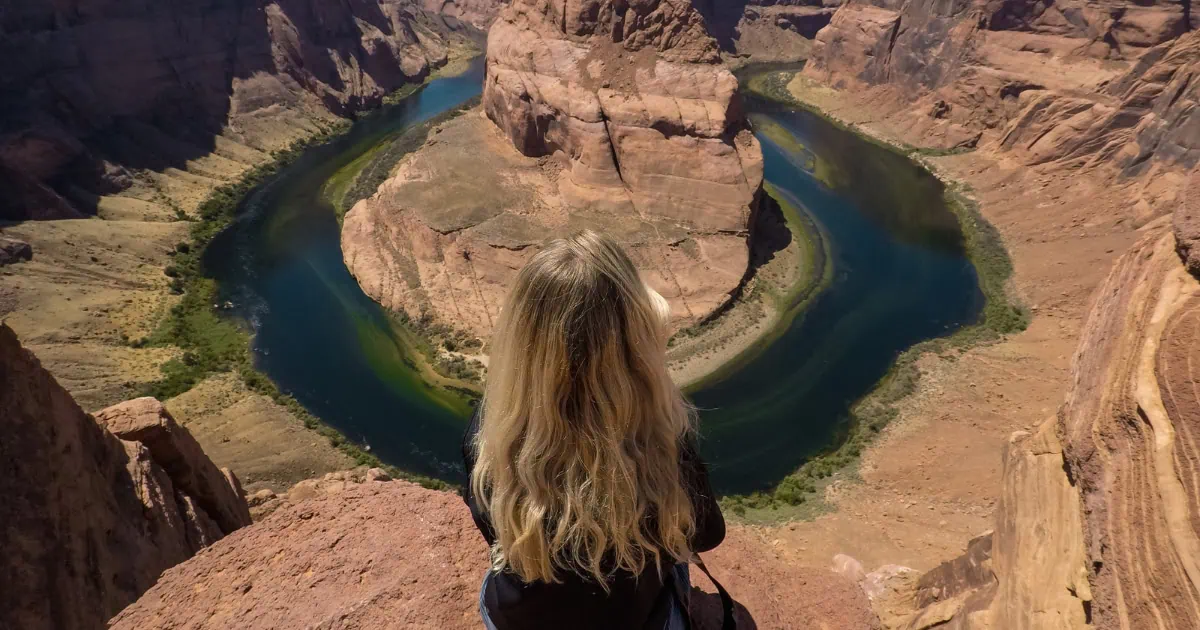
Horseshoe Bend and Antelope Canyon are located near the town of Page, about 2.5 hours from the South Rim, and can be perfectly combined with a Grand Canyon visit on the same road trip.
Horseshoe Bend is a sweeping meander of the Colorado River, where it curves 270° around a massive rock pillar. Entry is $10 per car and the walk to the viewpoint takes about 15 minutes. You’ll recognise the photos from Instagram — but in person, it’s (as always) a completely different experience.
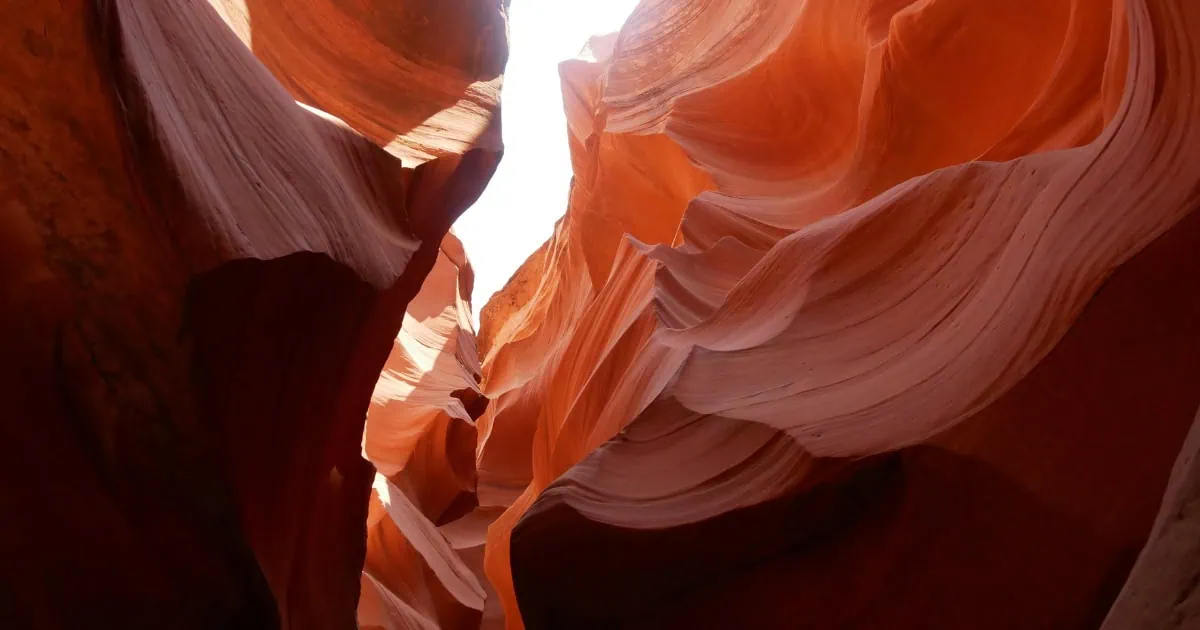
Antelope Canyon (Upper and Lower) are narrow slot canyons where light penetrates from above, creating incredible colour effects on the sandstone walls. Access is only possible with a Navajo Nation guide. Upper Antelope is more photogenic; Lower Antelope is less crowded. Prices from ~$40–80 per person (~€37–73).
💡 Road trip TIP: Las Vegas → Grand Canyon South Rim (2 nights) → Desert View → Page / Horseshoe Bend + Antelope Canyon → Monument Valley → back to Vegas. An ideal loop for 5–7 days.
Where to eat and drink at the Grand Canyon
I won’t lie to you — the Grand Canyon isn’t a gastronomic paradise. You’re in the middle of Arizona’s wilderness and the dining options reflect that. But you’ll find a few places where you can eat well and with a view that would cost a fortune anywhere else.
Inside the park (South Rim)
- El Tovar Dining Room — the best restaurant in the park. Steaks, fish, seasonal American cuisine. Mains around $25–45 (~€23–41). Book dinner well in advance — the atmosphere of the historic dining hall is beautiful.
- Arizona Room — a more casual alternative to El Tovar, great steaks and burgers. No reservations, but expect a queue in season. Mains $15–30.
- Bright Angel Restaurant — solid breakfasts and lunches at reasonable prices. Nothing exceptional, but reliable.
- Maswik Food Court — fast food, pizza, burgers. When you need food quickly and without ceremony.
In Flagstaff (if you’re staying overnight)
Flagstaff has a surprisingly lively food scene. Brix Restaurant serves excellent American cuisine with local ingredients. Pizzicletta has some of the best Neapolitan pizzas in all of Arizona (and yes, I know that sounds absurd — Naples and Arizona — but it’s true 😅). Tourist Home is a lovely café with excellent cappuccino.
What to bring with you
Always pack more food and water than you think you’ll need for the canyon. There are no shops on the trails (with the exception of Phantom Ranch at the bottom). Salty snacks are better than sweet ones — your body needs electrolytes in the heat. And water volume? A minimum of 1 litre per hour of walking in summer, 0.5 litres in cooler months.
Practical tips and tricks for the Grand Canyon
Entrance fees and America the Beautiful Pass
Entrance to Grand Canyon National Park is $35 (~€32) per car (valid for 7 days, covers both South and North Rim). Motorcycles $30, pedestrians/cyclists $20 per person. If you plan to visit multiple national parks, the America the Beautiful Pass at $80 (~€73) is a no-brainer — it’s valid for a year and covers 2,000+ federal recreation areas.
Internet and eSIM
Mobile signal at the Grand Canyon is limited — you’ll get reception in Grand Canyon Village, but on the trails and at more remote viewpoints, forget about it. Before your trip to the USA, get an eSIM so you have data as soon as you land. We use Holafly — here’s our review on whether it’s worth it.
Travel insurance
Healthcare in the USA is astronomically expensive — a rescue operation in the canyon can cost tens of thousands of dollars. Don’t go without insurance. For shorter trips, we recommend a comprehensive travel insurance policy from a reputable UK provider. For longer adventures, we’ve had great experiences with SafetyWing.
What to pack
The Grand Canyon requires layers. On the canyon rim it can be around 5 °C (41 °F) in the morning, 25 °C (77 °F) at noon, and 40 °C (104 °F) down in the canyon. Layering is key. Proper hiking boots are essential — not flip-flops, not trainers. For hiking you need boots with ankle support and good grip. And if you want to pack efficiently, check out our guide to packing carry-on only.
Safety
- Don’t underestimate the canyon. An average of 12 people die here each year — falls from the rim, dehydration, overestimating abilities on the trails.
- Never climb over the railings for a photo. No photo is worth your life.
- On hikes, turn back sooner than you think — the ascent takes twice as long as the descent.
- In summer, don’t hike into the canyon between 10:00 and 16:00. An early start (5:00–6:00 am) is essential.
Frequently Asked Questions (FAQ)
How much does it cost to enter the Grand Canyon?
The entrance fee is $35 (~€32) per private vehicle and is valid for 7 days. It includes access to both the South Rim and the North Rim. For pedestrians and cyclists, the fee is $20 per person. With the annual America the Beautiful Pass ($80), you get free entry to all national parks.
What makes the Grand Canyon so special?
The Grand Canyon is one of the largest and most impressive canyons in the world — 446 km (277 miles) long, up to 29 km (18 miles) wide, and over 1,800 metres (6,000 feet) deep. At its bottom are rocks nearly 2 billion years old. It’s not just “a big hole in the ground” — it’s a geological textbook where you can read the entire history of the planet in its colourful layers. And the feeling of standing on the edge? Unforgettable.
When is the best time to visit the Grand Canyon?
The best time is spring (March–May) and autumn (September–November) — pleasant temperatures, fewer tourists, and beautiful light. Summer is hot and crowded, while winter is cold but romantic with snow on the rim. The North Rim is open only from mid-May to mid-October.
Which is the largest canyon in the USA?
The Grand Canyon is the most famous and one of the largest — 446 km long and over 1,800 m deep. Technically, there are canyons that are “bigger” in some parameter (Hells Canyon in Idaho is deeper), but the Grand Canyon’s combination of size, beauty, and accessibility makes it unquestionably number one. It’s one of the most significant natural wonders not just in the USA, but in the entire world.
Is one day enough for the Grand Canyon?
It’s enough, but it would be a shame. In one day you can see the main viewpoints on the South Rim, walk the Rim Trail, and perhaps take a short hike to Ooh Aah Point. But if you want to experience both sunrise and sunset, venture deeper into the canyon, or visit the North Rim, plan for at least 2–3 days. We initially came for one day and then regretted not having more time. The second time we stayed three days and it was ideal.
Is the Grand Canyon safe for families with children?
Yes, but with common sense. The Rim Trail is wide, paved, and manageable even for small children and pushchairs. The main viewpoints have railings. However — and this is a big however — the canyon is deep and not all areas have barriers. Children must be supervised at all times and should never climb on rocks beyond the railings. Descending into the canyon via Bright Angel or South Kaibab Trail is only recommended for older children (10+) who can handle more demanding walks.
What is the difference between the South Rim and North Rim?
The South Rim is more accessible — open year-round, easier to reach by car, with more accommodation, restaurants, and services. It attracts 90% of visitors. The North Rim sits 300 m (1,000 ft) higher, is open only from mid-May to October, and is significantly quieter. Views from both sides are stunning, but the North Rim has a wilder atmosphere with forests and meadows. If you have time, visit both sides — but if you’re choosing just one, I recommend the South Rim for a first visit.
Tips and Tricks for Your Vacation
Don’t Overpay for Flights
Search for flights on Kayak. It’s our favorite search engine because it scans the websites of all airlines and always finds the cheapest connection.
Book Your Accommodation Smartly
The best experiences we’ve had when looking for accommodation (from Alaska to Morocco) are with Booking.com, where hotels, apartments, and entire houses are usually the cheapest and most widely available.
Don’t Forget Travel Insurance
Good travel insurance will protect you against illness, accidents, theft, or flight cancellations. We’ve had a few hospital visits abroad, so we know how important it is to have proper insurance arranged.
Where we insure ourselves: SafetyWing (best for everyone) and TrueTraveller (for extra-long trips).
Why don’t we recommend any Czech insurance company? Because they have too many restrictions. They set limits on the number of days abroad, travel insurance via a credit card often requires you to pay medical expenses only with that card, and they frequently limit the number of returns to the Czech Republic.
Find the Best Experiences
Get Your Guide is a huge online marketplace where you can book guided walks, trips, skip-the-line tickets, tours, and much more. We always find some extra fun there!


