

We’ll never drive in Uganda after dark again. We promised each other, and in the morning we set off really early. It didn’t work out. On the way to the Rwenzori Mountains (the Mountains of the Moon), darkness and a storm caught us.
If we thought nothing could be worse than driving through dirt tracks in the dark, today proved that flooded two-metre-deep potholes are a brutal school of offroad driving — a matter of life and death. This was only part three of our Uganda road trip, and gorilla trekking in Uganda was still ahead of us.
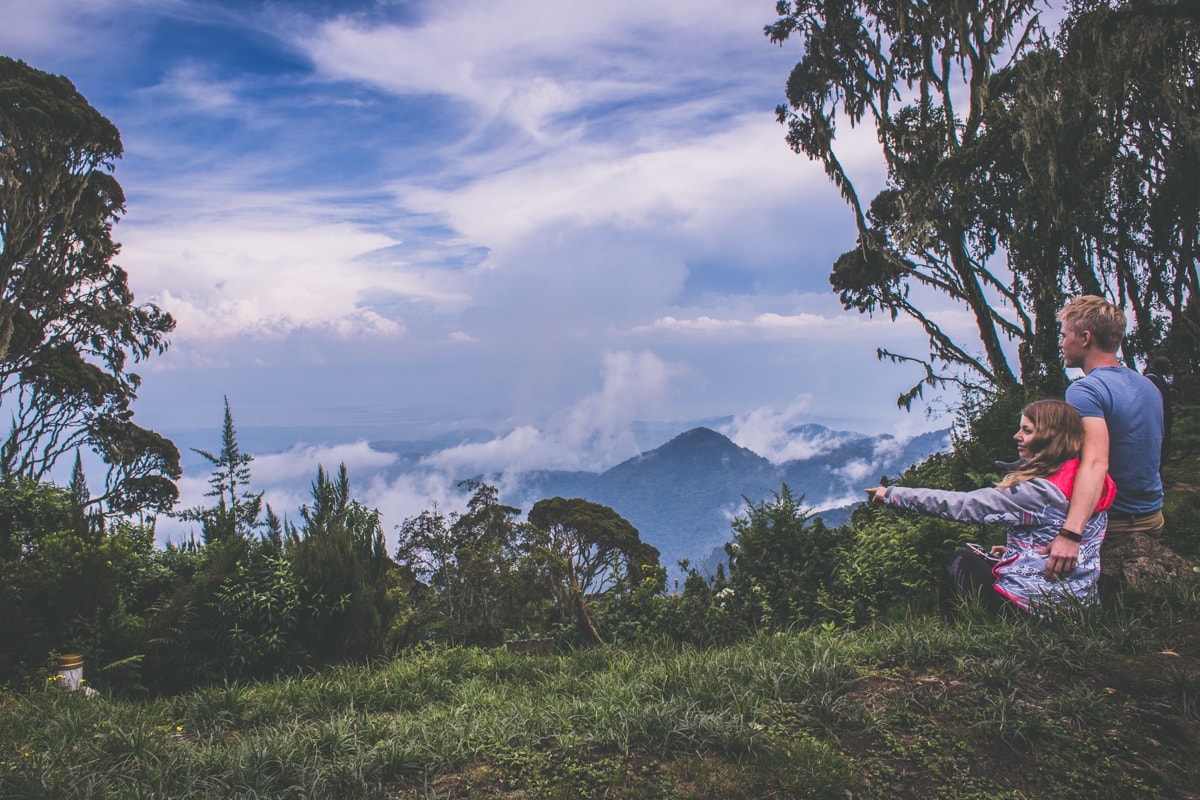
I didn’t feel like doing a two-day trek anymore. We checked into the hostel where the hike starts and declared we’d definitely go in the morning. Neither of us believed it though. We didn’t want to disappoint each other, but the depressing rain only brought the urge to get out of there as quickly as possible.
But the morning had a surprise in store — the weather was beautiful. Neither of us could find a single reason not to go, so off we went. You’re not allowed into the Rwenzori Mountains without a guide and porters. It also costs a lot of money. A two-day trip comes to $235 per person, plus you’re expected to tip the porters, who you’re required to have but aren’t paid by the company. They’re just people from the village.
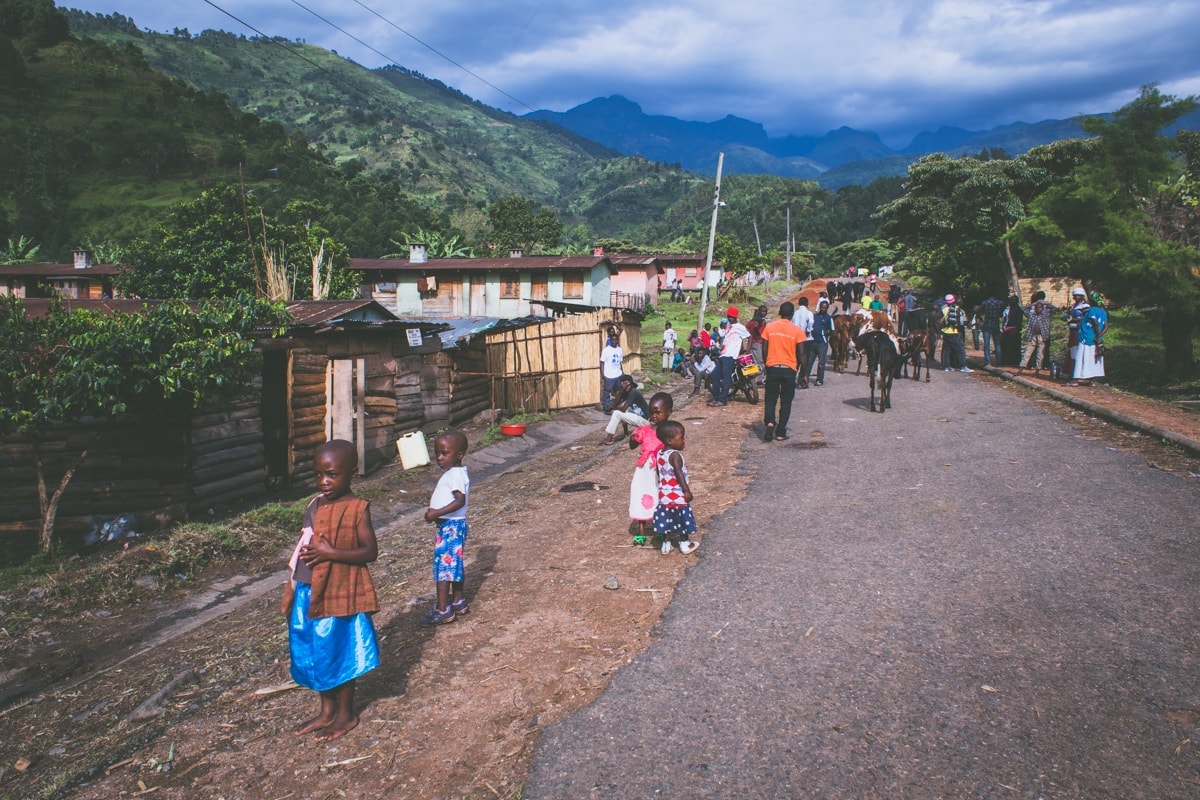
Uphill, and then steeply uphill
“Now it’ll be flat for about four kilometres, and then we’ll start climbing.” Our guide explained, and we spent the whole time wondering why he called it flat when it was actually uphill. Then we understood — for him, “climbing” only means when you have to use your hands. Soon we were grateful for the porters. The sun was blazing and we were fighting our way through the jungle.
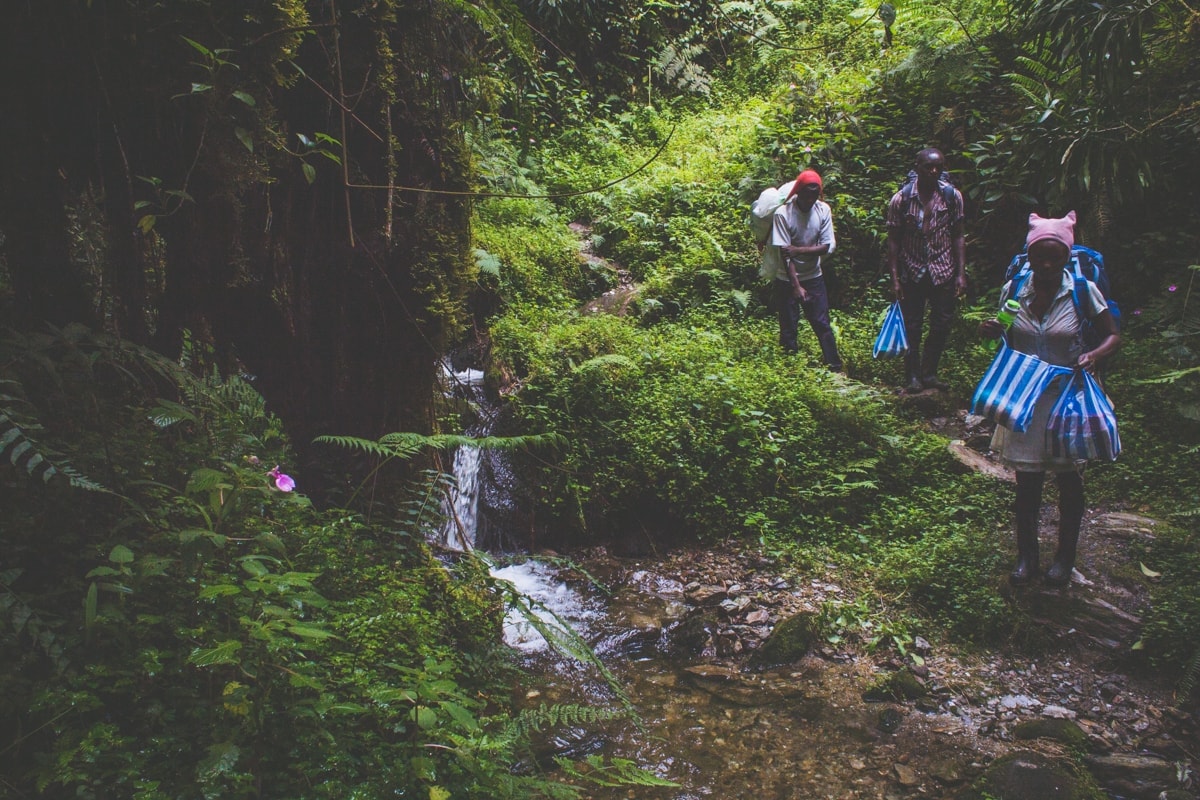
Our guide wasn’t much of a guide. His most frequent words were: “Break here?”
We only got something useful out of him when we asked if there were venomous snakes around.
“There are. We have the green mamba, black mamba, and spitting cobra.” His white teeth gleamed in a smile against his dark face.
“So just the most dangerous ones in the world,” Lukáš commented.
“Yeah, but we’d have to be incredibly lucky to run into them!” The guide smiled, and we quietly thought to ourselves that it would indeed be incredible “luck” to meet a snake that could kill you.
The Ugandan game of hide and seek
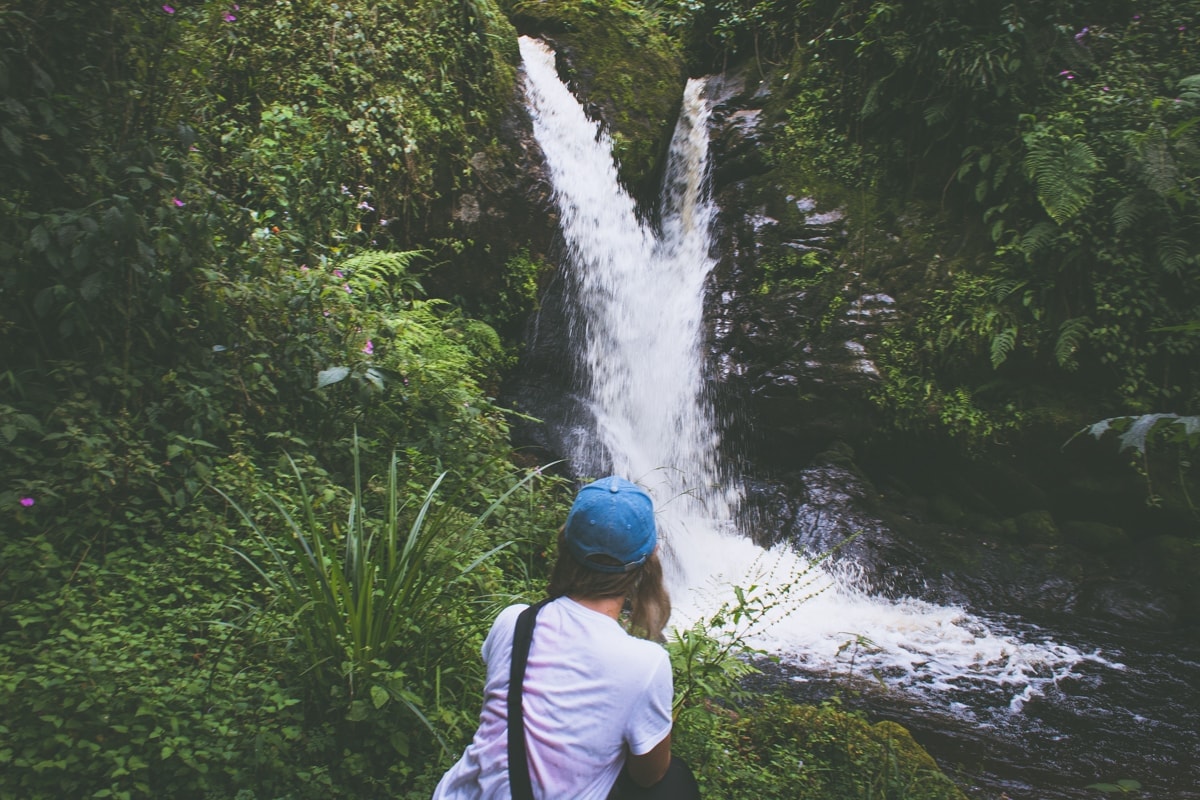
When we reach the halfway point and look like we’re about to give up the ghost, we decide we need a lunch break. The porters unpack the food, then disappear around the corner with the guide. We hear them laughing and joking, but as soon as the meal is over, they return, fall silent, and stay quiet as long as they’re near us.

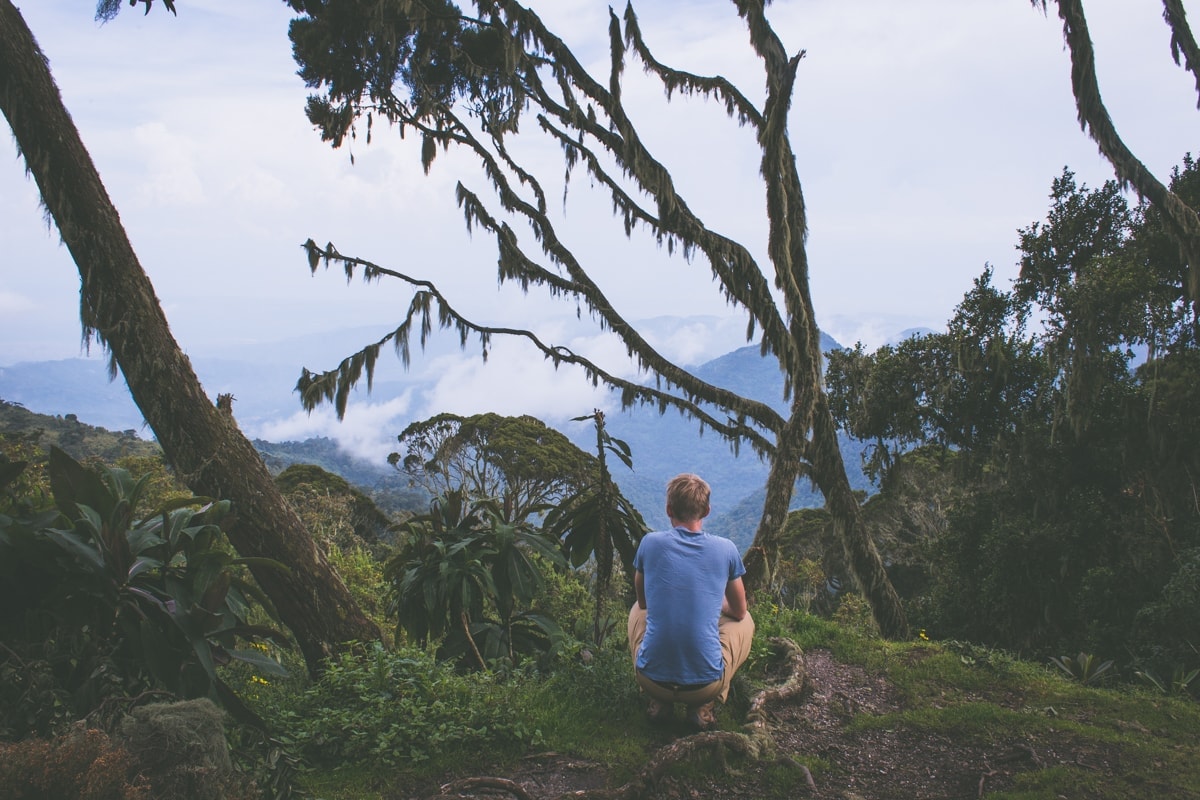
We finally reach the hut. But we discover there’s no view from here. “We’d have to go higher for that, but it’s up to you,” the Ugandan tells us. So we drag ourselves higher, immediately cursing ourselves because we know our bodies won’t thank us for this in the coming days. After a total of 7 hours, we’re at 3,147 metres. It’s worth it.
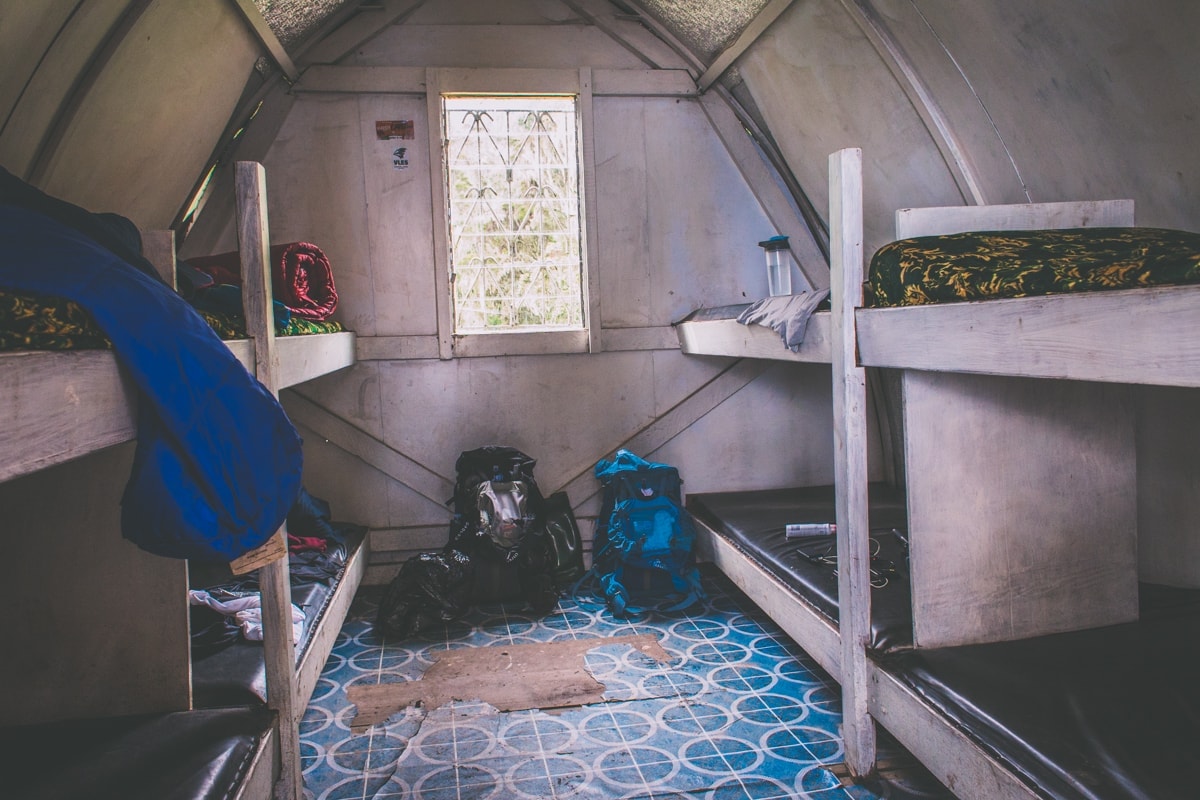
But this is where the real theatre begins. “So, we’re here,” the guide announces, points to the hut where we’ll sleep, and then vanishes into a tiny shelter with our three porters and some other locals who were already there.
White European VIPs
“The website said that a common activity after hiking is chatting with the guide,” I comment, amused by the Ugandans hiding in their shelter. We see our guide just once more that day — for a “briefing,” which is simply the announcement that breakfast is at seven and we leave at 7:30. In the meantime, the porters occasionally emerge to bring us tea, biscuits, soup, and then a main course. Each portion is enough for five, and we feel embarrassed because we can never finish it. No one talks to us.
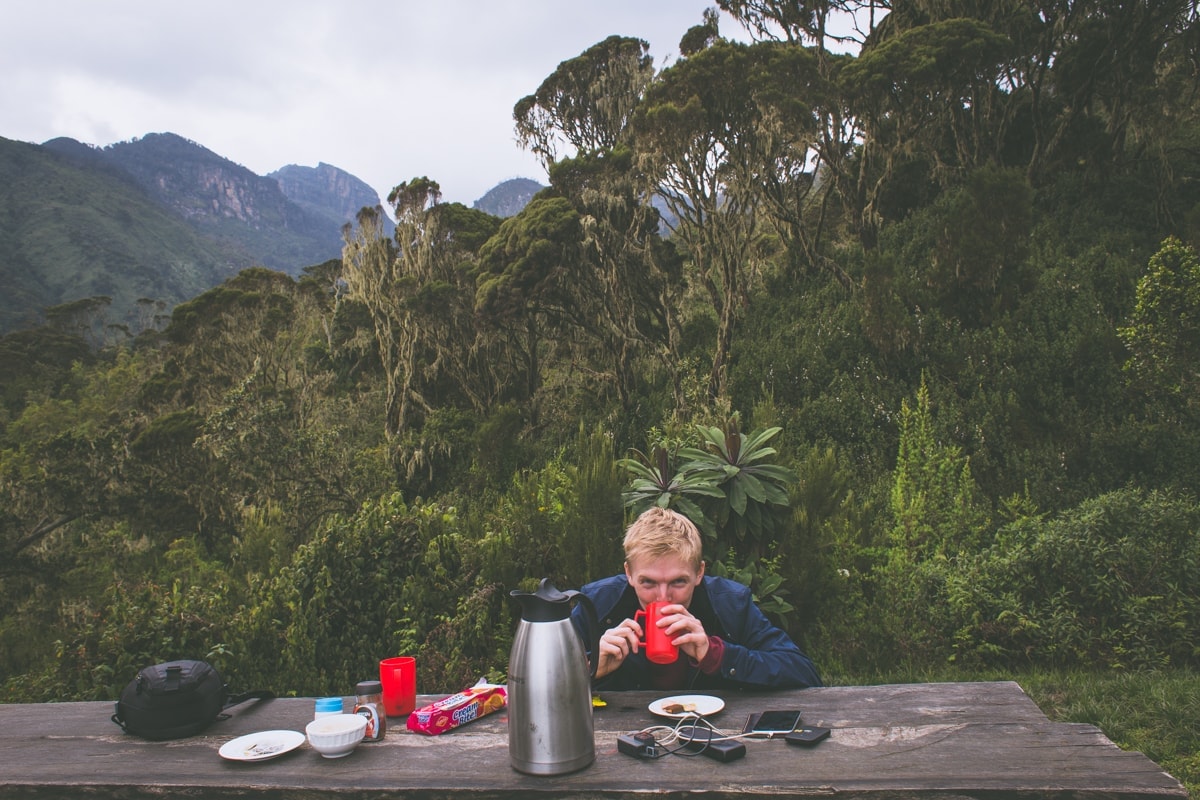
“We’re like VIPs here,” Lukáš and I whisper to each other, feeling awkward about it.
As soon as we finish eating, we quickly disappear into the hut. When we close the door behind us, laughter erupts. The Ugandans party until midnight, or maybe until morning. Until we emerge from the hut again and they’ll serve us like VIPs once more. In silence.
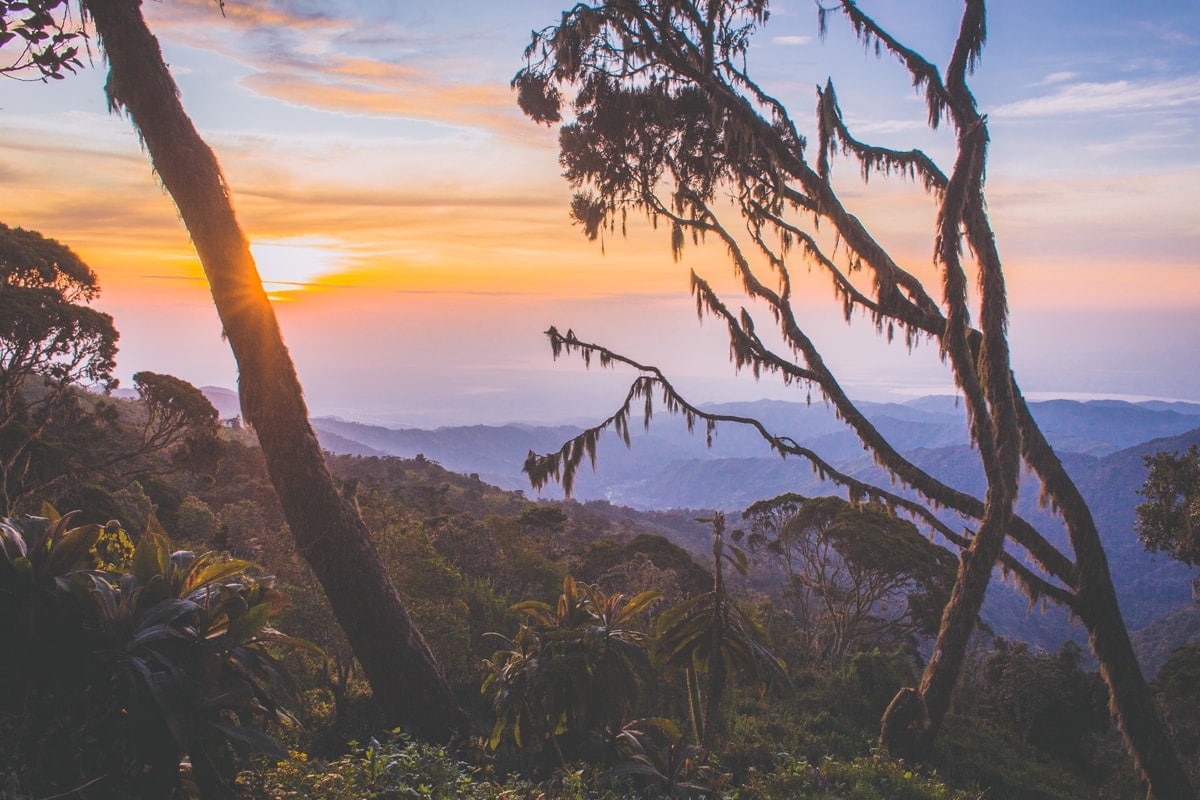
“Tea is ready.” The call comes at 6:20 and we wonder why they told us breakfast was at seven if they’re waking us at 6:20. We shrug it off and drag ourselves to the table, where they start piling on several courses of breakfast. First porridge, then eggs, fried potatoes, and toast. Lukáš even gets sausages. We even get butter. “They must have brought an entire kitchen up here,” Lukáš sighs over the food. We’re miserable about it, feeling guilty for leaving food behind. We secretly wrap up the leftovers and decide we’ll run it down in five hours and refuse the lunch break.
Malaria risk puts you off cooking
For the second day, we can barely walk. At Simba Camp on the edge of Queen Elizabeth National Park, we shuffle around as if someone had beaten us up — and that’s exactly how we feel. Even pitching the tent turns out to be a heroic feat. Luckily, we gave up cooking after the first attempt. It gets dark very early here, and with darkness comes a horde of mosquitoes and one of the highest malaria risks in all of Africa. So at least we don’t have to worry about cooking.
We’ve also run out of clean clothes. We’d naively assumed we could use washing machines at whatever hotel we camped next to. It turned out they obviously don’t have washing machines here, so you have to pay per item of laundry.
So we wash everything in our own basin and hang it on the trees around us. “It’s like a Ugandan Christmas tree,” I say, looking at the tree next to our tent and wondering whether the Christmas lights are already up back home in Europe.
Huge hotel complexes with no guests, sometimes no staff
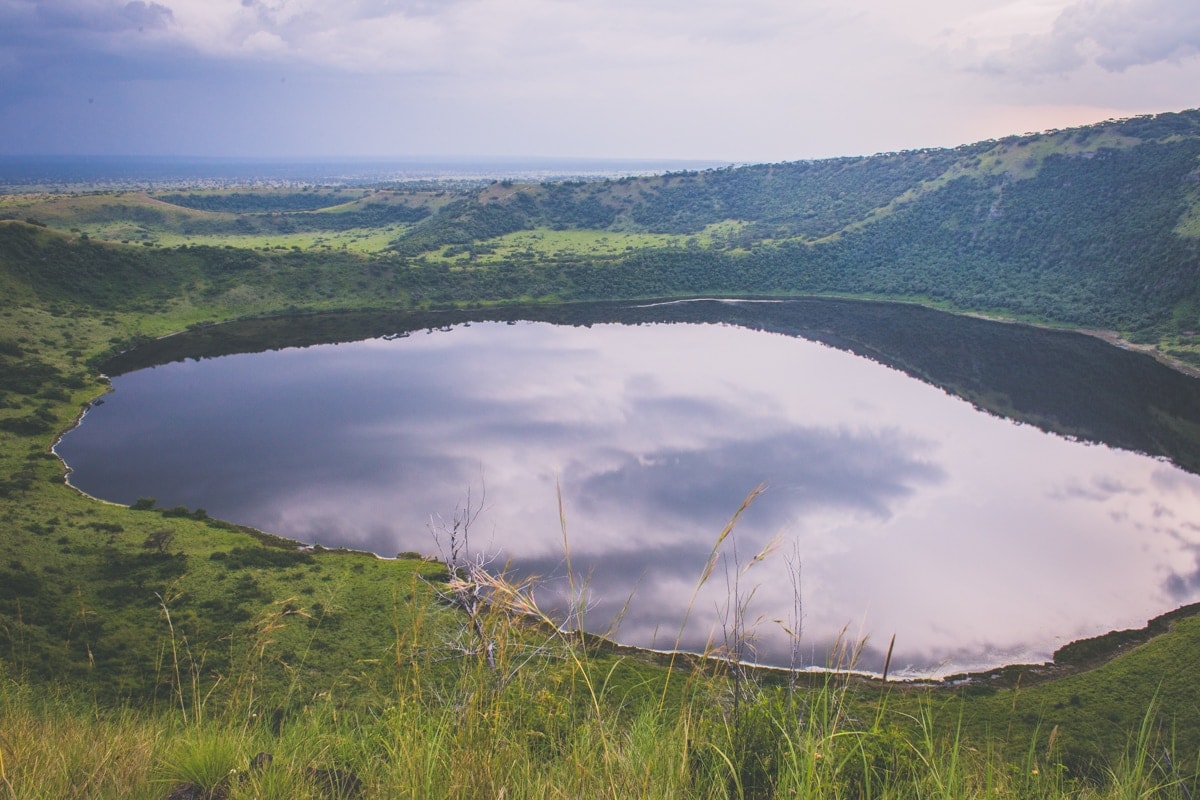
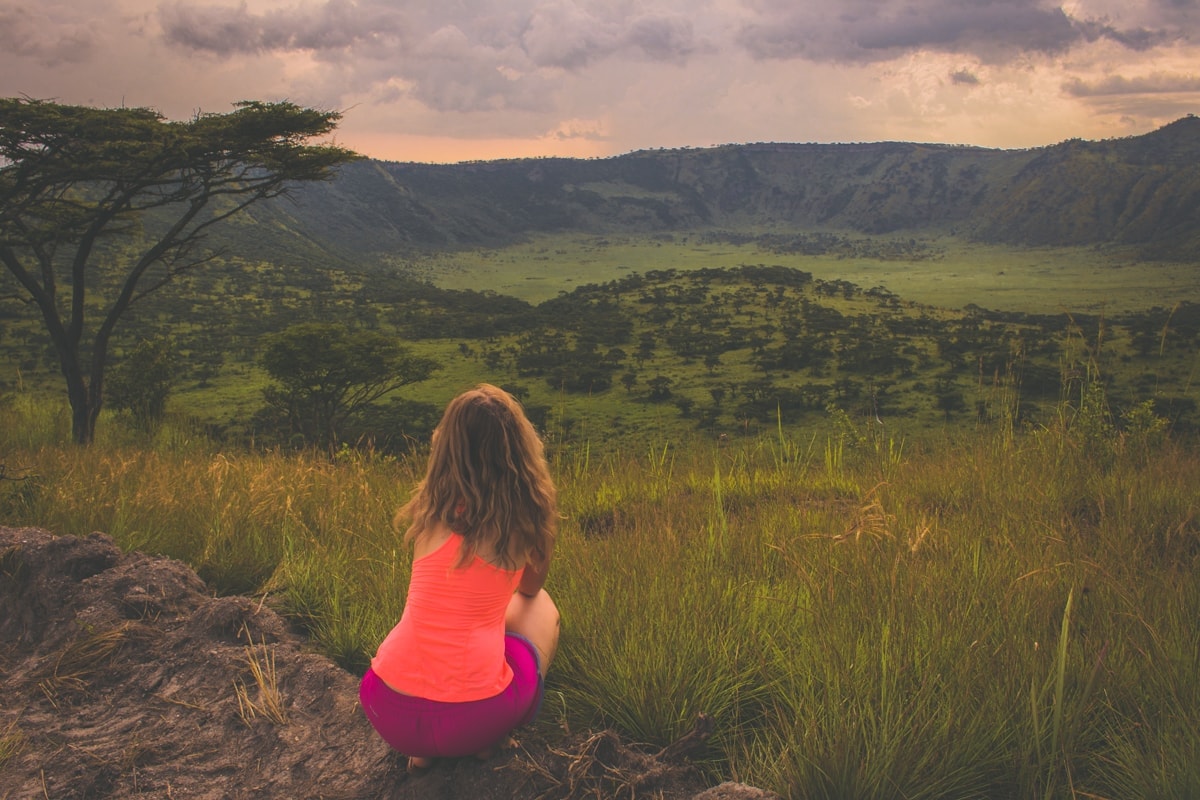
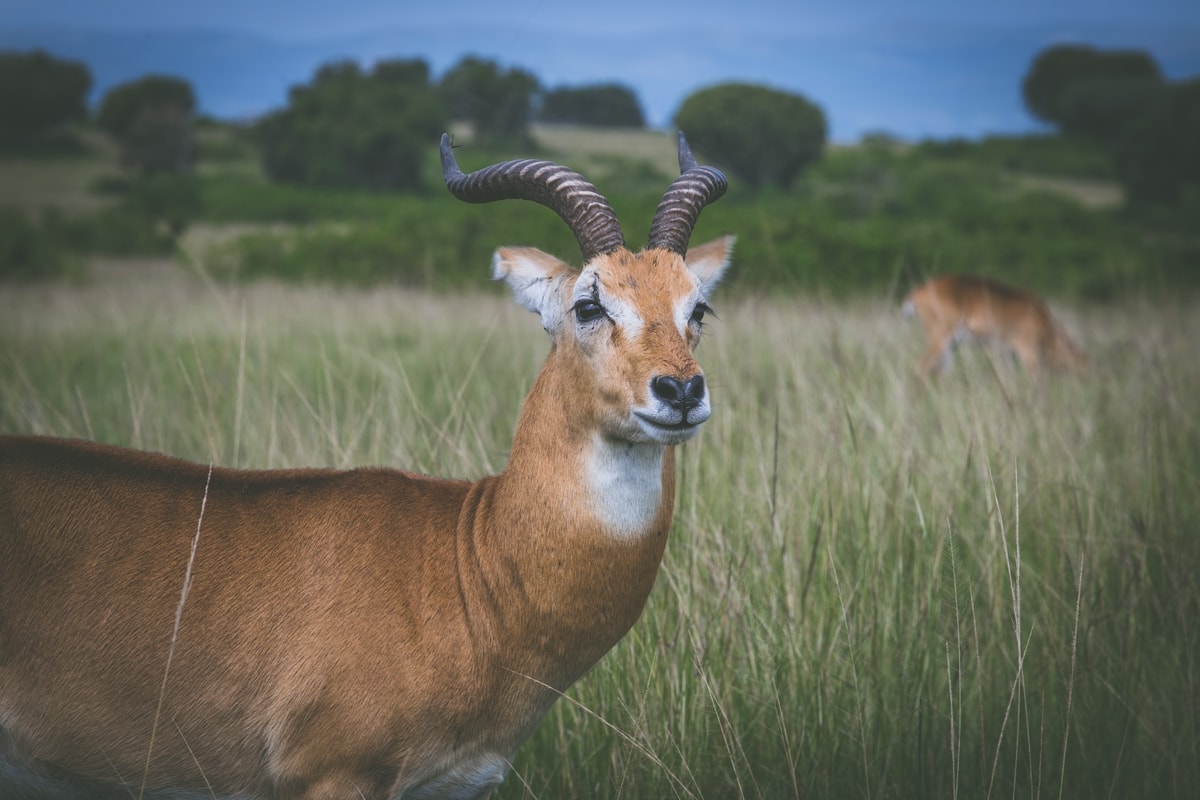
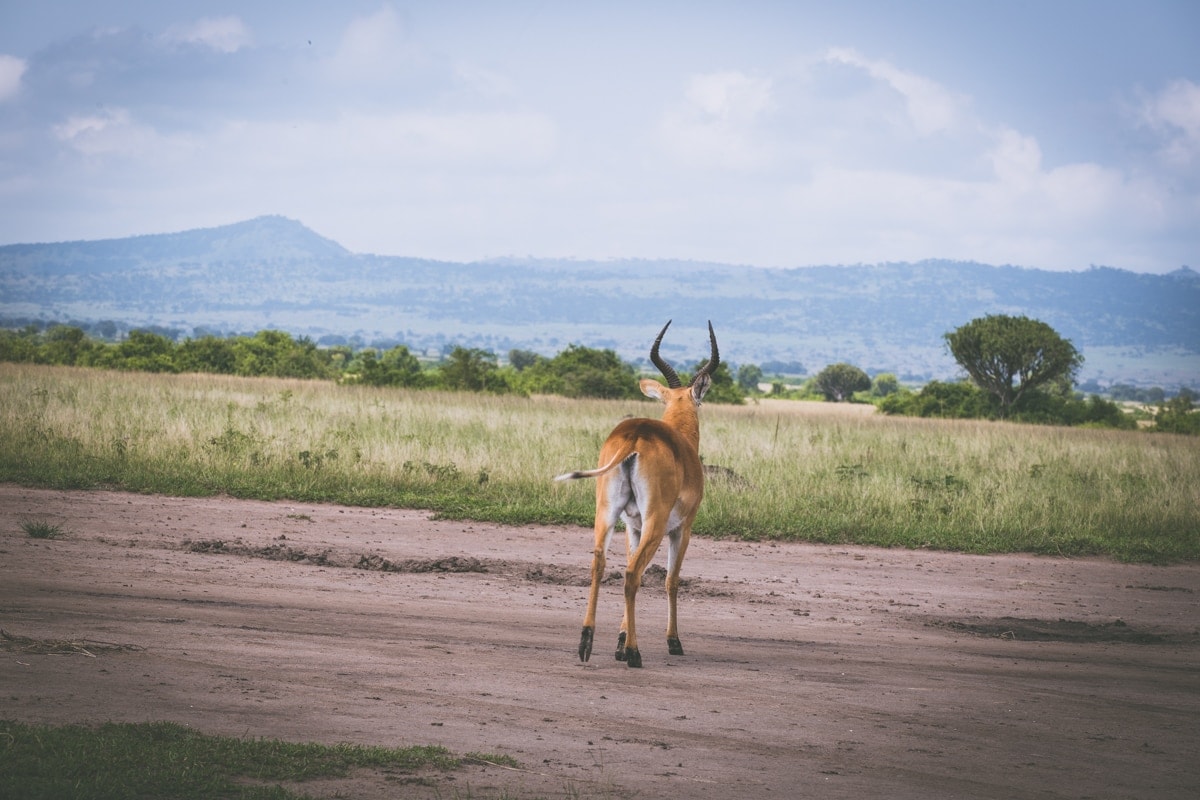
Queen Elizabeth National Park is a bit of a disappointment for us. We don’t see many animals, our legs still haven’t recovered, and we know that gorilla trekking is fast approaching — and we’ll need our muscles for that Uganda gorilla safari.
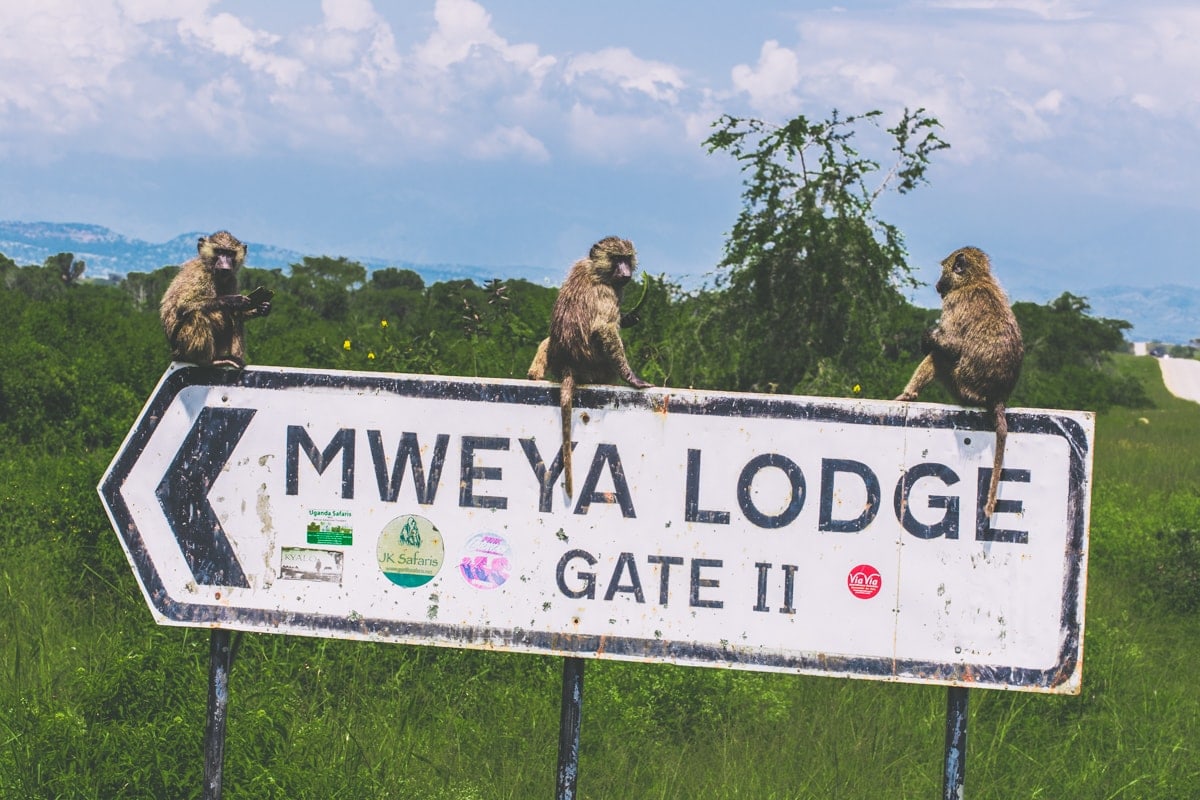
Early in the afternoon, we look for accommodation. We arrive at a lodge that’s supposed to have a camping spot too. Loud music is blaring from reception, but the entire complex is deserted. We search the grounds but can’t find anyone. So we head to the next hotel with camping, turning off at a dubious sign reading “Queen Elizabeth Park View Tourist Hotel & Camping.” The road itself is terrifying — children just out of school stick to us, peering through our windows, pulling at the door handles, or running behind us pretending to push the car. There’s a frightening cliff beside us.
We finally reach the gate and dread the thought of driving back through the children.
Nobody comes. We’re about to turn around when I spot movement behind the gate.
“Someone’s there!”
First they tried to rip us off
When the gate opens, several Ugandans greet us. The complex is enormous with a view over the safari landscape. At first we regret not turning around. We’re the only ones here and the Ugandan isn’t thrilled that we only want to camp. “$20 per person,” he tries, but we tell him their website says $10.
“$10 is also fine.” With the feeling that he immediately tried to rip us off, we feel like intruders. But once the initial, predictably blunt performance about what we want for dinner and when we want it dies down — followed by apologies that they can actually only make one dish and dinner can only be at a specific time — we all end up sitting in the common room, chatting.

It turns out our host is genuinely interested in the world around him. He tells us about Uganda and its direction, and we learn there’s compulsory school attendance here. “So that kids don’t take drugs and girls don’t have babies at fifteen,” he comments, and goes on until we reach world politics and end up complaining about Kim Jong-un. Then he asks how to attract more European tourists to Uganda. We talk about roads, marketing, until we end up discussing Europe.
How can you live in Europe in that kind of cold?
“And what’s the weather like where you’re from?”
“In winter, temperatures drop below zero. Last year it was even minus 15 in our city.”
“UUUUH?” The Ugandan lets out the traditional local sound of astonishment. “How can people live in that?” He stares at us wide-eyed. “I’d just lie under a blanket all day and never go anywhere.” And he laughs. The idea of winter is clearly hilariously funny to him.
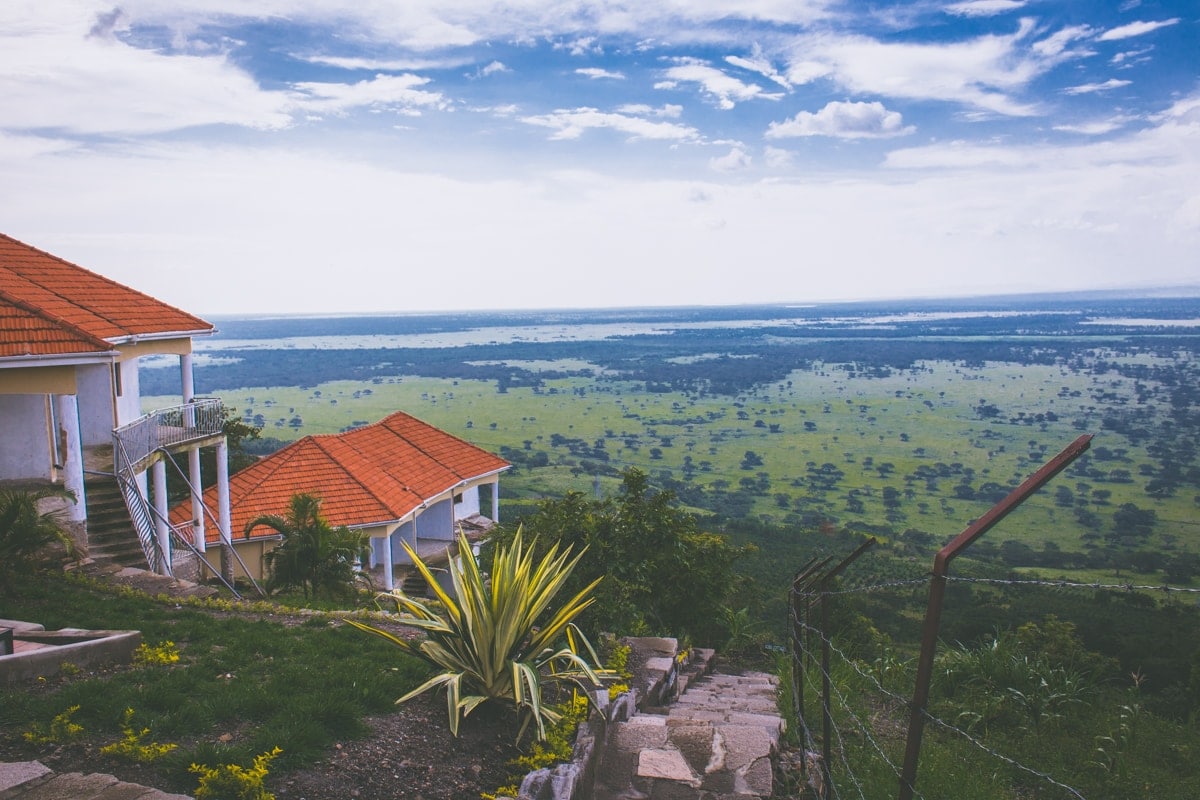
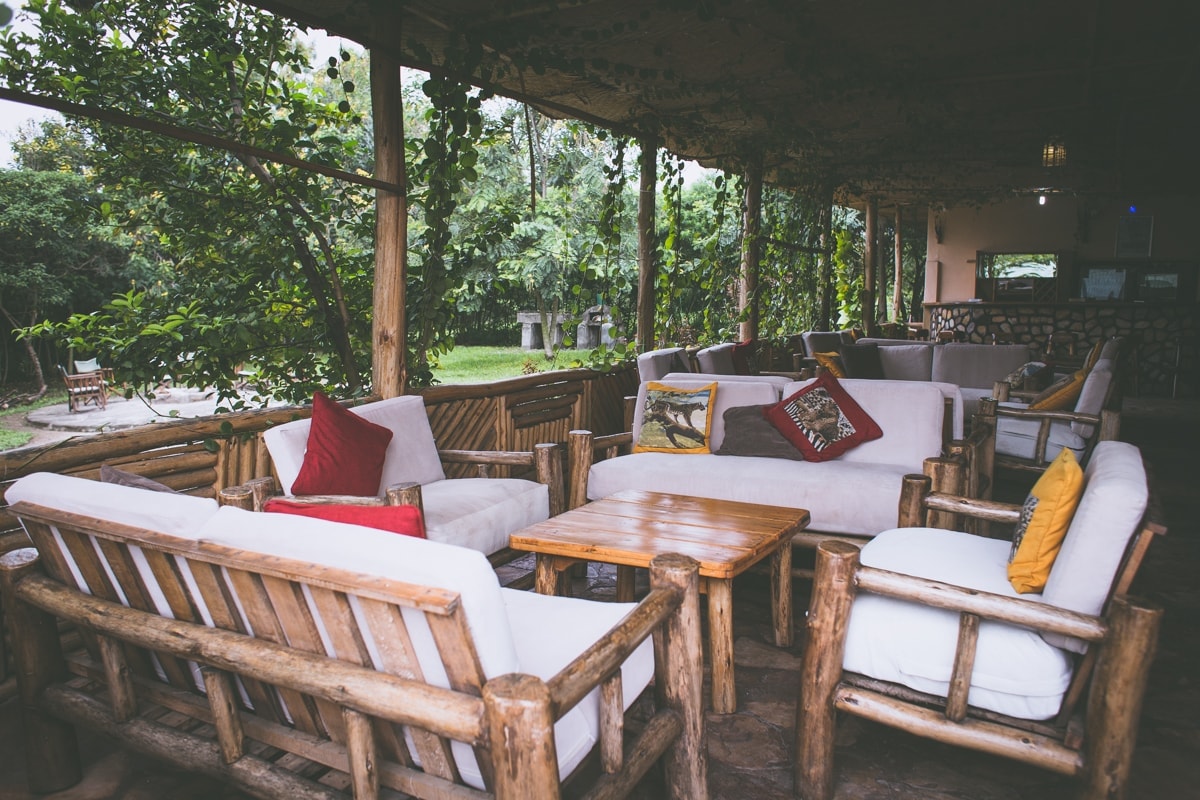
“Well, sometimes we don’t feel like getting up either,” I admit. We’re sitting in a room that serves as both reception and restaurant. In reality, it’s just a few sofas, a coffee table, and a TV. Like most hotel complexes here, this one is oversized but poorly thought out. The complex has at least 20 rooms, but parking for only five cars. The access road is dusty, full of holes, built more for a tank than a car, and runs along an enormous cliff.
The last guest here was a month ago. So we had about four Ugandans all to ourselves. Maybe more.
“We have heating at home,” Lukáš explains. The Ugandan ignores this and suddenly his eyes light up.
“And can cars drive in that? In that kind of cold?” The Ugandan is practically in stitches — I’ve never seen anyone find winter so funny. There’s clearly something hilarious about it that I absolutely don’t understand. We explain that cars drive perfectly normally in winter. This concern seems amusing to us in turn — frost and snow are a breeze compared to your average dusty road in Uganda.
Suddenly he falls quiet.
How Ugandans defend their gardens
“Hear that sound? People are running to defend the garden,” we pause for a moment, but only for a second. The power has just gone out and I can only see the white half-moon of a smile.
“Defend it. From what?”
“From elephants! They play drums for them!” We burst out laughing, then listen to the drums and singing of people in the distance before we all go to sleep. The next day, we don’t even mind that he probably added that extra $20 to our dinner bill — the amount he’d tried to charge us for camping. We give him a tip and sincerely wish that more people would visit.
Into the jungle to find mountain gorillas
The greatest experience is yet to come. We arrive at Bwindi National Park, from where we’re setting out the next day for our gorilla trekking in Uganda. We’re excited. The local camp is supposed to be top-notch (and priced accordingly), and people rate the encounter with mountain gorillas as the most amazing experience of their lives.
Rushaga Gorilla Camp is indeed beautiful, even though there’s no Wi-Fi and the food is the same as everywhere else — an imitation of American cuisine without taste or imagination. Ugandans aren’t great at organisation; we’ve had our gorilla permit for two weeks but don’t know where or when to show up. We try to find out here, but even information from the locals varies. One person says 7:30, another says 8:00.
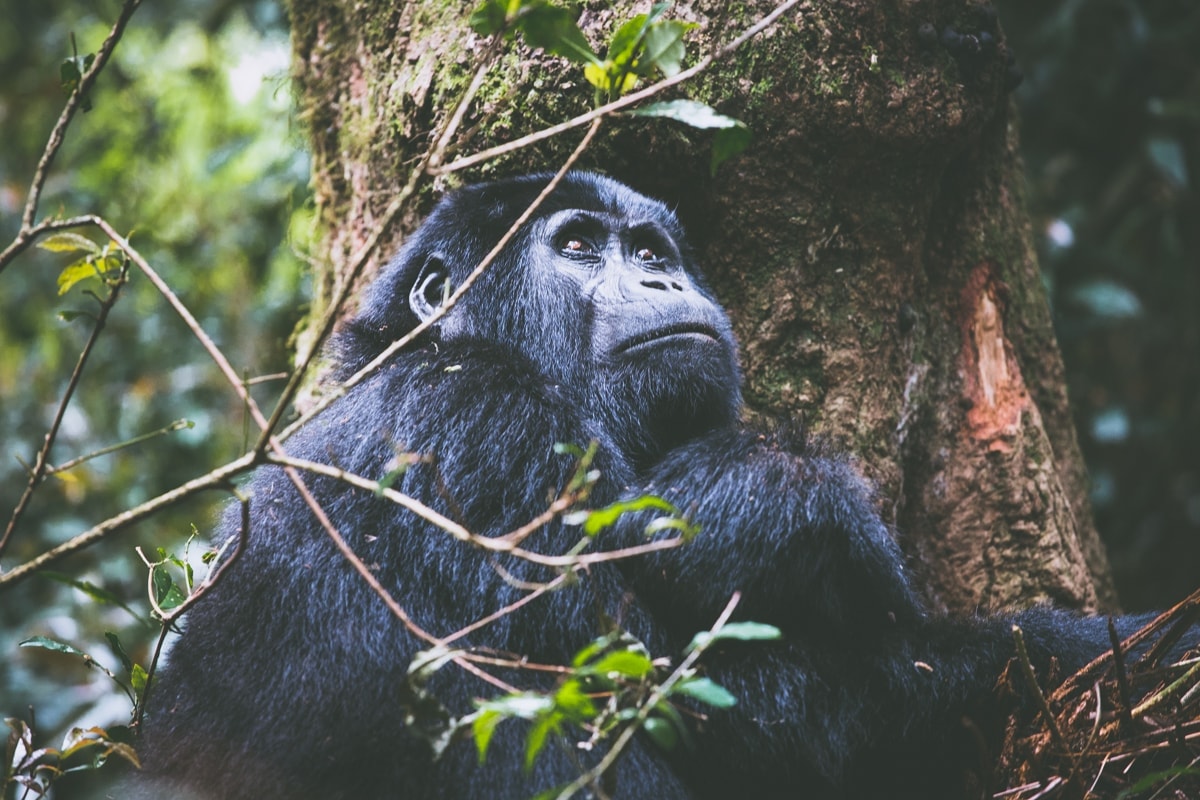
At the meeting point, it takes another two hours to split us into groups and drive to the spot where we finally set off. They try several times to convince us to take porters along. (Whom we’d then have to tip at least $15.) We don’t understand why, when all we have in our backpack is water and a snack. We don’t understand why they’re not included in the price when we’re paying $450 (in high season it’s $650).
A gorilla came to touch us and wanted to play
We’ve been wading through the jungle for hours, sinking into mud while our escorts hack a path with machetes. Just when I’m about to give up, something huge and black flashes in front of us. Our hearts are pounding. Then we hear the roaring of gorillas and the cracking of branches. The Ugandans grunt and growl at them, trying to call them in their language. Lukáš and I are cursing ourselves for paying to probably die in the arms of a 180-kilogram gorilla.
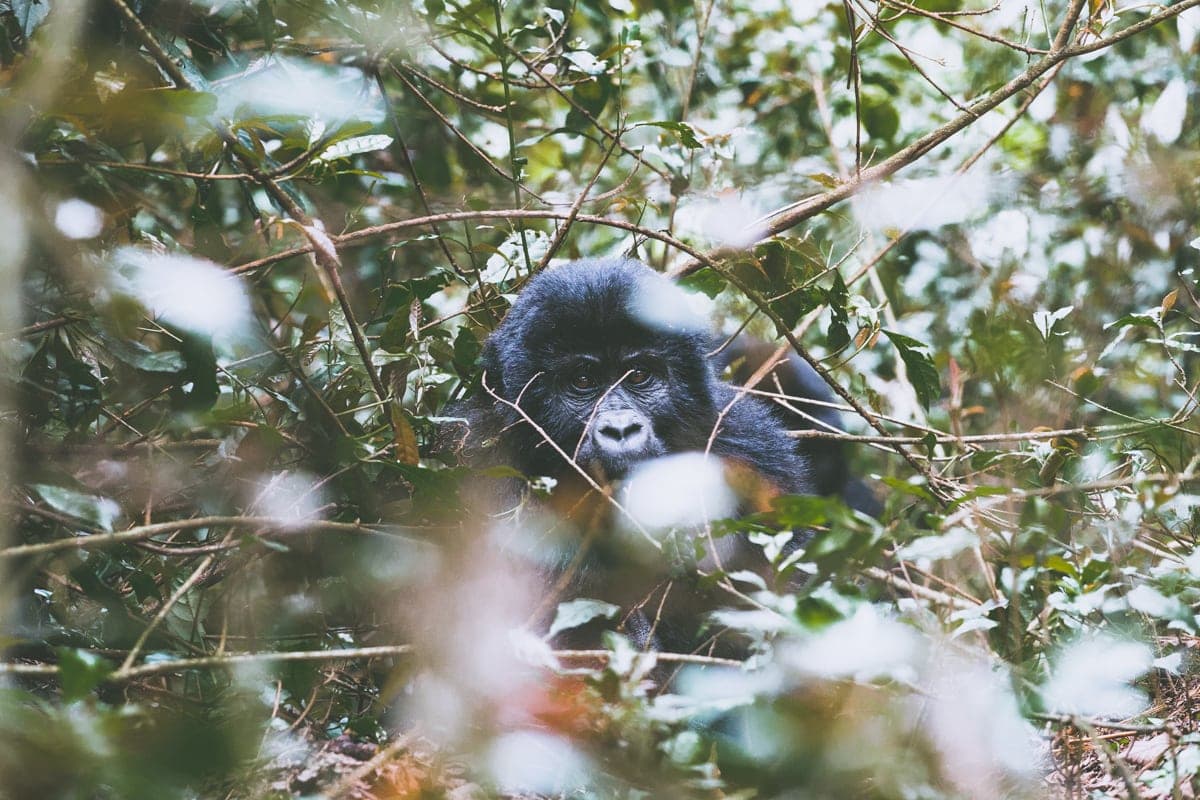
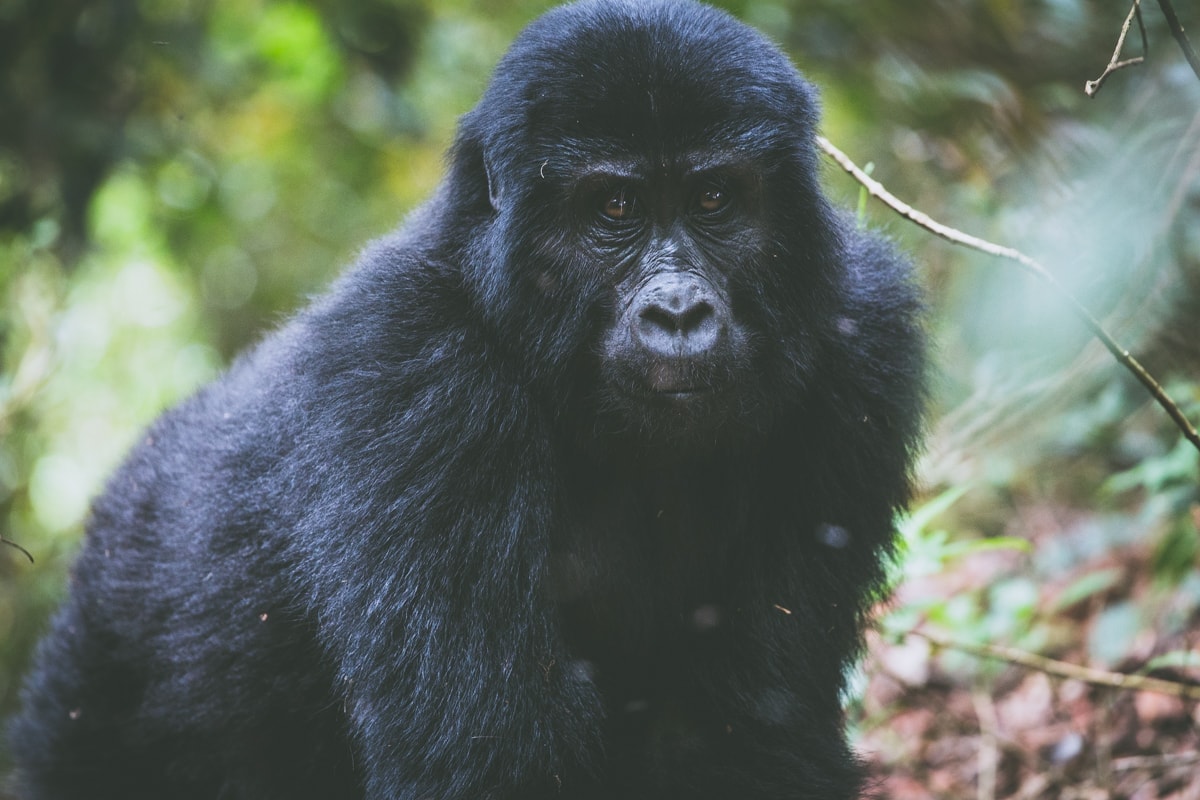
I’m the only one with a camera, so one of our escorts holds my hand and pulls me along at the front, while with his other hand he breaks and hacks through branches. He sits me under a tree and points. Suddenly I see them. We all settle down in sacred silence and watch the gorilla family. They watch us. A two-year-old comes over to touch us, then jumps back and starts celebrating. She sniffs at us. She looks me in the eyes, then suddenly runs away, comes back, and sits at the end of our semicircle. She joins us, crosses her arms over her chest, and just like us, watches the scene around her for a while.
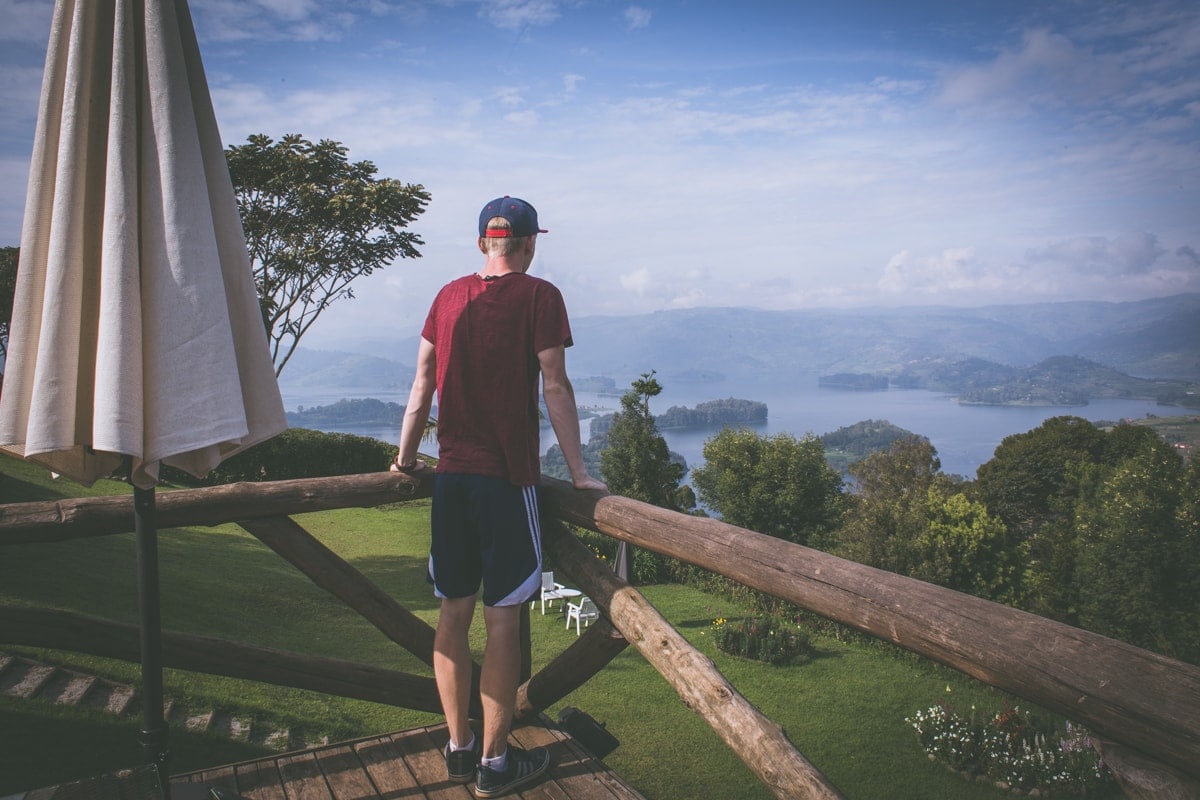
There are only about 800 of these mountain gorillas in the world, and they all live in two national parks in Uganda. One of those parks also extends into the Democratic Republic of Congo and Rwanda. You cannot encounter them anywhere else on Earth.
You should have a goat at home. Preferably two or three!
We’re running out of energy. We’ve reached Lake Bunyonyi and taken a boat to the Paradise Eco Hub, a charming and affordable little hotel with amazing reviews on one of the islands in this Ugandan water paradise. You can even swim here. We booked it through Booking.com so we’d have internet and could get some work done.
Our SIM card data was nearly gone and we needed to send a pile of emails. The internet didn’t work, of course, but it might not have mattered anyway. Our bodies decided they’d had enough and completely shut down for two nights and a day. So we spent those two days sleeping, eating, or chatting with the staff.
“Do you have goats at home?” an 18-year-old Ugandan asks me, pointing at a black goat.
“Sure, we have them,” I answer, and he looks surprised.
“And how many do you own?” Only now do I realise he’s not asking whether we have goats in our country, but whether we have them at home.
“Well, we don’t have any at home. But people in our country do keep them,” I explain.
“But you should have goats at home. A goat is a very good thing. You should have at least one, but preferably two or three,” the Ugandan instructs me, and I’m amused by the image of goats in our tiny flat back home.
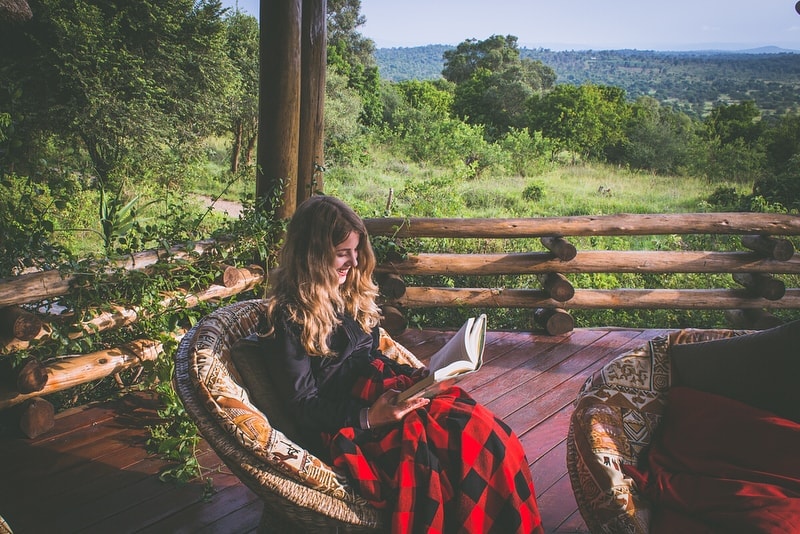
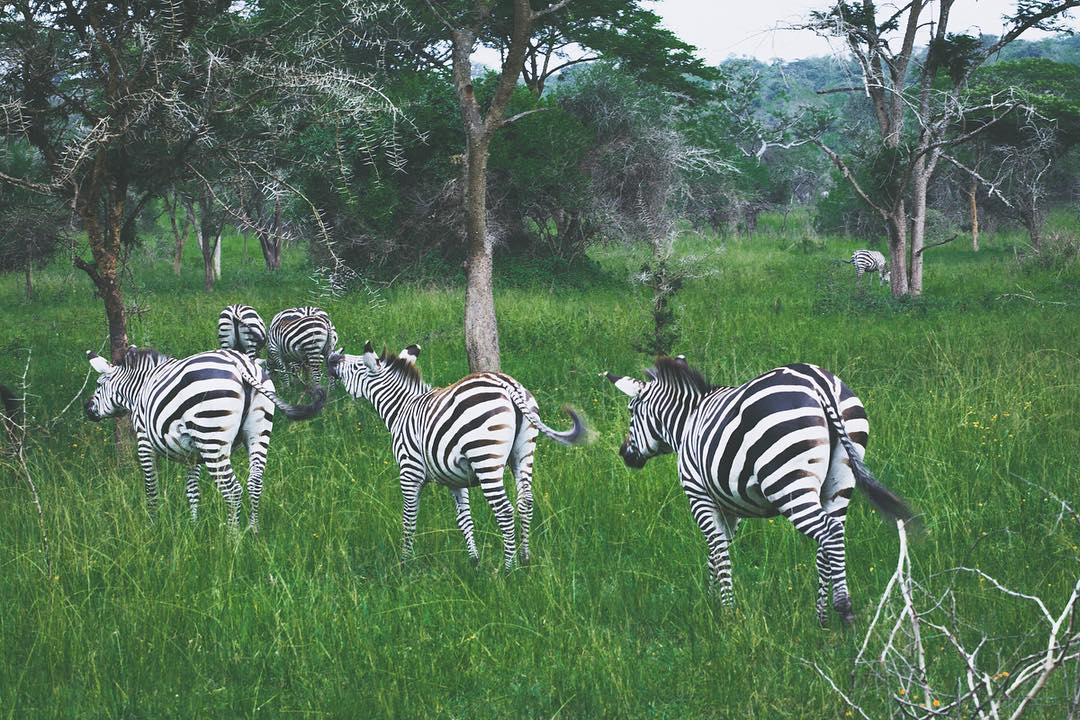
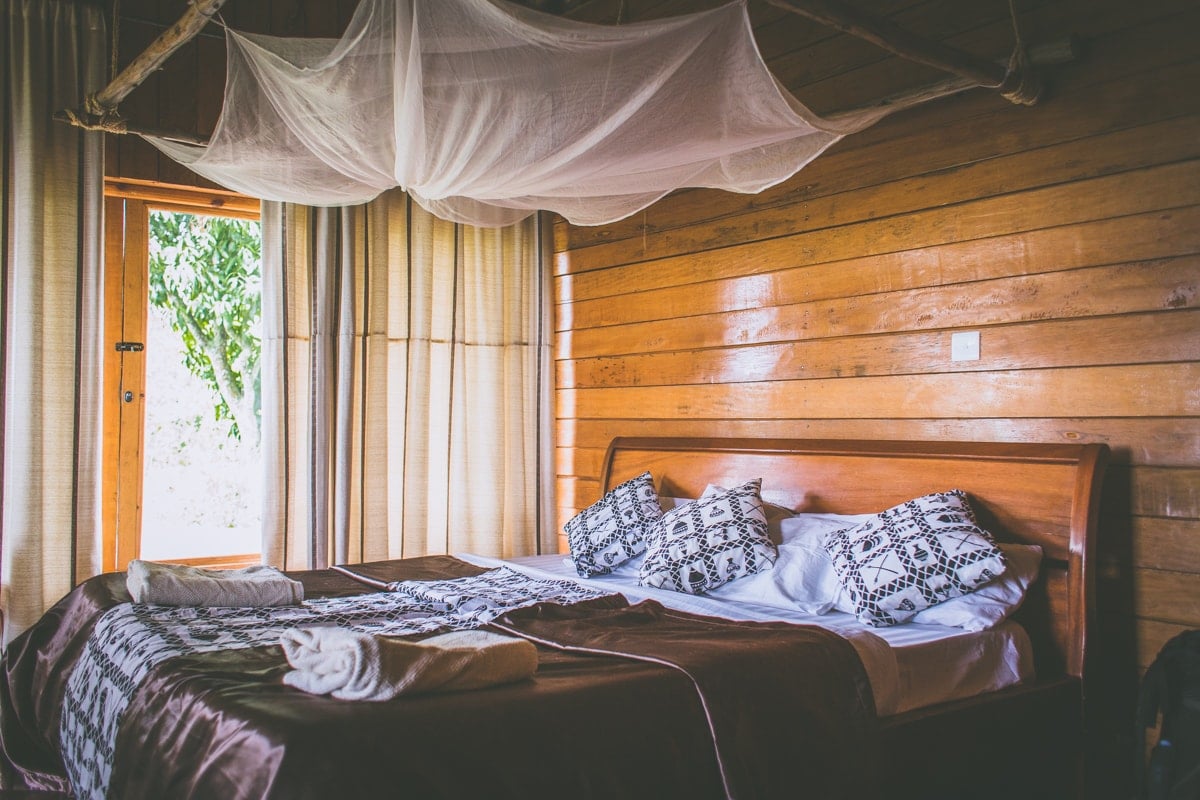
Today I’m sitting in one of those expensive tourist hotels near Lake Mburo National Park, where we spend the day watching zebras. We came here for the internet — which of course doesn’t work — but we fell in love with this oasis of calm and decided to stay. Tomorrow is our last safari, and then we’ll slowly head home.
Tips and Tricks for Your Vacation
Don’t Overpay for Flights
Search for flights on Kayak. It’s our favorite search engine because it scans the websites of all airlines and always finds the cheapest connection.
Book Your Accommodation Smartly
The best experiences we’ve had when looking for accommodation (from Alaska to Morocco) are with Booking.com, where hotels, apartments, and entire houses are usually the cheapest and most widely available.
Don’t Forget Travel Insurance
Good travel insurance will protect you against illness, accidents, theft, or flight cancellations. We’ve had a few hospital visits abroad, so we know how important it is to have proper insurance arranged.
Where we insure ourselves: SafetyWing (best for everyone) and TrueTraveller (for extra-long trips).
Why don’t we recommend any Czech insurance company? Because they have too many restrictions. They set limits on the number of days abroad, travel insurance via a credit card often requires you to pay medical expenses only with that card, and they frequently limit the number of returns to the Czech Republic.
Find the Best Experiences
Get Your Guide is a huge online marketplace where you can book guided walks, trips, skip-the-line tickets, tours, and much more. We always find some extra fun there!


