

I’ll admit that I knew almost nothing about Digby, Canada before our road trip through Nova Scotia. I knew that a ferry runs from here to New Brunswick, and somewhere online I’d read that they supposedly have the best scallops in the world. That was about it. And that’s exactly how — completely unprepared — I fell in love with one of the most charming corners of Atlantic Canada. 😊
Digby is the kind of town that doesn’t hit you over the head with monumental landmarks. There are no museum giants or Instagram hotspots with queues of tourists here. Instead, you’ll find a wooden wharf full of fishing boats, an ocean that transforms beyond recognition every six hours thanks to the Bay of Fundy tides, and a plate of golden fried scallops that’ll have you wondering whether you could emigrate to the southern coast of Nova Scotia.
In this article, you’ll find 15 tips on what to see and do in Digby and the surrounding area — from the famous waterfront and Digby Neck to whale watching on Brier Island, Acadian culture, and restaurants where you’ll have the freshest seafood of your life. I’ll also share the best time to visit, where to stay, and how much it all costs.

TL;DR
- Digby is famous for its scallops (Digby scallops) — they’re considered some of the best in the world, and you can get them fresh practically everywhere.
- Bay of Fundy with the highest tides on the planet is the main natural attraction of the entire region.
- Digby Neck, Long Island, and Brier Island form a fascinating chain of peninsulas and islands where you can spot whales, seals, puffins, and some of the most beautiful cliffs in Canada.
- A ferry runs from Digby to Saint John in New Brunswick — a practical link if you’re planning a road trip across multiple provinces.
- Acadian culture (Acadian Shore) is alive and well here, giving the town a unique Francophone character.
- Accommodation is surprisingly affordable — a pleasant B&B or motel starts from around €60 per night, even in peak season.
- The best time to visit is June to September — warm enough for swimming, whales are active, and restaurants are open.
- Allow at least 2–3 days for Digby and the area — one day isn’t enough, trust me.
When to visit Digby and how to get there
Digby sits on the southwestern coast of Nova Scotia, right on the Bay of Fundy, and is one of the key stops on any road trip through this province. Let’s look at when it’s best to visit and how to handle the logistics.
Best time to visit
Peak season runs from mid-June to mid-September. During this period, temperatures are a pleasant 18–25 °C, most restaurants and attractions are open, and — most importantly — whale watching season is in full swing. July and August are the warmest months and also when Digby Scallop Days takes place (usually early August), a festival where the whole town celebrates its most famous delicacy.
If you can’t stand crowds (and honestly there are no mega crowds in Digby, but still), September is an absolutely ideal month. Tourist numbers drop, the weather is still lovely, and the autumn colours are slowly starting to appear. We were here at the turn of summer and autumn and it was perfect.
I’d avoid the period from November to April — most whale watching companies and smaller restaurants close, and the weather tends to be rainy and windy. Digby in the off-season is a very quiet town.
How to get to Digby
By car from Halifax, it’s about 2.5 hours along Highway 101 — the drive is pleasant and takes you through lovely countryside. If you’re coming from the southern part of Nova Scotia (Lunenburg, Mahone Bay), expect 3–4 hours.
By ferry from New Brunswick — this is the famous connection. Bay Ferries operates the ferry from Saint John (NB) to Digby. The crossing takes about 2.5 hours across the Bay of Fundy and is an experience in itself — from the deck, you might spot dolphins or whales. A return ticket for a car plus two adults costs around 200–250 CAD (approximately €135–170), so it’s not exactly cheap, but it saves you hours of driving around. Book your spot in advance, especially in July and August — the ferry fills up fast.
A rental car is a must. Without a car, you simply can’t explore Digby Neck, Long Island, and Brier Island. We’ve had great long-term experience with RentalCars, which we use all over the world — it compares prices from different rental companies, saving you both time and money. You can pick up your car at Halifax airport.
Where to stay in Digby + how much does a holiday in Nova Scotia cost
Accommodation in Digby and the surrounding area is pleasantly cheaper compared to, say, Halifax or Lunenburg — and often much cosier too. Family-run B&Bs, small motels with harbour views, and cottages in nature are the norm here. Don’t look for five-star resorts, but honestly — that’s exactly what you want in a place like this.
Where exactly to stay
In central Digby (near the waterfront), stay if you want restaurants and the wharf within walking distance. A pleasant B&B room starts from 100–160 CAD (€65–105) per night. Motels along Highway 101 offer rooms from 80 CAD (€52), but they lack charm.
On Digby Neck or Long Island, smaller cabins and cottages are ideal for those who want to be closer to nature. Prices range from 120–200 CAD (€78–130) per night, and you often have a kitchenette, which comes in handy.
On Brier Island, options are more limited — there are a handful of B&Bs and guesthouses. If you’re planning whale watching, it’s worth spending at least one night here so you don’t have to rush through two ferries in the morning. Just book well in advance, as capacity is small.
How much does a holiday in Digby cost (approximate budget for two)
| Item | Price per day (2 people) |
| Accommodation (B&B / motel) | 100–160 CAD (€65–105) |
| Food (lunch + dinner at a restaurant) | 60–100 CAD (€39–65) |
| Petrol | 20–35 CAD (€13–23) |
| Whale watching | 70–80 CAD/person (€46–52) |
| Ferry to Long/Brier Island | Free! |
For 3 days in Digby and the area, budget around 800–1,200 CAD (€520–780) for two — including accommodation, food, petrol, and one whale watching trip. Nova Scotia isn’t the cheapest Canadian province, but compared to British Columbia or Ontario, it’s more affordable. And for those scallops… it’s absolutely worth it. 😁
Digby and surroundings: 15 things to see and do
Let’s get to the most important part — what to actually do in Digby and the surrounding area? I’ve put together 15 tips covering the town itself, the entire Digby Neck all the way to Brier Island, nearby beaches, and Acadian culture. Some are classic “must-sees,” while others are more like hidden gems you’ll only discover if you’re not afraid to venture off the main road.
1. Digby Wharf — the heart of town with ocean air
The Digby waterfront is where the town truly comes alive. This wooden wharf is home to one of the largest scallop fishing fleets in the world — and that’s no exaggeration. In the morning, you can watch fishermen returning with their catch; in the afternoon, sit on a bench and observe how the Bay of Fundy tides dramatically change the water level.
A stroll along the wharf is free and takes about 20–30 minutes. At the end of the pier, you’ll find information boards about the history of scallop fishing in Digby and the Bay of Fundy. If you’re lucky enough to be there when the boats come in, the fishermen are usually friendly and happy to show you what they caught today.
Right by the harbour, there are several restaurants specialising in seafood (more on those in the food section below), making the wharf the ideal place to start and end your day. It’s most beautiful at sunset, when the entire harbour turns orange and you’re sitting with a plate of scallops and a glass of wine, wondering why you didn’t come here sooner. 😊

2. Digby Scallops — taste the world’s most famous scallops
This isn’t a tip about a specific place, but about an experience that defines all of Digby. The town is literally synonymous with scallops — Digby scallops are considered some of the best on the planet thanks to the icy waters of the Bay of Fundy, which give them a sweeter and more delicate flavour than scallops from warmer waters.
You can get them at practically every restaurant in town — fried, grilled, buttered, in chowder, on pasta. The local classic is pan-seared scallops with a squeeze of lemon and herb butter. A serving at a restaurant typically costs 18–30 CAD (€12–20) and portions are generous.
If you want the absolute freshest, stop by Digby Fish Market or one of the vendors right at the harbour — buy them raw and prepare them yourself if your accommodation has a kitchenette. The locals say the best way to cook them is the simplest — a bit of butter, salt, pepper, and two minutes per side. And they’re right.
If you’re in Digby in early August, you’ll hit Digby Scallop Days — a festival where the whole town celebrates its most famous delicacy with live music, boat races, and of course tonnes of scallops in every form imaginable.
3. Bay of Fundy — the highest tides on Earth
The Bay of Fundy is a natural phenomenon you have to see with your own eyes to believe. The difference between high and low tide here reaches up to 16 metres — that’s the height of a five-storey building. In six hours, the landscape transforms completely: where there was ocean, there’s suddenly a muddy plain full of starfish and seaweed, and vice versa.
From Digby, the Bay of Fundy is literally a few steps away — the entire town sits on its southern shore. The best way to experience the contrast is to visit the beach or wharf twice a day — once at high tide and once at low tide. The difference will blow your mind.
For an even more dramatic experience, head to Burntcoat Head on the other side of the bay (about 3 hours by car), where the world’s highest tides are officially measured. But honestly — even right in Digby and on Digby Neck, the tidal effect is fascinating and well worth your attention. Download an app or check the website tides.gc.ca to find exact tide times for your location — planning around them will significantly enhance your experience.
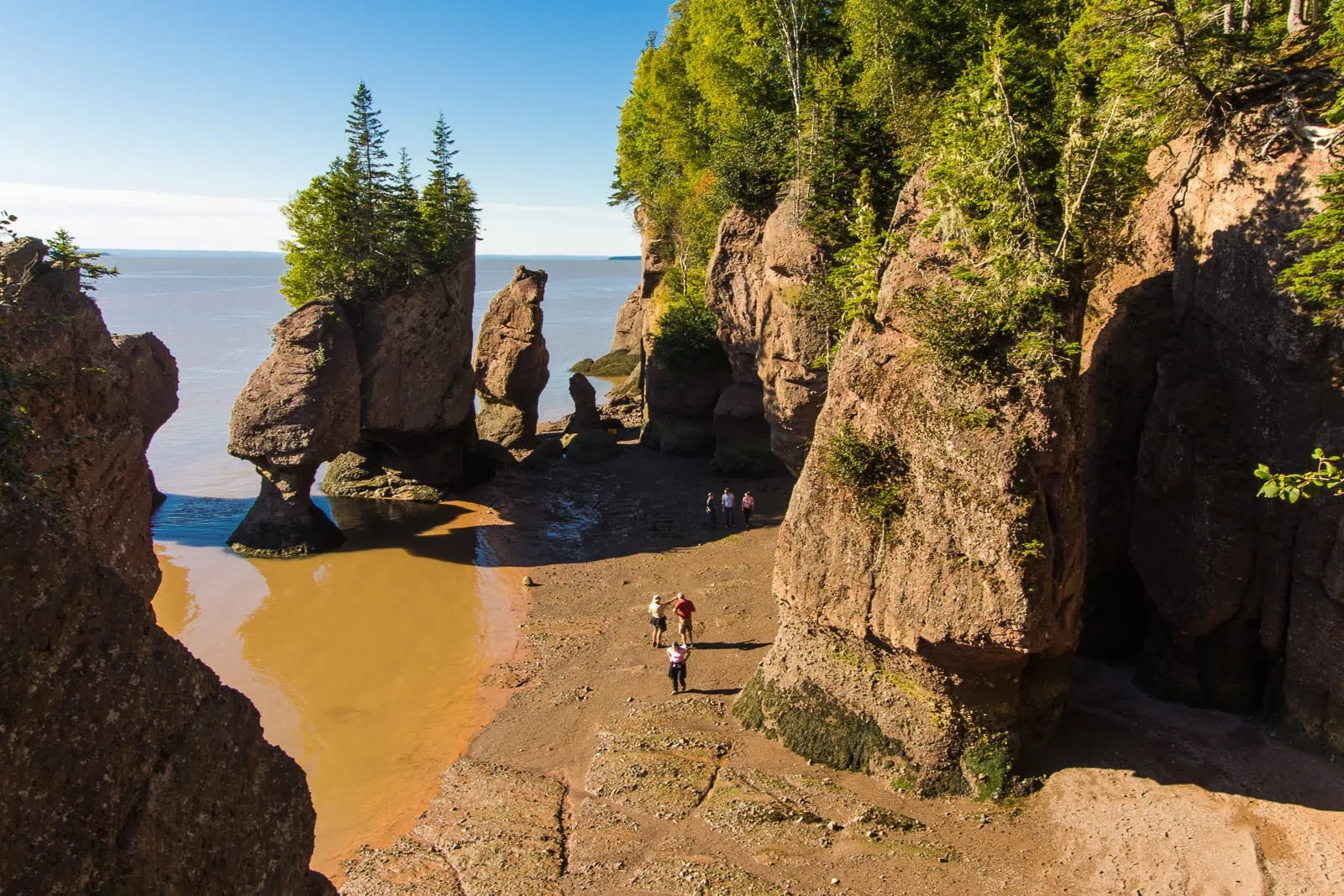
4. Digby Neck — a peninsula where time stands still
Digby Neck is a narrow peninsula stretching about 45 km southwest of Digby and continuing across two small islands (Long Island and Brier Island) out into the open Atlantic. It’s one of the most beautiful and peaceful places in all of Nova Scotia — and honestly, one of the main reasons it’s worth making the trip to Digby at all.
The drive along Digby Neck is an experience in itself. Route 217 winds along a narrow strip of land with ocean on both sides — the Bay of Fundy to the left, St. Mary’s Bay to the right. Along the way, you’ll pass tiny fishing villages where time seems to have stopped somewhere in the 1980s. Sandy Cove, Centreville, Tiverton — each has its own small harbour, a handful of houses, and absolute tranquillity.
Don’t plan Digby Neck as an hour-long stop. Ideally, set aside an entire day for the whole peninsula including Long and Brier Islands, or better still a day and a half. The round trip with exploration of all the stops takes at least 5–6 hours, not counting waiting for ferries.
5. Balancing Rock — a geological wonder defying gravity
On Long Island (just past the first ferry from Digby Neck), you’ll find one of the most iconic natural attractions in all of Nova Scotia — Balancing Rock, a massive basalt column balancing on a narrow rocky base. It looks like it could topple at any moment, but it’s been standing here for thousands of years.
The trail to Balancing Rock is about 2.5 km one way from the car park on Route 217. The path is fairly easy, but the final section involves 235 wooden steps down to the shoreline (and of course back up again 😅). The entire round trip takes about 1.5–2 hours. At the end, you’re rewarded not only with the famous rock but also a stunning view of the Bay of Fundy.
Tip: Go at low tide, when the rock formation is even more dramatic and you can see more of the coastal formations. And bring proper shoes — the trail can be slippery after rain. If you’re looking for quality footwear for such hikes, check out our hiking boots guide.
6. Long Island — a peaceful island with fishing villages
Long Island lies between Digby Neck and Brier Island, and you reach it via a free ferry from East Ferry (at the end of Digby Neck) to Tiverton. The ferry runs every half hour, the crossing takes about 5 minutes, and it’s free — for cars and passengers alike. No reservation needed, just drive up and onto the boat.
Tiverton, the main village at the northern end of the island, is a charming fishing port where you can watch lobster traps being stacked on the pier and buy fresh seafood straight from the fishermen. There are a few small cafés and shops in the centre.
On Long Island, be sure to visit Boar’s Head Lighthouse — a lighthouse on a dramatic cliff edge with views over the Bay of Fundy. The walk to the lighthouse is short (about 15 minutes from the car park) and the view is worth it. It’s one of those places where you sit on a rock, listen to the waves, and forget about the rest of the world for a while.
Drive through the island slowly, stopping at small harbours and beaches. From Tiverton to the southern end of the island (Freeport, where the ferry to Brier Island departs), it’s about a 20-minute drive — but with stops, allow an hour.
7. Brier Island — whales, puffins, and the end of the world
Brier Island is the last link in the chain of Digby Neck → Long Island → Brier Island, and it’s the place that excited us the most on our entire trip to Digby. You reach the island via a second free ferry from Freeport (Long Island) to Westport (Brier Island) — again, it runs every half hour and takes just a few minutes.
Brier Island has only about 200 permanent residents, one shop, a few B&Bs, and two whale watching companies. And it’s the whales that draw most people here. But even if you skip whale watching, the island itself is stunning — dramatic basalt cliffs, moss, mud flats at low tide, and the feeling of being at the end of the world (because technically, you are).
Walk through Brier Island Nature Preserve — a network of trails leads through bogs, along cliffs, and to the lighthouse on the island’s western tip. In summer, Atlantic Puffins nest here, though for the best puffin viewing, a boat trip is better (whale watching operators often include them on their route). You can also spot seals resting on rocks at low tide.
Practical tip: There’s no petrol station on Brier Island. Fill up on Digby Neck or in Digby before you set off. Food options are limited too — Westport has a few small eateries, but don’t expect a wide selection.
8. Whale watching from Brier Island — a once-in-a-lifetime experience
If whale watching is on your bucket list, Brier Island is one of the best spots on the east coast of North America to see them. The waters around the island are rich in nutrients thanks to the mixing currents of the Bay of Fundy and the Atlantic, attracting humpback whales, fin whales, right whales, and dolphins.
Two main companies offer whale watching trips:
- Brier Island Whale and Seabird Cruises
- Mariner Cruises Whale & Seabird Tours
Both operate from Westport and offer 3–4 hour trips for approximately 70–80 CAD (€46–52) per person. The season runs from June to October, with August and September being the best for whales — the chance of a sighting during this period is reportedly over 95%.
We saw three humpback whales, one of which breached about 50 metres from our boat. Lukáš caught it on video and I was so startled that I dropped my camera. Fortunately, it landed on the deck and not in the ocean. 😅
Book ahead, especially in July and August. And bring warm clothing — even when it’s 25 °C on land, it’s noticeably colder on the water. Several layers and a windbreaker are essential.
9. Point Prim Lighthouse — one of the oldest lighthouses in Nova Scotia
A short distance from Digby, along the coast heading south, stands Point Prim Lighthouse — one of the oldest lighthouses in the province. It’s not the most photogenic lighthouse you’ll see in Nova Scotia (that’s probably Peggy’s Cove), but it has its own charm — it sits on a quiet rocky headland surrounded by nothing but ocean and wind.
A short path leads to the lighthouse from a small car park. The surrounding rocks are perfect for sitting and watching the tide come in. It’s a perfect 30–45 minute stop, especially if you’re driving along the coast and need a break from the road.
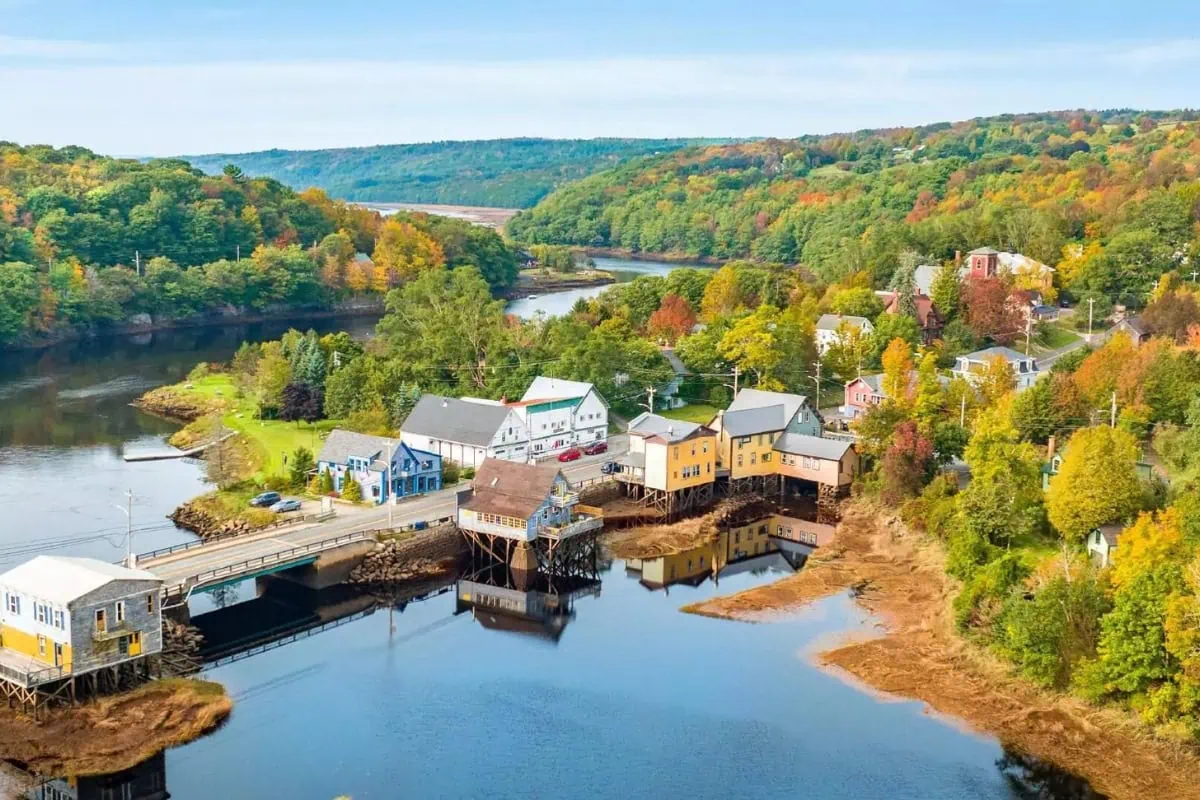
10. Bear River — the “Little Switzerland” village on stilts
About 15 minutes by car from Digby lies Bear River — a tiny village nicknamed “The Switzerland of Nova Scotia” because of the steep hills surrounding the river. That’s a slightly exaggerated comparison (it’s definitely not the Alps 😅), but the village is genuinely charming — a row of buildings stands on wooden stilts above the river and at high tide, they look as though they’re floating on water.
Bear River is known for its arts community — you’ll find several galleries, studios, and craft workshops. Bear River First Nation Heritage and Cultural Centre offers insight into the culture of the indigenous Mi’kmaq people. The village is small — you can walk through it in an hour — but the atmosphere is unique.
In summer, the Bear River Cherry Carnival takes place (usually July/August), a festival with live music and local cherries. If the festival isn’t on, at least stop by one of the local cafés or galleries.
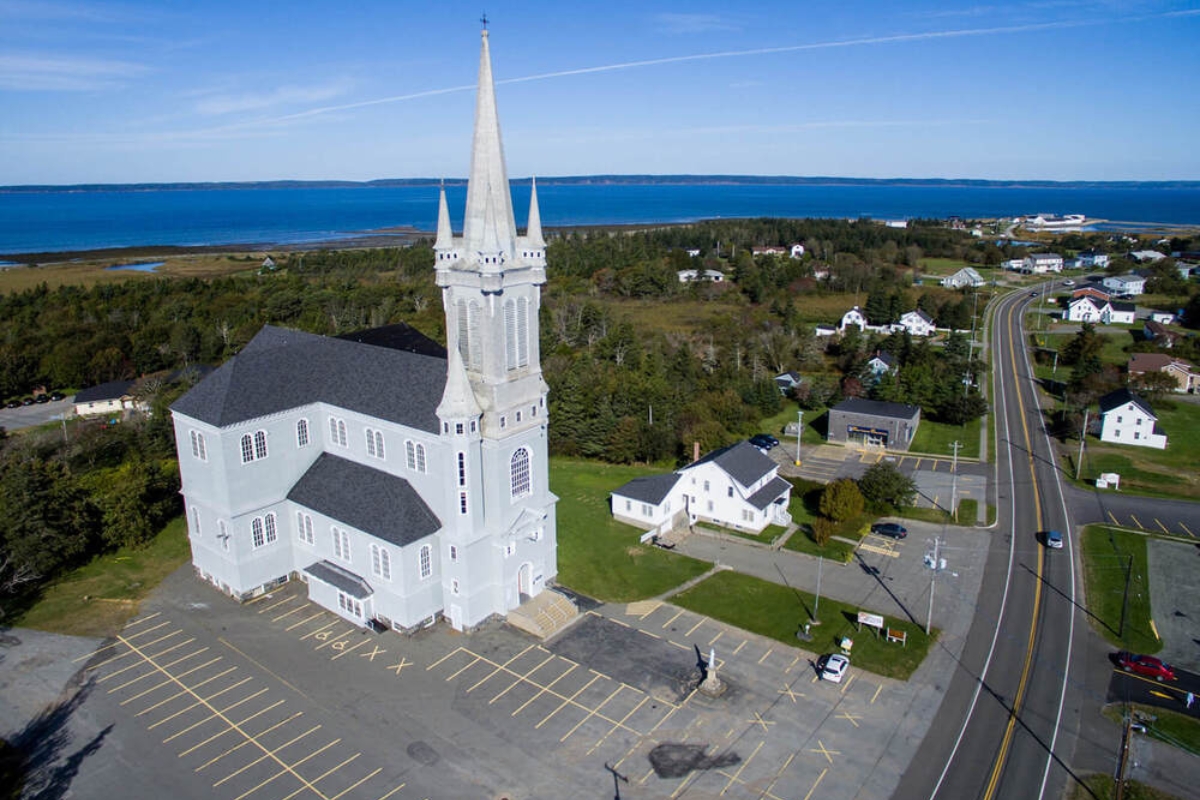
11. Acadian Shore — Francophone culture within reach
South of Digby, along St. Mary’s Bay, stretches the Acadian Shore (Municipality of Clare) — an area home to a strong Acadian (Francophone) community. It’s a fascinating cultural mix that you won’t find in such concentration anywhere else in Canada.
The main stop is the village of Church Point (Pointe-de-l’Église), where you’ll find Église Sainte-Marie — reportedly the largest wooden church in North America. The building is impressive and a guided tour lasts about 30 minutes. Admission is by donation (suggested contribution 5 CAD / €3).
On the Acadian Shore, people speak a unique dialect of French (Acadien), eat rapure (a traditional Acadian potato pie with meat), and in summer celebrate the Festival Acadien de Clare — one of the largest Acadian festivals in the world. If you’re interested in history, Rendez-vous de la Baie in Church Point is an interpretive centre that explains Acadian history and culture.
Tip: Even if you don’t speak French, don’t worry — most people speak English too and are used to tourists. But if you attempt a “Bonjour!”, their faces will light up.
12. Kejimkujik Seaside Adjunct — wild beaches without the crowds
About an hour’s drive from Digby (on the southern coast of Nova Scotia) lies Kejimkujik National Park Seaside Adjunct — the coastal section of Kejimkujik National Park, which is one of the best-kept secrets in the entire province. There are no car parks full of coaches or souvenir stalls here. Just kilometres of untouched white sand beaches, lagoons, and wild nature.
Trails of about 3–4 km lead from the car park to the two main beaches (Harbour Rocks and St. Catherine’s River Beach). The walk is flat and easy, but it’s precisely this distance that ensures you’ll find very few people on the beaches — sometimes you’ll have them entirely to yourself.
Note: There is no public transport here and mobile signal is non-existent. Bring plenty of water, snacks, and let someone know where you’re heading. Park entry costs 8.50 CAD (€5.50) per person/day (Parks Canada parking fees).
13. Annapolis Royal — a historic town near Digby
About 40 minutes by car from Digby lies Annapolis Royal, one of the most historically significant towns in Canada — it was the site of the first European settlement in North America north of Florida (1605). Today it’s a charming town with Fort Anne National Historic Site, where you can explore the remains of an old fortress and a museum.
Annapolis Royal Historic Gardens are beautiful gardens spread across 7 hectares, featuring Acadian, Victorian, and modern garden designs. Admission is around 15 CAD (€10) and you should allow at least an hour for a stroll.
The main street (St. George Street) is full of small shops, galleries, and cafés. If you enjoy ghost tours, Annapolis Royal offers the Candlelight Graveyard Tour — a night-time tour of the historic cemetery by candlelight, considered one of the best ghost tours in Canada. A bit morbid? Perhaps. Fun? Absolutely.
14. Ferry crossing to Saint John (New Brunswick)
If you’re planning a road trip across broader Atlantic Canada (which I’d highly recommend), the ferry from Bay Ferries running from Digby to Saint John in New Brunswick is both a practical and scenic link between two provinces.
The ferry The Fundy Rose runs once or twice daily (depending on the season), and the crossing across the Bay of Fundy takes approximately 2.5 hours. On board, there’s a café, a small shop, and an outdoor deck where you can watch the coastline and, with a bit of luck, spot marine wildlife.
Prices (approximate, 2025):
- Adult passenger: approximately 45 CAD (€29) one way
- Car (standard): approximately 110 CAD (€72) one way
- Return tickets work out cheaper
Important: Book online in advance on the Bay Ferries website, especially during the summer months. Arrive at the terminal at least one hour before departure — loading cars takes time and a late arrival means they may not take you.

15. Sunset from Digby Pines — a scenic end to the day
Digby Pines Golf Resort & Spa is a historic hotel in the style of a Norman château that has stood on a hill above the town since 1929. Even if you’re not staying here (prices are higher, around 200–300 CAD / €130–195 per night), come for dinner or a drink at sunset.
From the hotel’s terrace and expansive gardens, you get one of the most beautiful views of Annapolis Basin and Bay of Fundy. At sunset, the entire bay turns shades of orange and purple, and it’s exactly the kind of moment that makes you think Nova Scotia might be the most beautiful place in Canada.
The hotel also has a golf course and spa if you have a free day and want to treat yourself to a bit of luxury. But even just a stroll through the gardens and the view alone are worth the stop.

What to eat and drink in Digby: a foodie travel guide
In Digby, it’s all about seafood. That’s the alpha and omega of the local gastronomy. But let’s get specific — where to eat and what to order.
Digby restaurants we recommend
Captain’s Cabin — right by the wharf, a classic seafood restaurant with harbour views. The scallops here are of course excellent (pan-seared and deep-fried), portions are generous, and prices are reasonable (mains 18–28 CAD / €12–18). The atmosphere is casual — turn up in shorts and a t-shirt, nobody cares.
Fundy Restaurant — another local classic, slightly simpler setting but with fresh fish and scallops. The fish & chips here are excellent and well priced.
Shoreline Restaurant (on Digby Neck, Sandy Cove) — if you’re driving through Digby Neck, stop here for lunch. A smaller restaurant with a homely feel and views over the bay. The chowder (thick fish/scallop soup) here is phenomenal.
Royal Fundy Seafood Market — if you want to buy fresh seafood to cook at home (in accommodation with a kitchenette), this is the place. Scallops, lobster, shrimp — all fresh from today’s catch.
Must-try dishes
- Digby scallops — in any form, but pan-seared with herb butter is the classic
- Lobster roll — a bun packed with lobster meat, a quintessential Atlantic Canadian treat
- Seafood chowder — a creamy soup with a mix of seafood, perfect on chilly days
- Rapure / Rappie Pie — if you’re heading down the Acadian Shore, try this traditional Acadian speciality (a potato pie with chicken or lobster). It looks… odd, but tastes fantastic.
- Blueberry grunt — a traditional Nova Scotian dessert with blueberries, served warm with ice cream. Blueberries grow wild here and in August, they’re absolutely everywhere.
Practical travel tips
Internet and mobile data
In Digby itself, WiFi in hotels and cafés works fine. On Digby Neck, Long Island, and Brier Island, however, expect very weak or no signal at all. Download offline maps (Google Maps or Maps.me) in advance — you’ll need them.
If you want data throughout Canada without any hassle, check out our review of the Holafly eSIM — it works brilliantly and you don’t have to bother with local SIM cards.
What to pack
- A windbreaker and warm layer — even in summer, it’s noticeably colder on the coast and on the water
- Proper shoes — for trails (Balancing Rock, Kejimkujik Seaside), you need at least sturdy trainers, ideally hiking boots
- A rain jacket — Nova Scotia weather is unpredictable and rain can arrive at any time
- Binoculars — for whale watching and birdwatching on Brier Island
- Cash — smaller businesses and markets on the islands don’t always accept cards
If you’re travelling with carry-on only, here’s our guide on how to pack everything into hand luggage.
Flights and transport
The nearest international airport is Halifax Stanfield International Airport (YHZ). From the UK, you can get here via London direct (seasonal routes operate in summer), or through Toronto or Montreal year-round. Search for cheap flights on Kiwi — it’s our favourite portal for finding connections.
From Halifax, rent a car (you can’t do Nova Scotia without one) and hit the road. We’ve had consistently great experiences with RentalCars.
Travel insurance
Don’t forget travel insurance for a trip to Canada — healthcare here costs astronomical amounts. For shorter trips, we opt for a standard travel policy, and for longer ones, we use SafetyWing.
FAQ — Frequently asked questions about Digby, Nova Scotia
What is Digby, Nova Scotia famous for?
Digby is world-renowned for its scallops (Digby scallops), which are considered some of the tastiest in the world thanks to the cold waters of the Bay of Fundy. The town is home to one of the largest scallop fishing fleets, and scallops form the backbone of the local economy and cuisine. Digby is also a gateway for trips to Digby Neck and Brier Island and the port for the ferry to New Brunswick.
Is Digby worth visiting?
Absolutely — but with one condition: you have to love nature, peace, and seafood. If you’re looking for buzzing nightlife or big-city attractions, Digby isn’t for you. But if you love wild coastlines, whale watching, authentic fishing villages, and some of the best seafood in Canada, then Digby is paradise on earth. I’d recommend spending at least 2–3 days to make the trip truly worthwhile.
How many days should you spend in Digby?
Ideally 2–3 days. One day for Digby itself and the surrounding area (wharf, Bear River, Annapolis Royal), one day for Digby Neck, Long Island, and Brier Island (including whale watching), and optionally a third day for the Acadian Shore or Kejimkujik Seaside. In a single day, you’d only manage the town and harbour — it would be a shame to come all this way and not see Brier Island.
How do you get from Digby to Brier Island?
Drive along Route 217 through Digby Neck to East Ferry, where you board a free ferry to Long Island (5-minute crossing). Drive across Long Island and from Freeport, board a second free ferry to Brier Island (again, just a few minutes). Both ferries run every half hour and no reservation is needed. The entire journey from Digby to Brier Island takes about 1.5 hours (including waiting for ferries).
When is the best time for whale watching near Digby?
June to October, with August and September being the absolute best for whales. During this period, the chance of spotting humpbacks, fin whales, or dolphins is over 95%. Whale watching trips depart from Brier Island (Westport) and last 3–4 hours. The price is around 70–80 CAD (€46–52) per person.
Is Digby one of the prettiest towns in Nova Scotia?
Digby is beautiful in a different way to, say, Lunenburg (UNESCO) or Peggy’s Cove (iconic lighthouse). Digby captivates you with its authenticity — it’s a working fishing town, not a tourist attraction. The most beautiful part of Digby is its surroundings — Digby Neck, Brier Island, Bay of Fundy. If I had to name the “prettiest towns” in Nova Scotia, I’d put Lunenburg, Mahone Bay, Annapolis Royal, and Digby with its surroundings on the list.
How much does a holiday in Digby cost?
Digby is one of the more affordable destinations in Nova Scotia. B&B or motel accommodation starts from 100 CAD (€65) per night, and a seafood dinner costs 20–35 CAD (€13–23) per person. Whale watching costs 70–80 CAD (€46–52). For three days for two people, budget around 800–1,200 CAD (€520–780) including everything. Ferries to Long Island and Brier Island are free, which is a pleasant surprise.
Tips and Tricks for Your Vacation
Don’t Overpay for Flights
Search for flights on Kayak. It’s our favorite search engine because it scans the websites of all airlines and always finds the cheapest connection.
Book Your Accommodation Smartly
The best experiences we’ve had when looking for accommodation (from Alaska to Morocco) are with Booking.com, where hotels, apartments, and entire houses are usually the cheapest and most widely available.
Don’t Forget Travel Insurance
Good travel insurance will protect you against illness, accidents, theft, or flight cancellations. We’ve had a few hospital visits abroad, so we know how important it is to have proper insurance arranged.
Where we insure ourselves: SafetyWing (best for everyone) and TrueTraveller (for extra-long trips).
Why don’t we recommend any Czech insurance company? Because they have too many restrictions. They set limits on the number of days abroad, travel insurance via a credit card often requires you to pay medical expenses only with that card, and they frequently limit the number of returns to the Czech Republic.
Find the Best Experiences
Get Your Guide is a huge online marketplace where you can book guided walks, trips, skip-the-line tickets, tours, and much more. We always find some extra fun there!


