

Got a flight coming up and you’re travelling with just a carry-on bag? It’s not for everyone, but it’s perfectly doable — especially if you’re only going away for a few days. Wondering how to master carry-on packing tips without losing your mind? Don’t worry, in this article you’ll find 20 best tips for packing a carry-on bag without leaving anything essential at home.
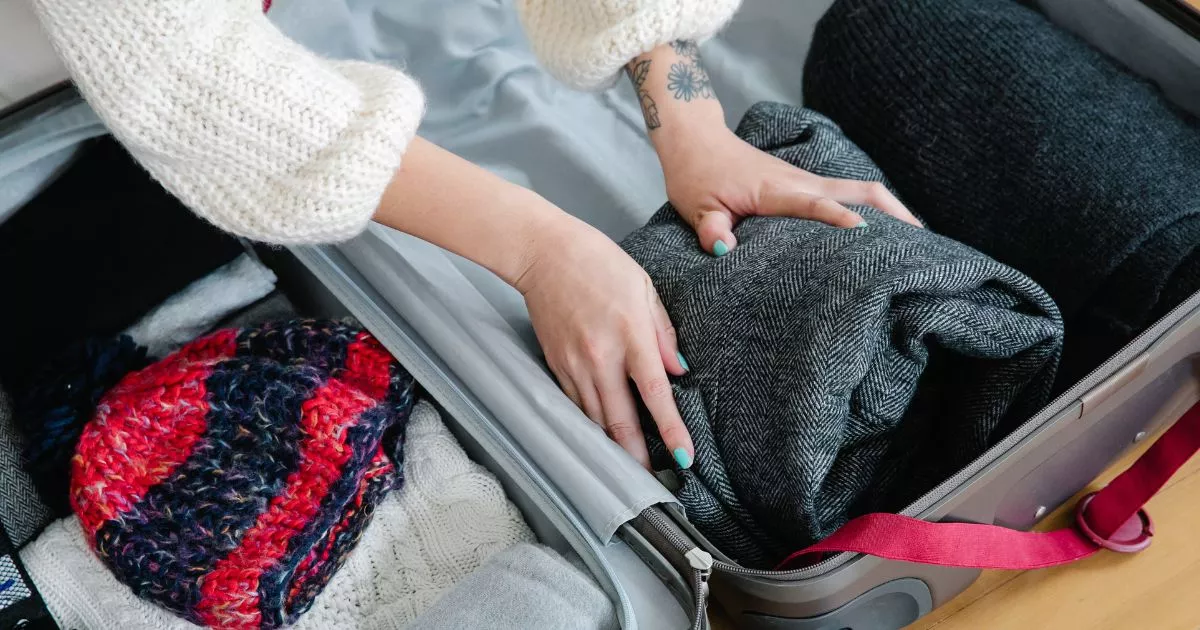
What is a carry-on bag
A carry-on bag is a smaller suitcase, backpack, handbag or bag that you can take with you into the aircraft cabin. It’s designed for your essential needs during the flight and must meet the size and weight limits set by the airline. Its main advantage is easy access throughout the flight, and most airlines don’t charge extra for this bag. So if you can manage to pack everything into a backpack, you’ll save money on your ticket.
💡You might also like: The best carry-on bags can be found HERE.
TIP: Check with your airline how large your free carry-on bag can be. Some, especially low-cost carriers, only allow a small personal item, not a full-size cabin bag.
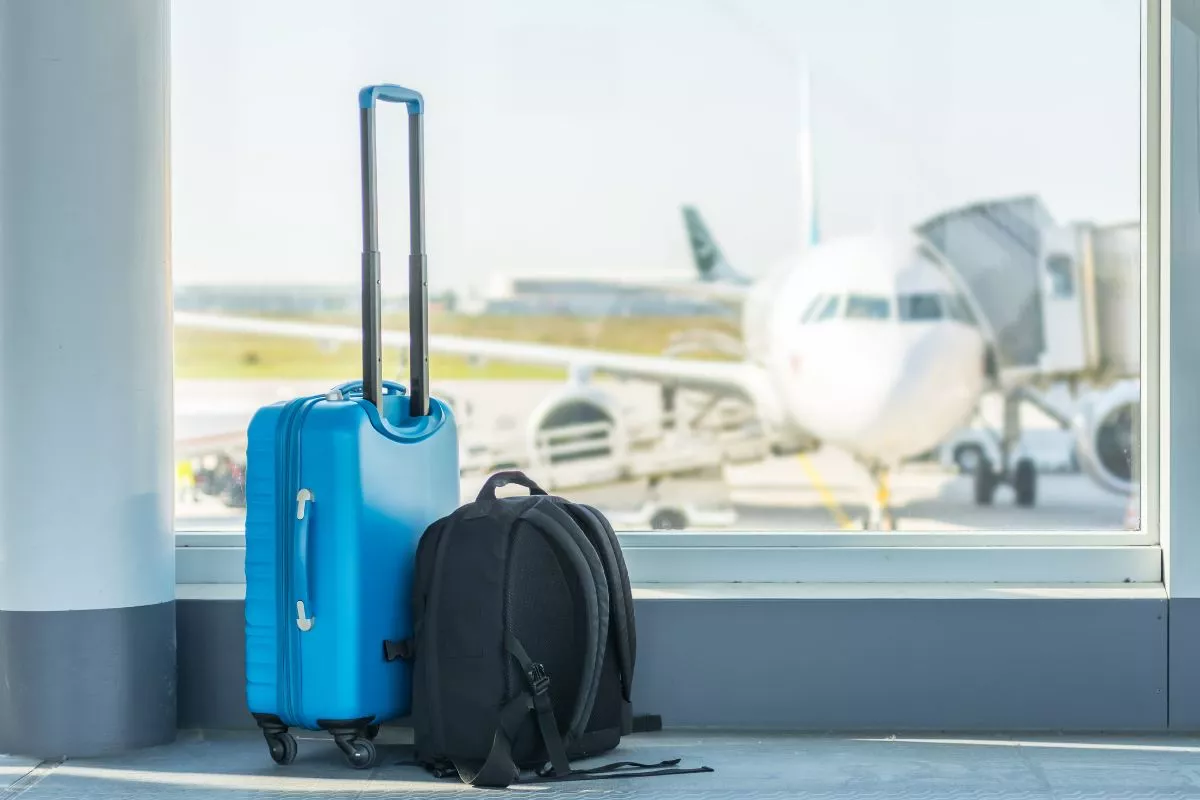
Allowed dimensions
Every airline has different rules for carry-on bag dimensions and weight, so always check the specific information on the airline’s website before your flight.
For a quick overview, here’s a table with the most common airlines:
| Airline | Dimensions | Weight | Notes |
| Ryanair | 40 x 20 x 25 cm | 10 kg | must fit under the seat, larger cabin bag for a fee |
| Wizz Air | 40 x 30 x 20 cm | 10 kg | must fit under the seat, larger cabin bag for a fee |
| easyJet | 45 x 36 x 20 cm | 15 kg | must fit under the seat, larger cabin bag for a fee |
| Lufthansa | 55 × 40 × 23 cm | 8 kg | – |
| KLM | 55 × 35 × 25 cm | 12 kg | + small personal bag free (40 x 30 x 15 cm) |
| Air France | 55 x 35 x 25 cm | 12 kg | + small personal bag free (40 x 30 x 15 cm) |
| British Airways | 56 x 45 x 25 cm | 23 kg | + small personal bag free (40 x 30 x 15 cm) |
| Emirates | 55 x 38 x 22 cm | 7 kg | – |
| Qatar Airways | 50 × 37 × 25 cm | 7 kg | – |
What can I take on a plane
Besides the allowed carry-on dimensions, there are also rules about what you can and can’t bring on board in your hand luggage.
What you can bring on a plane
✅ Liquids: Containers up to 100 ml, max 1 litre in total, in a clear resealable bag. Exception: medication and baby food.
✅ Food: Solid foods (sandwiches, chocolate, nuts). Liquid foods are subject to the 100 ml rule.
✅ Electronics: Laptops, phones, cameras, power banks up to 100 Wh.
✅ Medication: Allowed; stronger prescription drugs with a doctor’s certificate.
💡TIP: A comparison of the best travel power banks can be read HERE.
What you cannot bring on a plane
❌ Liquids over 100 ml: Drinks, perfumes, creams, gels (before security).
❌ Sharp objects: Knives, scissors over 6 cm, pins.
❌ Weapons and replicas: Firearms, stun guns, pepper sprays.
❌ Explosives: Firecrackers, lighters, fireworks.
❌ Prohibited chemicals: Toxic substances, acids.
💡 A detailed list of what you can and can’t take on a plane can be found in our article.
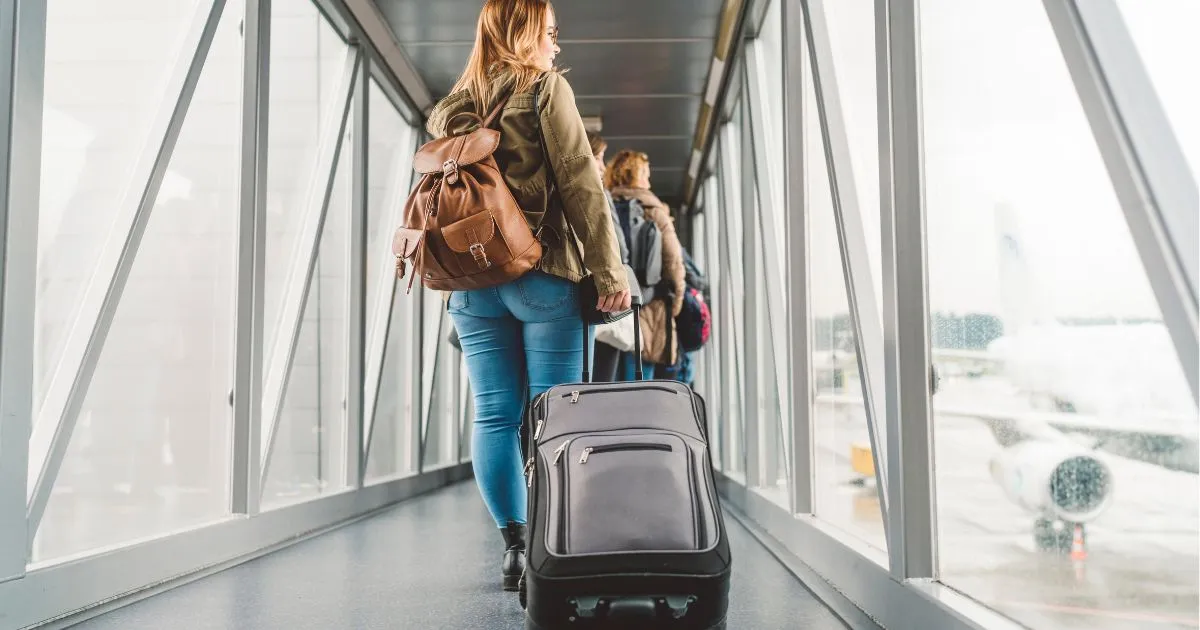
How to pack a carry-on bag: 20 effective packing tips
Packing only a carry-on can be a real challenge, especially if you’re travelling in winter. But don’t worry — I’m a typical backpacker and usually don’t fancy paying extra for checked luggage, so I’ve put together 20 effective suitcase packing tips to help you fit everything into your carry-on.
1) Check the airline’s rules
Every airline has its own rules for carry-on bag dimensions and weight, and sometimes even the permitted items can differ. Always check the conditions on the carrier’s website before your flight to avoid any unpleasant surprises at check-in. Pay special attention to the liquid allowance and restrictions for specific destinations.
2) Invest in a lightweight bag
A quality, lightweight bag lets you pack more without exceeding the weight limit. Personally, I’d recommend getting a carry-on backpack, which you can squish down if it gets measured at the gate. Plus, it’s much more practical and lighter for travel than a wheeled suitcase.
That said, most modern carry-on cases are made from durable and ultralight materials, so they can handle the rigours of travel too.
💡TIP: Best hiking backpacks
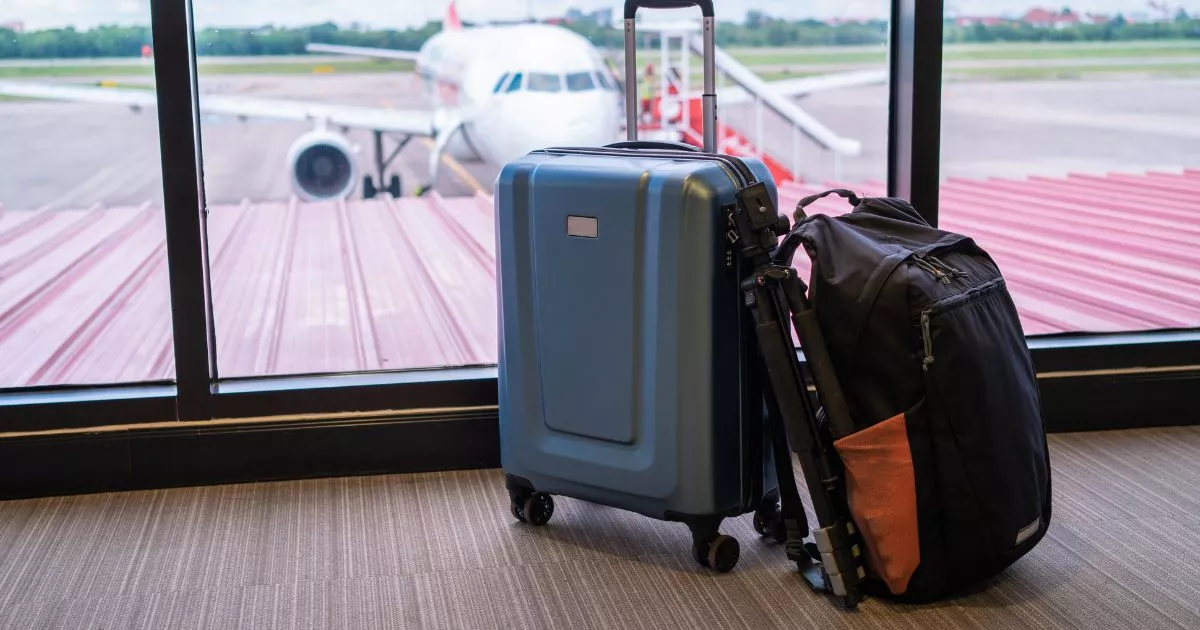
3) Check the weather at your destination
Before packing, check the weather forecast for your destination. This will help you avoid packing unnecessary items and better tailor your clothing choices. For warm destinations, light layers will do, while for colder places, prepare lightweight functional clothing that weighs next to nothing but keeps you warm.
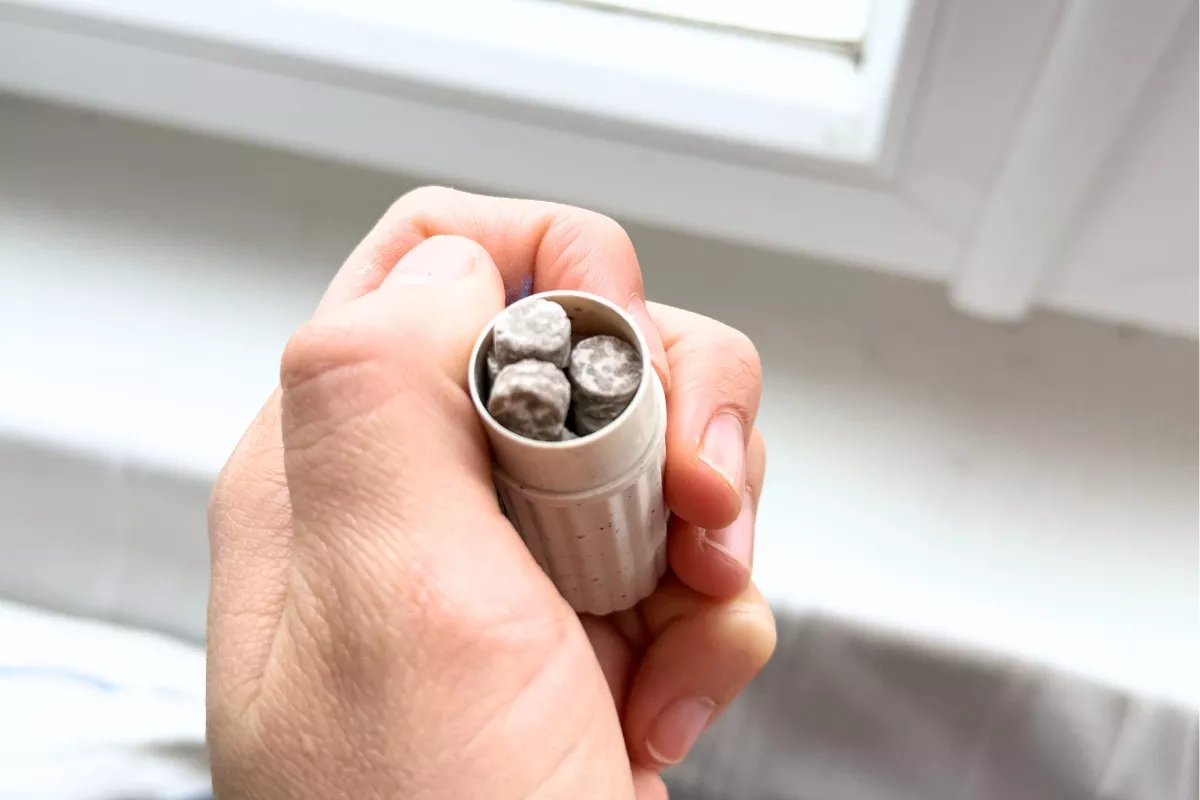
4) Minimise toiletries: Try waterless cosmetics
Toiletries take up space and are subject to liquid rules. Replace traditional products with waterless alternatives, such as nanoSpace Cosmetics travel sets. Not only do they save space, but they’re also environmentally friendly.
💡TIP: Review of nanoSpace waterless cosmetics
5) Pack ultralight antibacterial clothing
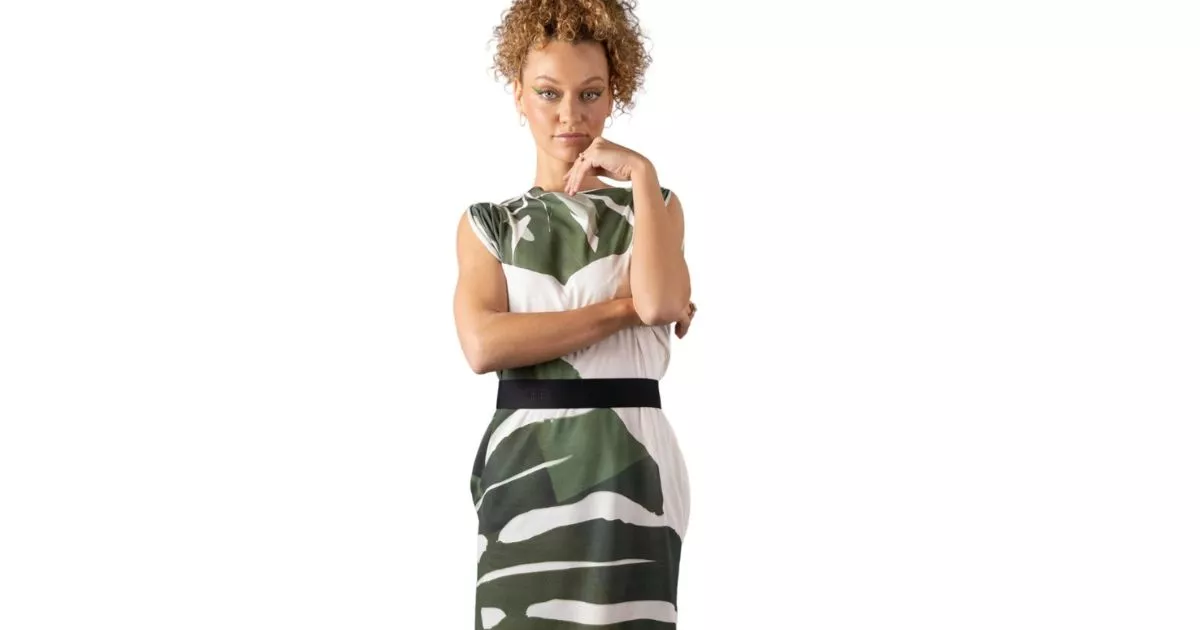
Pack clothing made from lightweight, functional materials (for example, these ultralight Travel dresses are brilliant for travelling) — they take up less space and stay fresher for longer. These materials are ideal for longer trips as they minimise the need for laundry and don’t weigh down your bag. Plus, they don’t need ironing.
6) Use vacuum bags
Vacuum bags are a brilliant trick for saving space. They work by sucking out the air, compressing your clothes to a fraction of their size. They’re ideal for bulky items like jackets, jumpers or hoodies, but remember that the weight of the clothes stays the same.
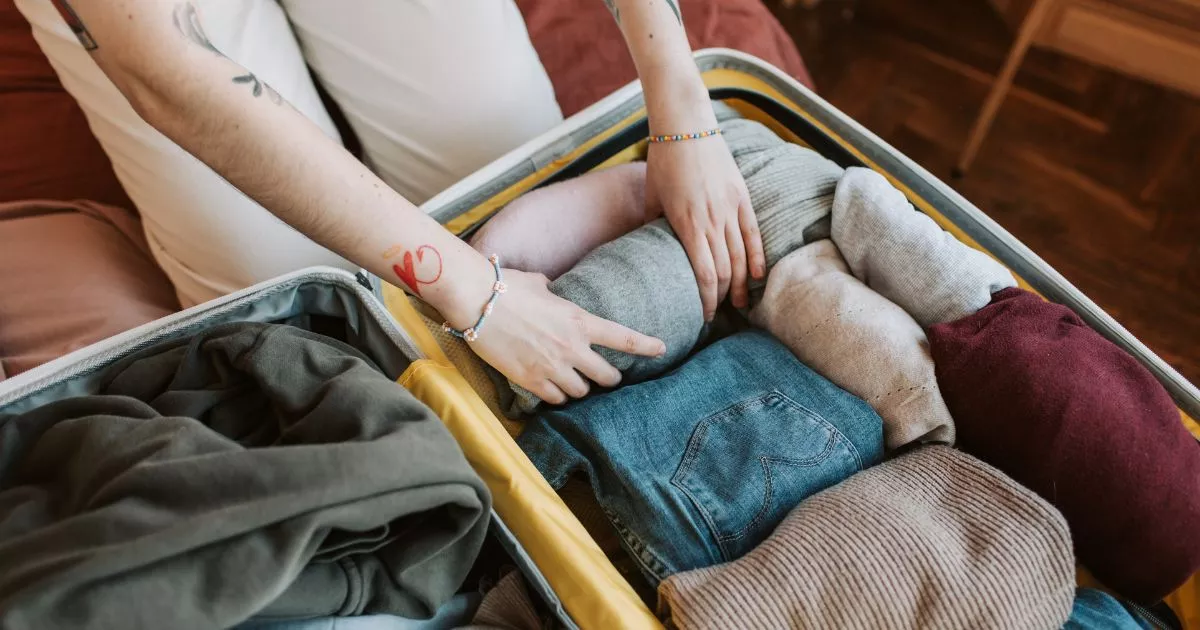
7) Roll your clothes instead of folding
Rolling your clothes not only saves space but also helps prevent creasing. This packing method is a favourite trick among travellers because it makes organisation easier and maximises every inch of space in your luggage.
8) Get an e-reader instead of books
Swap heavy books for an e-reader. It can hold hundreds of titles, so you’ll have plenty to read on your entire trip without overloading your luggage. Plus, it takes up minimal space and is incredibly light.
9) Bring an empty water bottle
Another one of my travel bag packing tips is to bring an empty water bottle. An empty bottle will pass through airport security just fine, and you can fill it up at water fountains or in the toilets once you’re through. That way you won’t go thirsty and you won’t need to buy overpriced water in the airport shops.
10) Pack smart and stay organised
The best thing you can do is make a list — written or mental — of everything you’ll need at your destination before you start packing. Then select the right items based on the weather forecast and organise your things so they’re easy to access. Pack so that everything has its place and you know exactly where each item is. A well-organised bag will also speed up your airport security check.
Don’t forget to use so-called dead space — for example, you can stuff socks or small items inside your shoes.
11) Pack versatile and multifunctional pieces
Versatile clothing, such as dresses that can be worn in multiple ways (the Oslo Summer dresses are great for this), or jackets with removable linings, will save you a lot of space. Multifunctional items are practical and reduce the amount you need to pack. Also think about how your pieces can be mixed, matched and layered, so you have enough outfits for each day. Barefoot shoes can also save you space.
Tip: How to choose barefoot shoes
12) Pack electronics, chargers and liquids on top
Items you’ll need at the security checkpoint should always be within easy reach. Electronics and liquids must be removed from your bag, so place them on top to make the screening process smoother.
13) Pack heavy items at the bottom
Heavier items, such as shoes or books, should go in the bottom of your bag, close to your back. This helps distribute the weight and increases comfort when carrying a backpack or carry-on bag.
14) Keep money and documents handy
Valuables like your passport, money or boarding passes should always be in a secure, easily accessible pocket. This way you’ll avoid rummaging and stress at check-in or security.
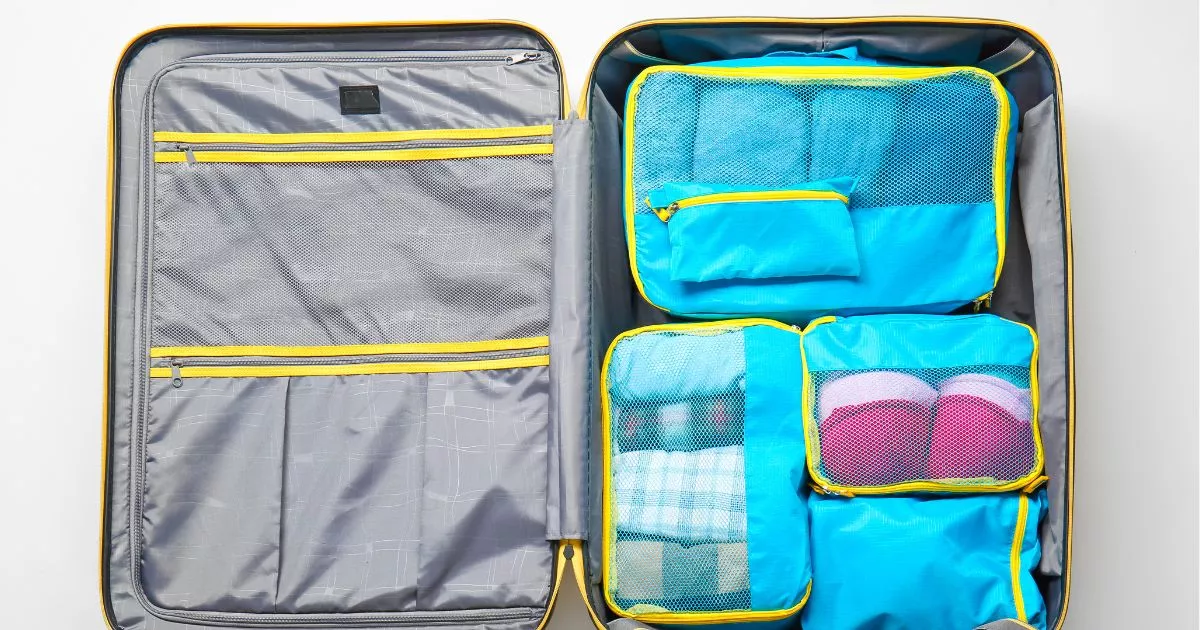
15) Use packing cubes
Packing cubes help you separate clothes, toiletries and small items. Your bag will be much better organised and you’ll save time when unpacking. They also help protect your belongings from getting dirty.
16) Wear your bulkiest clothes
Instead of packing heavy coats, jumpers, scarves and boots, wear them on the plane. This trick saves space in your luggage and makes it lighter to carry. During the flight, you can simply take them off and store them.
17) Don’t carry medication in original packaging
Medication in original boxes can be unnecessarily bulky. Transfer them into smaller bags, a pill organiser, or just take the blister pack to save space. However, keep the patient information leaflets and any doctor’s certificates just in case.
18) Skip the towel
A towel is bulky and unnecessary if you’re staying in a hotel where you’ll get one for free. If you do need one, opt for a travel microfibre towel — it’s compact and dries quickly.
19) Don’t pack unnecessary items and ditch the extras
Before your trip, go through what you’ve packed one more time and remove anything you don’t truly need. Minimalism when packing will make your travels easier and your bag lighter. Always ask yourself: “Do I really need that itchy jumper I never wear at home?” Also try to minimise packing things “just in case” — there are shops at your destination too, if worst comes to worst.
20) Do a post-trip review
After your trip, go through what you actually used and what remained untouched. This process will help you improve your packing habits for the next trip and avoid repeating the same mistakes.
💡You might also like: Can’t travel without your coffee? Then get a travel coffee maker that you can pack in your carry-on.
Frequently asked questions
Can I take a laptop in my carry-on?
Yes, always keep your laptop in your carry-on bag. However, you’ll need to take it out during the security screening.
How much liquid can I take on board?
A maximum of 1 litre, divided into containers of 100 ml each.
What happens if my bag exceeds the allowed dimensions?
You may be asked to pay an additional fee and your bag will be transported in the hold.
How can I save space when packing toiletries?
Use travel-size bottles, miniatures or waterless cosmetics.
Tips and Tricks for Your Vacation
Don’t Overpay for Flights
Search for flights on Kayak. It’s our favorite search engine because it scans the websites of all airlines and always finds the cheapest connection.
Book Your Accommodation Smartly
The best experiences we’ve had when looking for accommodation (from Alaska to Morocco) are with Booking.com, where hotels, apartments, and entire houses are usually the cheapest and most widely available.
Don’t Forget Travel Insurance
Good travel insurance will protect you against illness, accidents, theft, or flight cancellations. We’ve had a few hospital visits abroad, so we know how important it is to have proper insurance arranged.
Where we insure ourselves: SafetyWing (best for everyone) and TrueTraveller (for extra-long trips).
Why don’t we recommend any Czech insurance company? Because they have too many restrictions. They set limits on the number of days abroad, travel insurance via a credit card often requires you to pay medical expenses only with that card, and they frequently limit the number of returns to the Czech Republic.
Find the Best Experiences
Get Your Guide is a huge online marketplace where you can book guided walks, trips, skip-the-line tickets, tours, and much more. We always find some extra fun there!


