

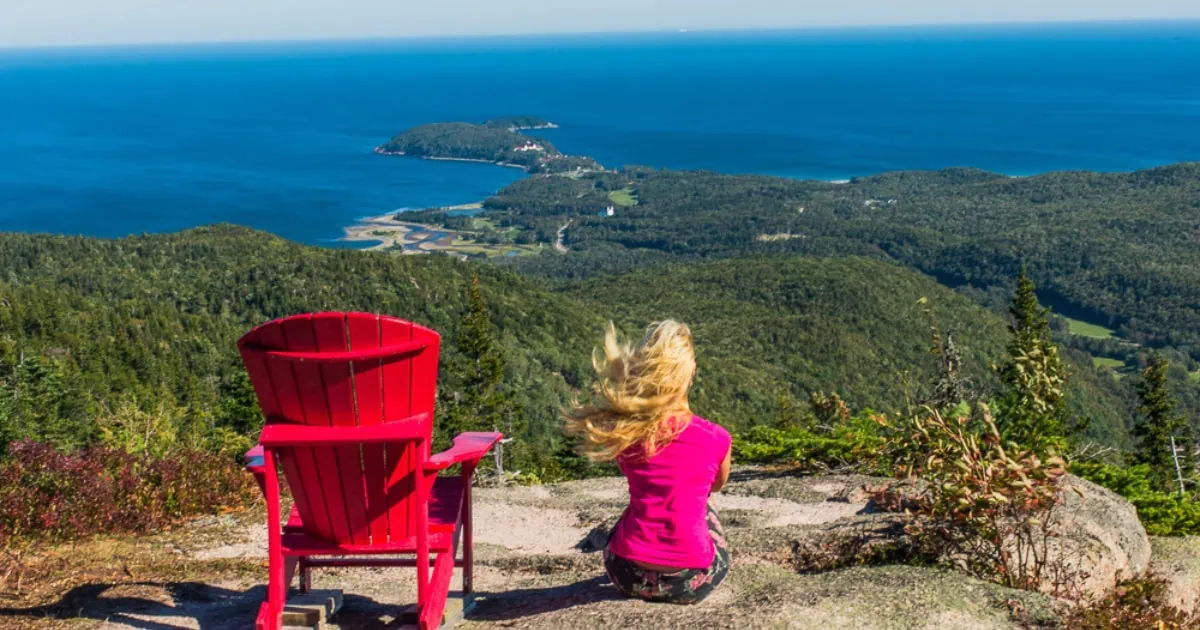
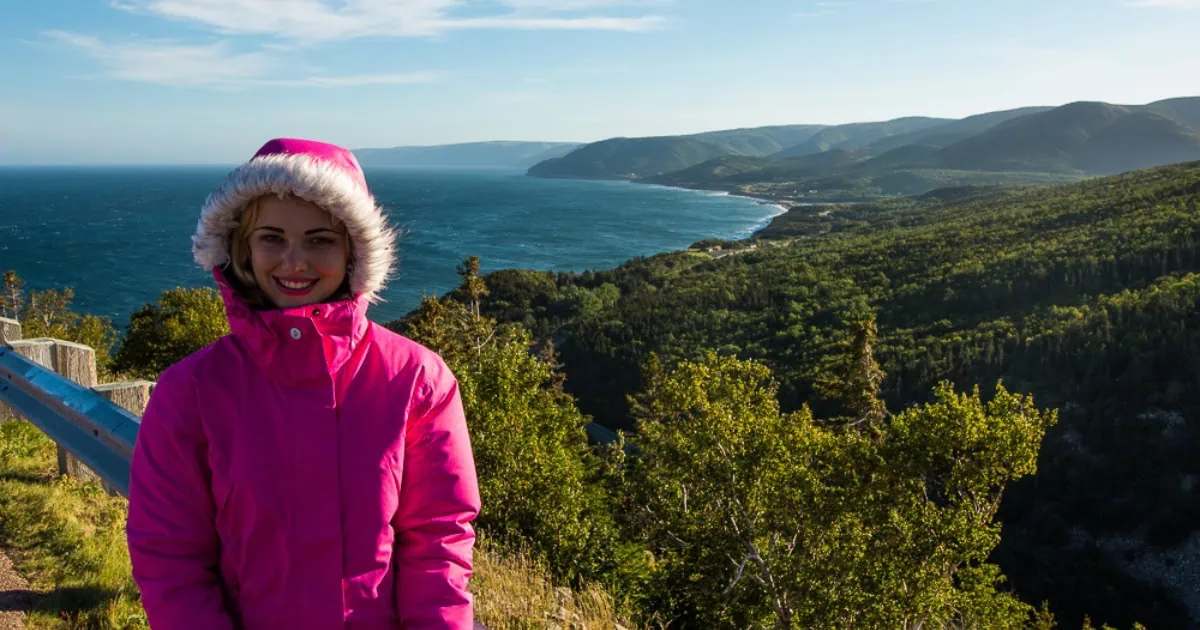
I’m standing on the edge of a cliff, the Atlantic crashing against the rocks below me, and the wind blowing into my face so hard I feel like it might sweep me away. Before me stretches an undulating green landscape that looks like it was torn right out of the Scottish Highlands — and honestly, that’s not far from the truth. We’re at Cape Breton Highlands National Park in Canada’s Nova Scotia, and I’ve got goosebumps. Not from the cold, but from how utterly breathtaking it is.
My mum and I arrived here at the end of September, when the entire island of Cape Breton transforms into a firework display of colours. Orange, red, yellow — the forests look as if someone spilled paint all over them. And we just stood there, mouths agape, wondering why we hadn’t come sooner. 😅
Cape Breton Highlands National Park is one of those places that barely gets mentioned in most travel circles (honestly, hardly anyone talks about it outside of Canada), but in reality, it ranks among the most beautiful national parks in all of Canada. If you’re planning a road trip through Cape Breton Canada and you love dramatic cliffs, wild ocean, moose, whales, and Celtic culture, this is the place where it all comes together at once.
In this article, you’ll find a complete guide to Cape Breton Highlands National Park — from the most beautiful trails and viewpoints to practical advice on where to stay and how much it all costs, plus tips on whale watching and the best lobster roll on the island. Let’s dive in.
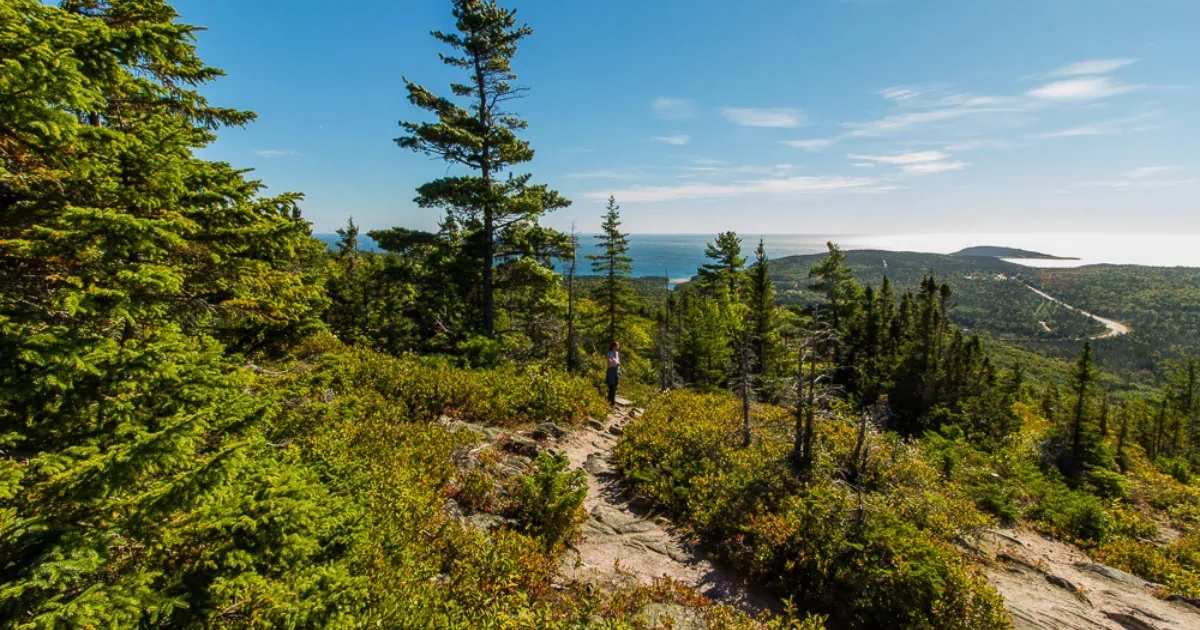
TL;DR
- Cape Breton Highlands National Park lies on the northern tip of Cape Breton Island in the province of Nova Scotia, Canada. It’s roughly the size of the Lake District, but instead of rolling hills, you’ll find dramatic Atlantic cliffs, boreal forests, and deep river valleys.
- The most beautiful time to visit is late September to mid-October — the fall foliage here is absolutely insane. Summer (July–August) is best for whale watching and swimming.
- Cabot Trail — a legendary 300 km loop road that circles the entire park. One of the most beautiful drives in the world and the main way to explore the park.
- Best trails: Skyline Trail (iconic sunset over the ocean), Franey Trail (more challenging with stunning views), and Middle Head Trail (easy but gorgeous).
- You’ll almost certainly spot moose — especially in the early evening and early morning. Watch out on the roads!
- Whale watching from Pleasant Bay or Chéticamp — humpback whales and more from June to October.
- Allow at least 3–4 days for the park, ideally 5–7 if you want to hike more trails and soak in the atmosphere.
- Camping in the park is an experience in itself — from classic campgrounds to backcountry camping at Fishing Cove.
- Park admission: 10.50 CAD/day per person (approx. €7), or a Discovery Pass for 75.25 CAD (approx. €50) for a full year to all of Canada’s national parks.
- Celtic culture is everywhere here — from live music to Gaelic signs. It feels like Scotland, just with moose.
When to Visit Cape Breton Highlands and How to Get There
Cape Breton Highlands National Park is one of those places where timing your trip can completely transform the experience. Each season offers something different — and each has its pros and cons. Let’s go through them so you know exactly when to set off.
Best Time to Visit
Autumn (late September – mid-October) is hands down the most beautiful time. The fall foliage on Cape Breton is legendary, drawing visitors from around the world. The entire Cabot Trail is lined with trees in every shade of orange, red, and gold. It’s simply wow. Temperatures hover around 8–15 °C, so pack layers — mornings can be chilly, but midday sun feels pleasant.
Summer (July–August) is best for hiking, camping, and whale watching. Temperatures around 18–25 °C, sometimes even warmer. Bear in mind, though, that it’s busier with tourists — Skyline Trail in particular gets quite crowded in August. Book your camping and accommodation well in advance. Seriously, not “a week before” — months ahead.
Spring (May–June) is quieter and cheaper, but some trails may be closed due to mud or wildlife migrations. The whale watching season opens in June though, which is a bonus. Just be warned — the weather can be fickle and fog is a frequent visitor.
Winter I wouldn’t recommend for hiking. Most services are closed, roads can be dangerous, and camping isn’t operational. However, if you love cross-country skiing, the park does offer winter trails.
How to Get to Cape Breton
By air: The closest airport is J.A. Douglas McCurdy Sydney Airport (YQY) right on Cape Breton Island. There are no direct flights from the UK — you’ll need a connection through Toronto, Montréal, or Halifax. Air Canada operates flights to Sydney. Search for affordable flights on Kiwi — it’s our go-to platform for finding flights to Canada.
Another option is flying into Halifax (YHZ), which is a larger airport with better connections from Europe. From Halifax, it’s about 4–4.5 hours by car to Cape Breton — ideal if you want to do a road trip through all of Nova Scotia.
By car: A car is absolutely essential on Cape Breton. Without one, you simply can’t get around the national park — there’s no public transport. We’ve had consistently great experiences with RentalCars, which we use all over the world. Pick up your rental from Halifax or Sydney.
From Halifax, take the Trans-Canada Highway (Highway 104 and then 105) across the Canso Causeway — the only road bridge to Cape Breton Island. That crossing is actually quite a symbolic moment. Suddenly you’re on the island and the world slows down.
Where to Stay and How Much Cape Breton Highlands Costs
Accommodation around Cape Breton Highlands National Park is surprisingly varied — from campgrounds right in the park to cosy B&Bs and more luxurious lodges with ocean views. Keep in mind that prices during peak season (July–October) are significantly higher than off-season, and the best accommodation gets snapped up months in advance. Don’t find yourself searching for a room the day before — it doesn’t work like that here. 😅
Camping in the Park
The most authentic experience is camping right inside the national park. Parks Canada operates several campgrounds:
- Chéticamp Campground — on the western side of the park, near the visitor centre. Large, with hot showers and toilets. Price: approx. 28–36 CAD/night (€18–24).
- Broad Cove Campground — on the eastern side, smaller and more peaceful. Perfect for sunrises over the ocean.
- Ingonish Campground — in the southeast of the park, close to Franey Trail and Ingonish Beach.
- Corney Brook Campground — small and romantic, right by the ocean.
- Fishing Cove Backcountry Campground — for adventurers. Accessible only on foot (approx. 8 km one-way). More on this below.
Reservations open on the Parks Canada website usually in January/February for the summer season. In autumn, it’s easier to find a spot, but I still recommend booking the main campgrounds in advance.
Accommodation Outside the Park
The two main bases for accommodation are Chéticamp on the west and Ingonish on the east. Both offer restaurants, shops, and lodging.
Chéticamp: An Acadian fishing village with galleries, restaurants, and a friendly atmosphere. For example, Auberge Bay Wind Suites.
Ingonish: Quieter, closer to Franey Trail and Middle Head Trail. You might check out Knotty Pine Cottages, Suites & Motel Rooms.
Pleasant Bay: A small village on the northern side of the Cabot Trail, ideal for whale watching. Accommodation is more limited but quieter — Ananda – Enchanted Forest Hideaway.
How Much Cape Breton Highlands Costs — Weekly Budget
Approximate budget for two people for 7 days (mid-range — mix of camping + B&B):
- Park admission: 10.50 CAD/day/person × 7 days × 2 = 147 CAD (€98). Tip: A Discovery Pass for 145.25 CAD for two is worth it if you plan to visit other parks too.
- Camping (3 nights): ~100 CAD (€67)
- B&B/accommodation (4 nights): ~800 CAD (€535)
- Food and restaurants: ~500 CAD (€335)
- Petrol (Cabot Trail + surroundings): ~150 CAD (€100)
- Whale watching (2 people): ~120 CAD (€80)
- Total for two for a week: approx. 1,800–2,000 CAD (€1,200–1,340) excluding flights and car rental
We didn’t particularly scrimp on the trip, but camping saved us a fair bit on accommodation and allowed us to stay longer.
Cabot Trail and the Best Viewpoints: 5 Stops You Can’t Miss
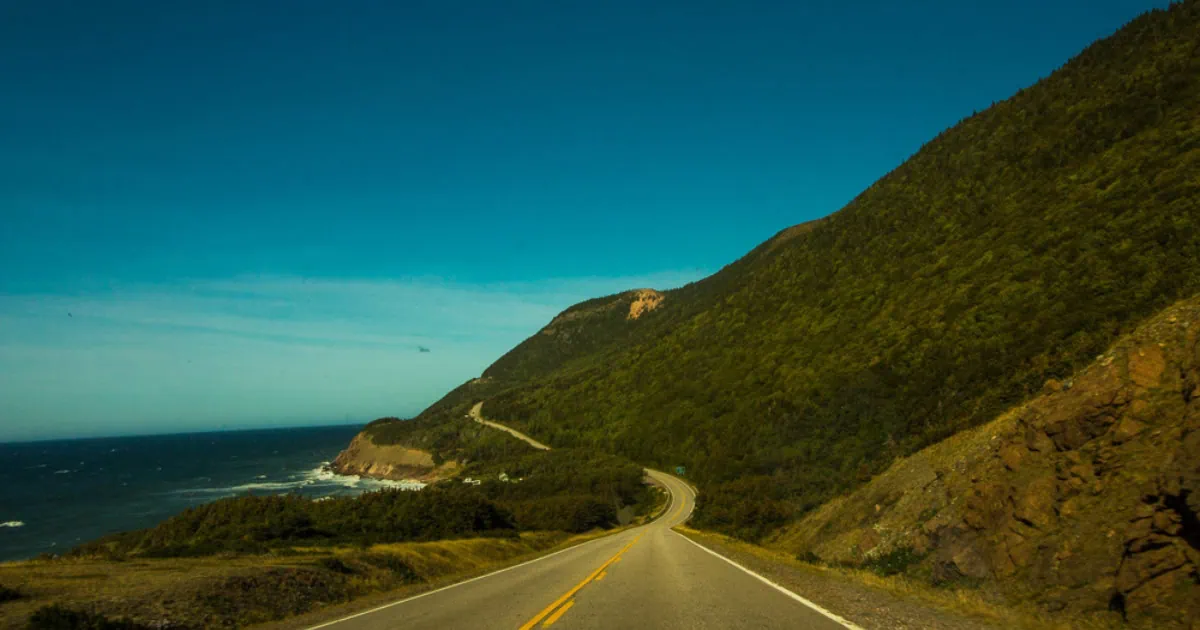
The Cabot Trail is a 300 km loop road that circles the entire Cape Breton Highlands National Park, and it’s considered one of the most beautiful drives in the world. And I have to say, for once, there’s no marketing exaggeration — it truly is. The road winds through mountains, along cliffs, through fishing villages, and past bays where you can spot whales right from the roadside. We drove it over two days, but you could easily spend a week here without getting bored.
You can drive the Cabot Trail clockwise or counter-clockwise — we went from Chéticamp north and then down through Ingonish, but both directions are beautiful. Personally, I recommend going counter-clockwise (starting from Chéticamp), because you’ll be on the outer side of the road closer to the ocean and the viewpoints will be right in front of you.
1. Cabot Trail Scenic Drive — the Road People Come Here For
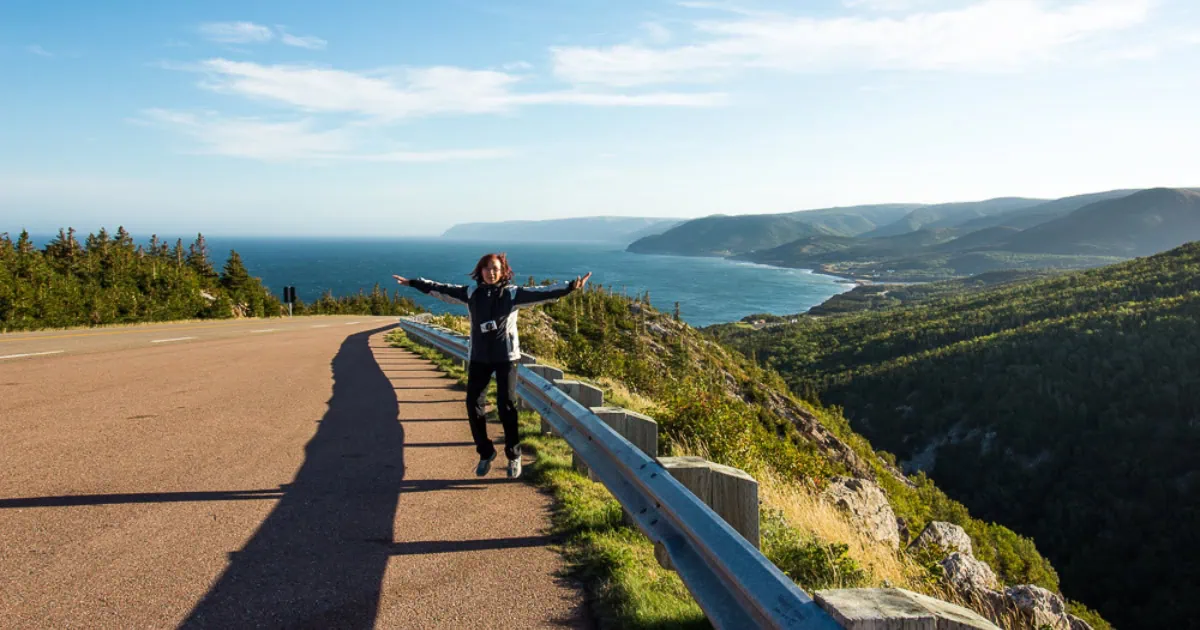
The drive along the Cabot Trail is an experience in itself. You don’t have to do a single trail and you’ll still have one of the most beautiful days on the road. The road is well-maintained, but it has steep climbs, sharp bends, and in some places you’ll encounter a series of “wow” moments around every curve.
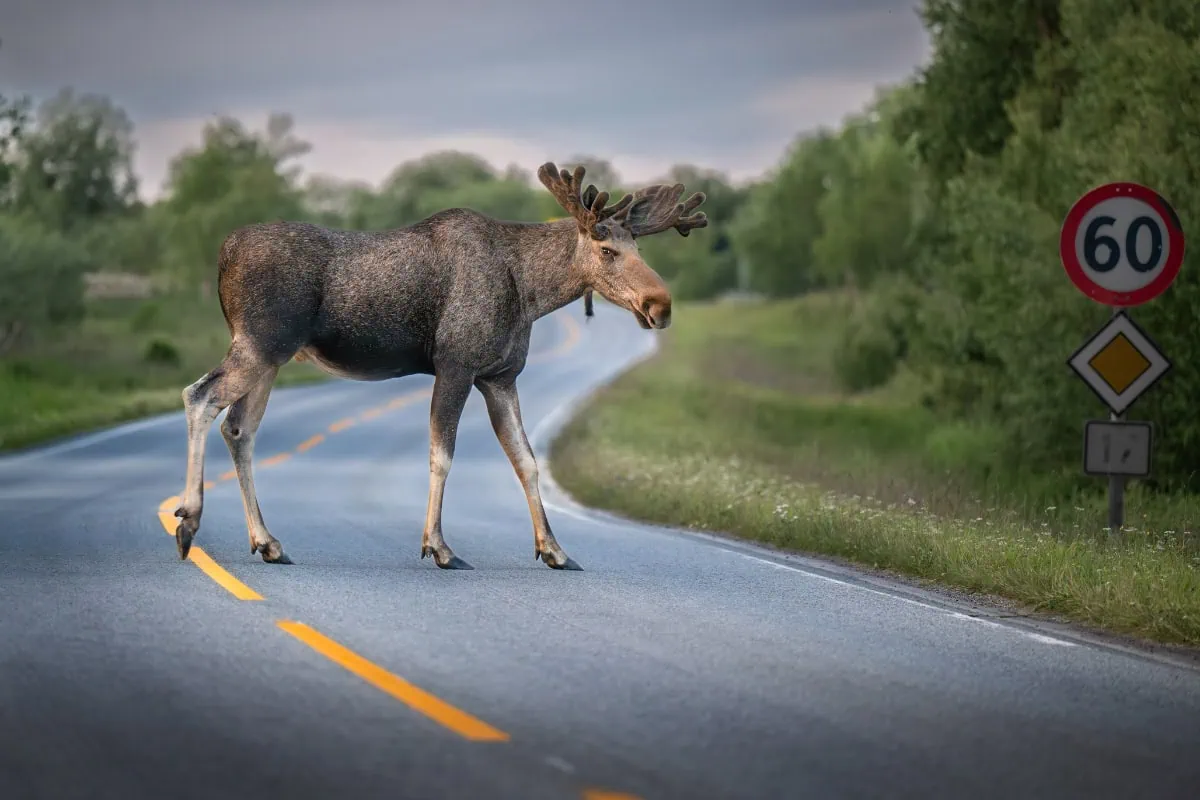
A few tips for the drive: Fill up on petrol in Chéticamp or Ingonish, because there are no petrol stations inside the park. Set aside a full day for the drive — you’ll be stopping every few minutes. And most importantly — watch out for moose on the road! They’re enormous, hard to spot at dusk, and a collision with a moose is a serious accident. Slow down especially at dawn and after dark.
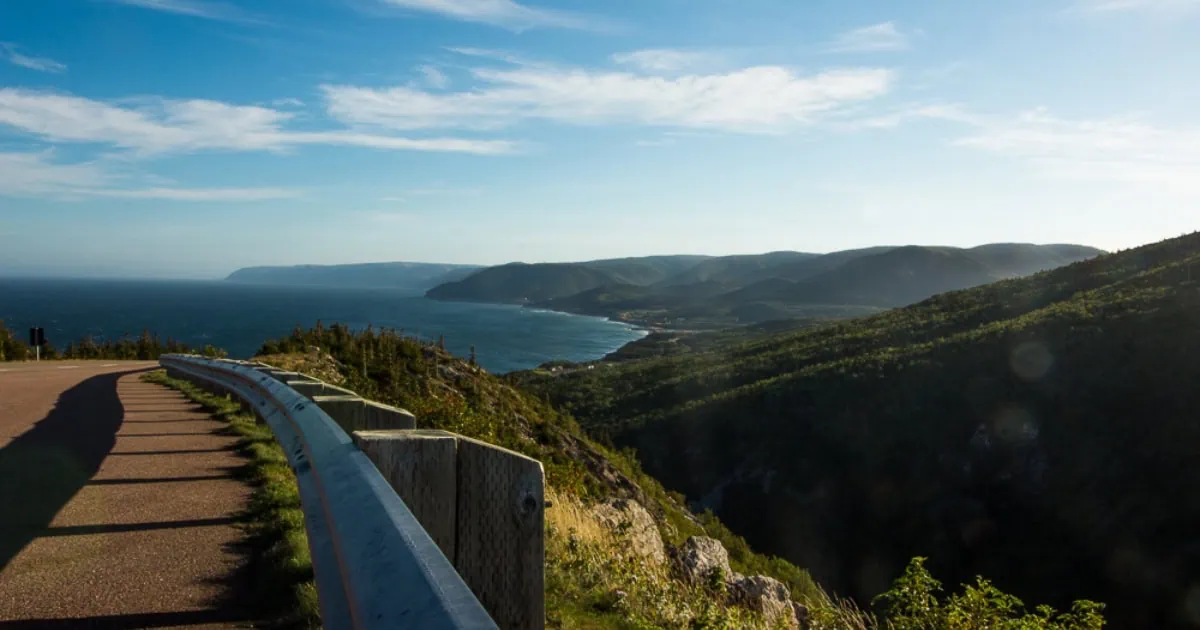
The most beautiful sections of the road are between French Mountain and Pleasant Bay (western side), and then the stretch leaving the park towards Ingonish on the eastern side, where the road winds high above the ocean. Keep your camera charged — or rather your phone, because you’ll be snapping photos every minute anyway. 😁
2. French Mountain and MacKenzie Mountain Lookouts — Ocean Views
On the western side of the Cabot Trail, just past Chéticamp, the road climbs up French Mountain and then MacKenzie Mountain. Both mountains offer official lookouts with car parks where you simply stop and take it all in.
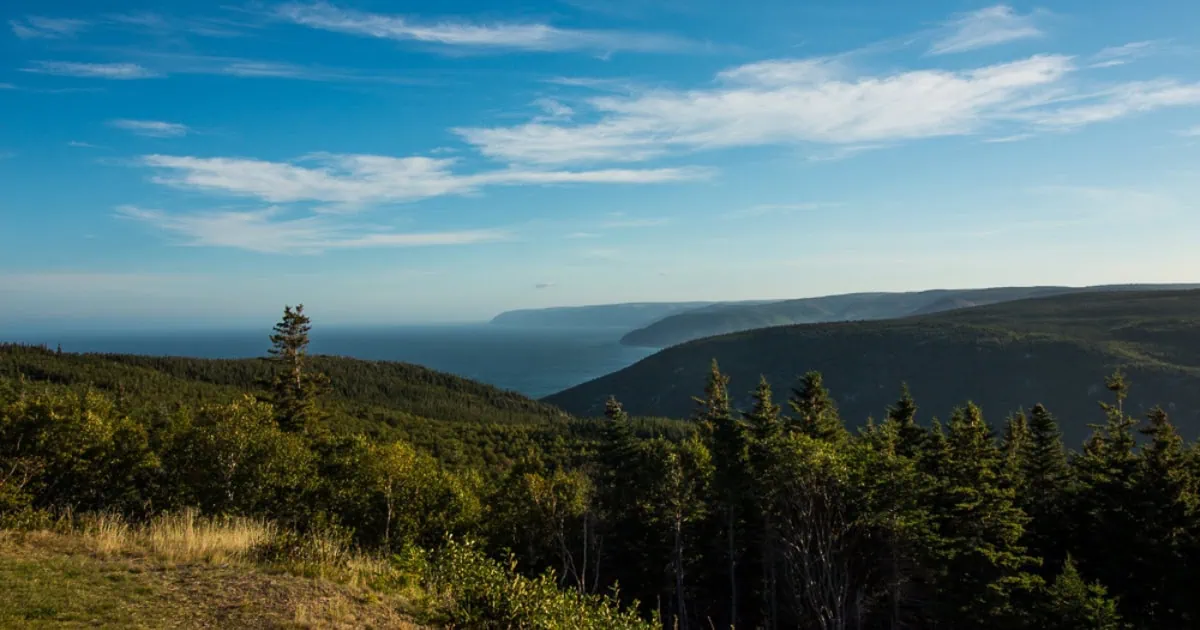
From French Mountain Lookout, you gaze down at Chéticamp and the entire Gulf of St. Lawrence coastline. On a clear day, it’s infinite — the water and sky merge into one. MacKenzie Mountain Lookout is a bit further along and the view is even more dramatic — the road literally cuts into the cliff face and you’re looking hundreds of metres down to the coast.
If you visit in autumn, these lookouts are particularly magical. The forests below you blaze with colour and the ocean is deep blue. It’s like looking at a painting where the artist went a bit overboard with the colour saturation — except here, it’s real.
3. North Mountain Lookout — Where You See Moose Below You
On the northern edge of the park, between Pleasant Bay and Neil’s Harbour, the road climbs North Mountain. The viewpoint here is one of the most dramatic on the entire Cabot Trail — you’re looking down into a deep valley with the ocean stretching beyond.
This is also one of the best spots to see moose. In the evening and early morning, moose often graze in the valleys below the road and you can observe them from a safe distance. We saw a cow with her calf here — we stood at the lookout, these enormous creatures strolling peacefully below us, and we completely lost track of time. Purely magical.
4. Lakies Head Lookout — the East Coast in All Its Glory
On the eastern side of the park, near Ingonish, you’ll find Lakies Head Lookout. It’s a smaller viewpoint, but the view of the rocky coastline where the Atlantic crashes against granite rocks is absolutely stunning.
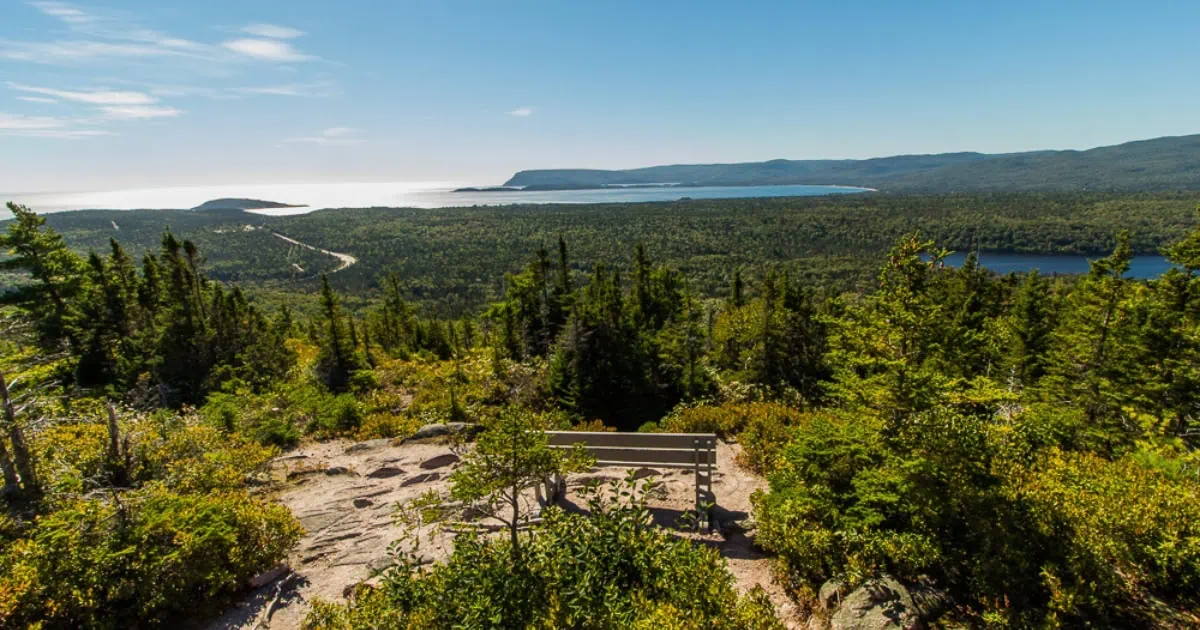
This spot is great for a snack break — there’s a bench and a peaceful atmosphere. Unlike Skyline Trail (which is packed with people), it’s quiet here even in peak season. If you’re lucky and it’s a clear day, you can see kilometres of sweeping cliffs along the coast.
5. Mica Hill and Sunrise Trail Lookout — for Early Birds
If you’re willing to get up before dawn, Mica Hill and the surrounding lookouts on the eastern side of the park offer spectacular sunrises over the Atlantic. The sky transitions from deep blue through pink to gold, and the entire ocean below you lights up.
Best Trails in Cape Breton Highlands: 6 Hiking Routes You Must Try
Cape Breton Highlands National Park offers over 25 marked trails with a total length of about 100 km. From short 20-minute walks to all-day challenging hikes — there’s something for everyone. Here are the best ones we walked (and a couple we heard about from locals who said we shouldn’t miss them, but our legs said otherwise).
6. Skyline Trail — the Most Famous Trail in the Entire Park
Length: 9.2 km (return) | Elevation gain: 365 m | Difficulty: Moderate | Time: 2.5–4 hours
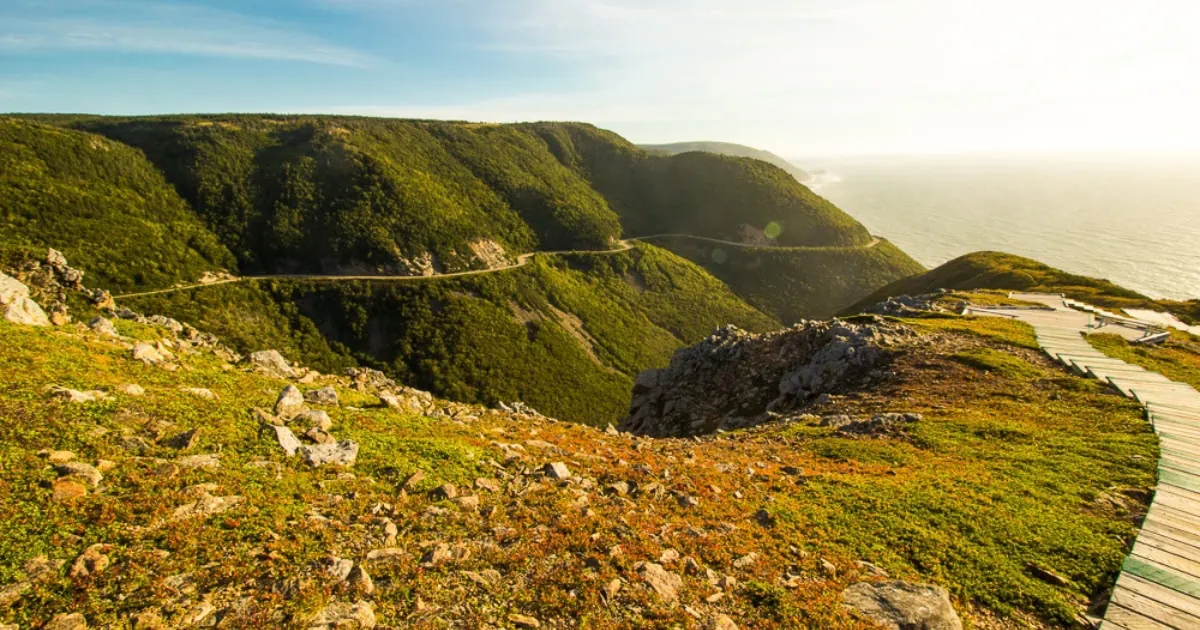
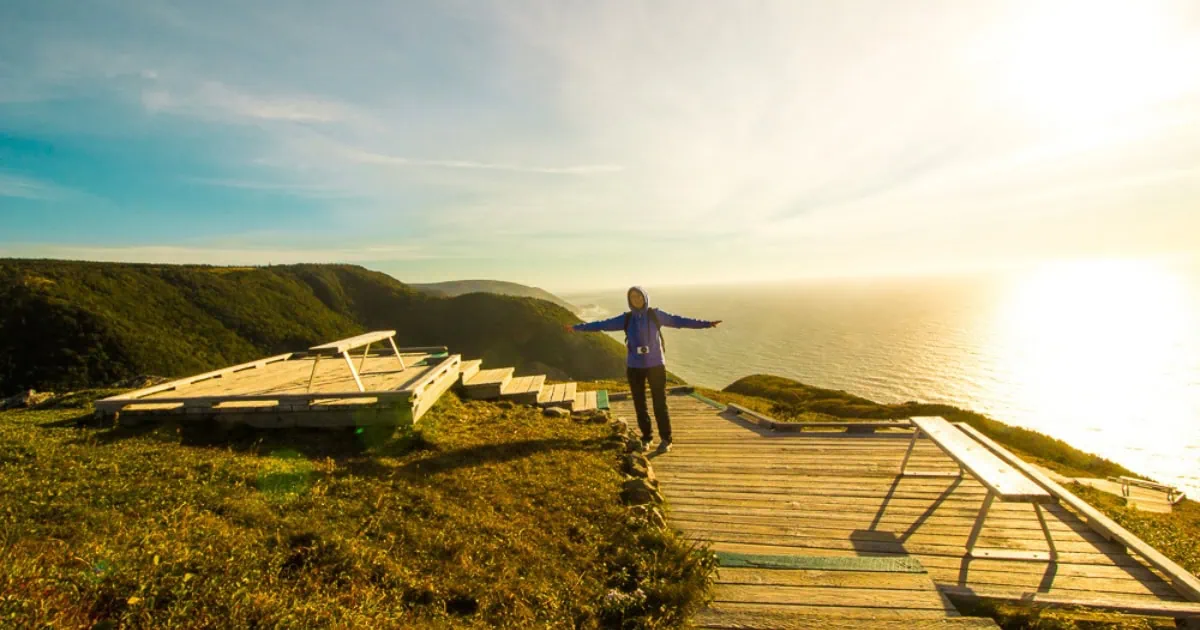
Skyline Trail is iconic. You’ve probably seen the photos — wooden boardwalks leading to a cliff edge, the ocean below, and a sky that never ends. And in reality, it’s even better.
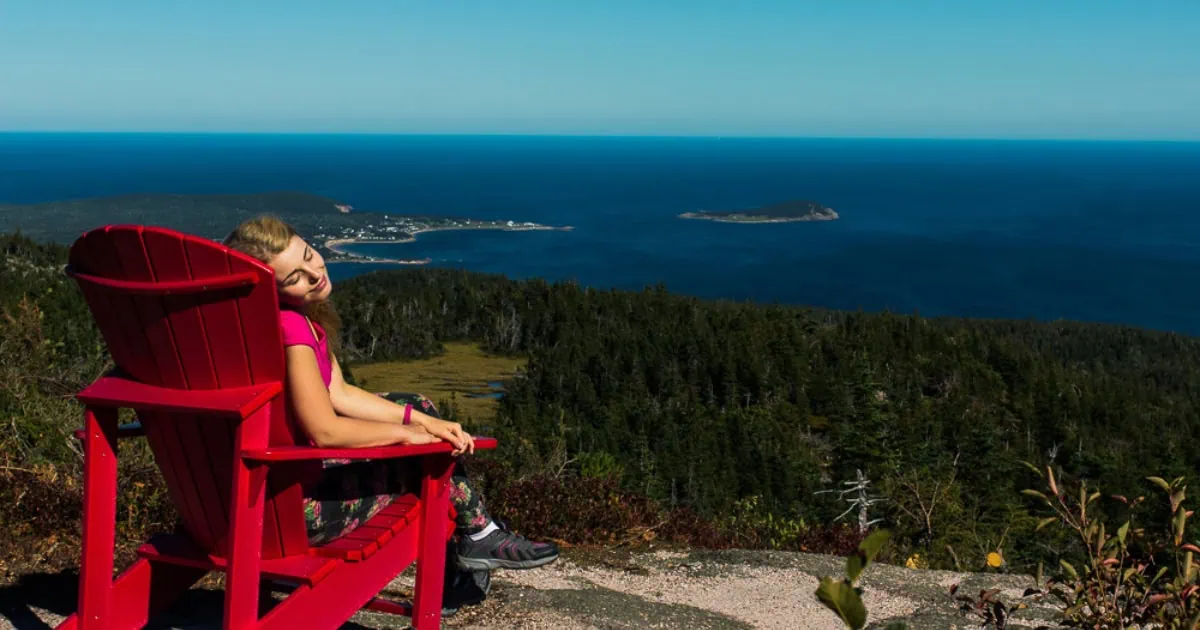
The trail starts in boreal forest, climbs gradually, and the last 600 metres run along a boardwalk that ends on a cliff high above the bay. From there, you watch the sunset over the Gulf of St. Lawrence and — I’m truly not exaggerating — it’s one of the best sunsets I’ve ever seen.
Important tip: Since 2024, Parks Canada requires a reservation for sunset on Skyline Trail (Sunset Skyline). Reservations open two days in advance and sell out within minutes. If you want the sunset, be at your computer at the exact moment bookings open (usually 8:00 AM). During the day (before 16:00), the trail is accessible without a reservation.
One more thing — the trail is closed after dark for safety reasons (bears). You must be back at the car park by the designated time.
7. Franey Trail — for Those Who Want a Proper Climb
Length: 7.4 km (loop) | Elevation gain: 366 m | Difficulty: Challenging | Time: 2.5–4 hours
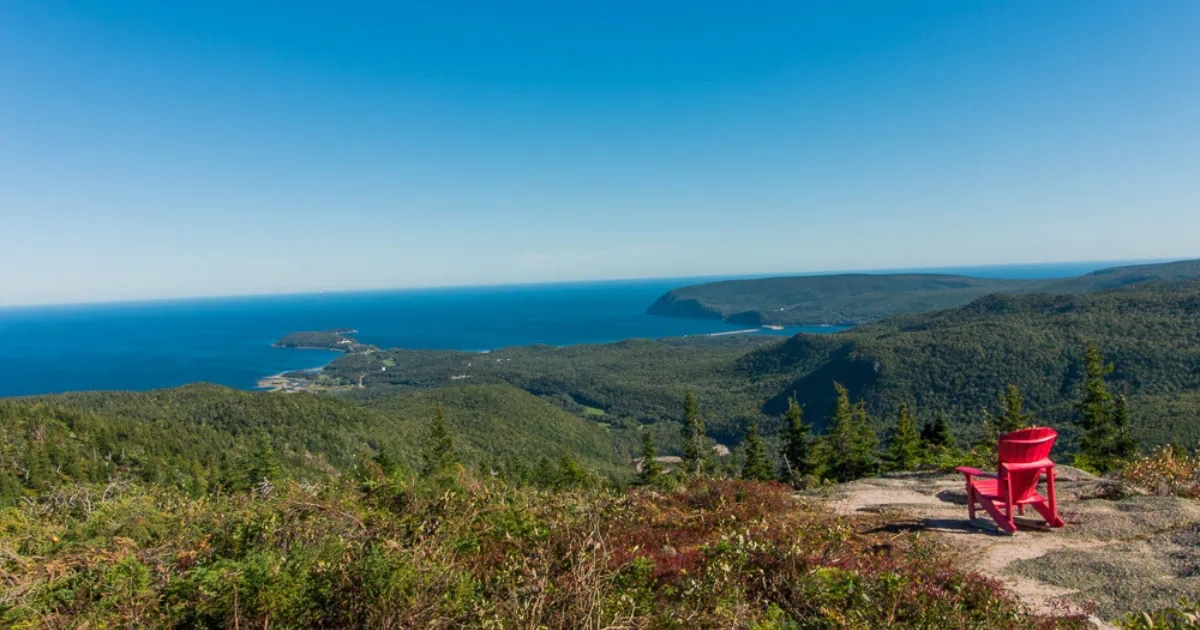
If Skyline Trail is the popular one, Franey Trail is the one for those in the know. The trail climbs fairly steeply through forest and ends at a rocky summit with 360° views over Clyburn Brook Canyon, the ocean, and the surrounding hills.
Unlike Skyline, you’ll encounter a fraction of the people. We met about six other hikers the entire way. The ascent is quite steep and rocky in places — good hiking boots are a genuine necessity here, not an optional extra. But that view from the summit… We stood there and couldn’t tear ourselves away.
The trail starts near Ingonish and you can combine it with a visit to Ingonish Beach, which is down by the car park. After a tough climb, dipping your feet in the icy Atlantic — there’s no better refreshment.
8. Middle Head Trail — Easy Yet Breathtaking
Length: 3.6 km (return) | Elevation gain: minimal | Difficulty: Easy | Time: 1–1.5 hours
Middle Head Trail is perfect for those who don’t want to spend all day climbing uphill but still want a cracking view. The trail follows a narrow peninsula that juts out into the ocean like a finger, and at the end, you’re surrounded by water on three sides.
The trail starts right at Keltic Lodge and winds through forest to a rocky headland. Along the way, you might spot seals, and during the season, even whales from dry land. We saw a group of seals basking on the rocks — Mum spent about 20 minutes photographing them and refused to move on.
I recommend coming here early in the morning, when the peninsula is wrapped in fog and the whole thing looks like something out of a Scottish novel.
9. Fishing Cove Trail — Backcountry Adventure
Length: 16 km (return) | Elevation gain: 335 m (down and then back up!) | Difficulty: Challenging | Time: 6–8 hours or overnight
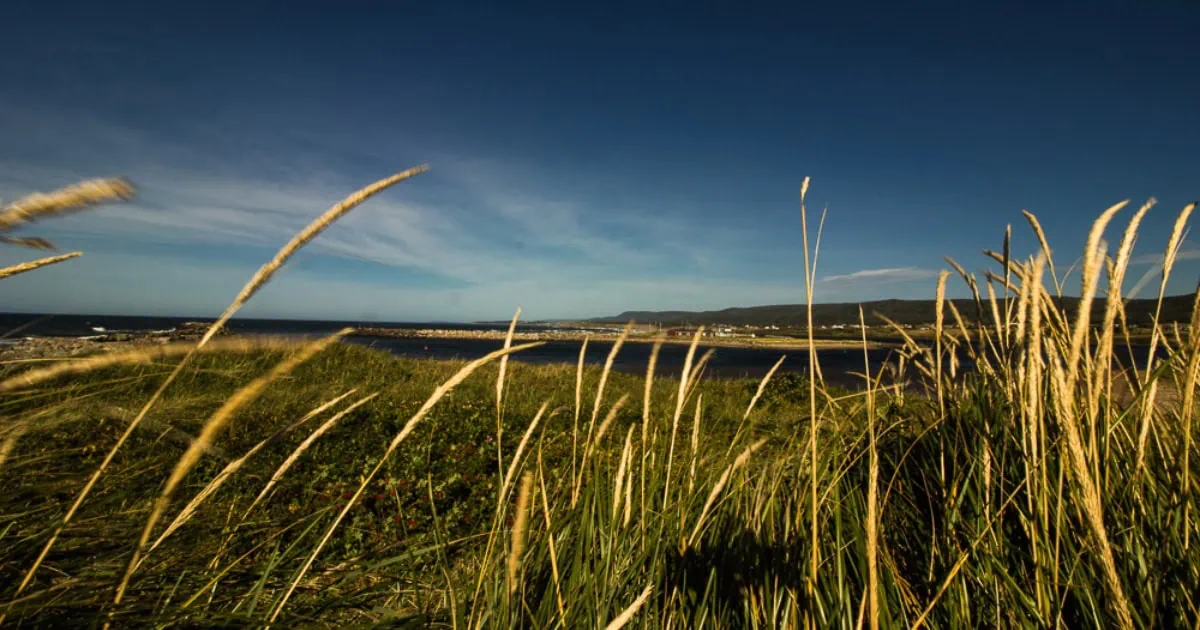
Fishing Cove is, for me, the most beautiful spot in the entire park. It’s a remote cove accessible only on foot, which most tourists never reach because few people manage the climb back up with a smile on their face.
The trail starts from the Cabot Trail road and descends steeply (335 metres) down to the ocean. And there — there is paradise. A pebbly little beach, green meadows, a stream with drinking water, and a backcountry campsite where you can sleep under the stars. Sounds idyllic? It is idyllic.
If you want to stay overnight, you’ll need a backcountry permit from Parks Canada (approx. 10 CAD/person/night, about €7). Spaces are limited and in season, booking ahead is worthwhile. Fire pits and pit toilets are available, but otherwise no amenities — and that’s exactly the point.
Warning: The way back is the same hill, but uphill. After a night in the backcountry with a pack on your back, it’s an experience bordering on a spiritual awakening. 😅 But it’s worth it.
10. Benjies Lake Trail — for Lovers of Peace and Bogs
Length: 3 km (loop) | Elevation gain: minimal | Difficulty: Easy | Time: 45 min – 1 hour
This trail is different from all the others. It doesn’t lead to a cliff or the ocean, but into the heart of the boreal forest to a quiet lake surrounded by bogs. There’s a wooden boardwalk, a few information panels, and above all — absolute silence.
If you need a break from dramatic views (yes, that can actually happen), Benjies Lake is perfect. We popped in here one afternoon when it was raining, and the atmosphere — fog hovering over the lake, droplets on the moss, not a soul around — was almost meditative.
11. Bog Trail — 20 Minutes but Worth It
Length: 0.8 km (loop) | Elevation gain: none | Difficulty: Very easy | Time: 20 minutes
The shortest trail on the list, but I’m including it because it’s absolutely unique. It runs along a boardwalk through a bog at around 400 m elevation and showcases an ecosystem that looks like it’s from another planet — carnivorous plants, mosses, miniature orchids.
Great for a quick stop when you’re driving the Cabot Trail and want to stretch your legs. It takes 20 minutes, but you’ll leave a little wiser.
Wildlife and Nature: 3 Experiences You Won’t Find Anywhere Else
Cape Breton Highlands National Park is home to incredible wildlife. This isn’t just about pretty views — you’re living in the midst of wild nature and it makes that very clear. The island is home to moose, black bears, bald eagles, seals, whales, and dozens of other species. Let’s look at the highlights.
12. Moose Watching — Giant Animals Right by the Road
Moose are the unofficial symbol of Cape Breton Highlands and you’ll spot them with high probability — especially if you know where and when to look.
Best time: Dawn (5:00–7:00) and dusk (18:00–20:00). Moose are more active in cooler weather, so you have a better chance in autumn.
Best spots: Around North Mountain, Bog Trail, the road between Pleasant Bay and Neil’s Harbour. During our entire stay, we saw seven moose — four right from the road, two from the North Mountain lookout, and one on Skyline Trail (that one startled us a bit because it was standing in the middle of the path and we weren’t sure who should give way 😁).
Safety rules: Moose are massive animals (bulls weigh up to 700 kg) and they’re not friendly. Keep a distance of at least 30 metres. On the roads, especially at dusk, drive slowly — a collision with a moose is extremely dangerous.
13. Whale Watching — Whales Within Arm’s Reach
From June to October, humpback whales, minke whales, and occasionally pilot whales migrate along Cape Breton’s coastline. Whale watching is one of the most popular experiences in the entire area.
Tours depart from Pleasant Bay on the western side and from Bay St. Lawrence on the northern tip of the island. Prices are around 50–65 CAD per person (€33–43). It’s worth choosing a smaller boat (zodiac) — you’re closer to the water and it’s a more intense experience, though wetter. 😅
We went from Pleasant Bay with Captain Mark’s Whale & Seal Cruise and saw two humpbacks breaching about 50 metres from the boat. That moment when the entire enormous body surges out of the ocean and then crashes back down with a splash… you can’t prepare for it. You just stand there with your mouth open.
Tip: If you suffer from seasickness, take tablets BEFORE boarding. The Atlantic here can be quite rough and on a small boat, you’ll definitely feel it.
14. Bald Eagle and Bird Watching
Cape Breton is a paradise for bird watching. Bald eagles are surprisingly common here — we saw several soaring above the cliffs along the Cabot Trail. Other species you’ll encounter include osprey, blue jays, and in the harbours, cormorants and puffins (mainly on the Bird Islands off Englishtown).
If you’re into birds, the Bird Islands Boat Tour from Englishtown takes you to small islands where thousands of seabirds nest. Price is around 45 CAD per person (€30).
Celtic Culture and Villages on the Cabot Trail: What to Do Outside the Park
Cape Breton isn’t just a national park — it’s a culturally fascinating island where Acadian (French) and Scottish (Celtic) cultures meet. Gaelic was a common language here until the mid-20th century and Celtic tradition is still very much alive. Here are places worth visiting beyond the trails.
15. Chéticamp — an Acadian Village with Soul
Chéticamp is a picturesque fishing village on the western side of the park and the main gateway to Cape Breton Highlands. It’s an Acadian community — descendants of French settlers who have lived here since the 18th century. The village is famous for traditional hooked rugs, and you’ll find several galleries and workshops here.
Stop by Les Trois Pignons — a cultural centre with a museum of Acadian culture and an impressive collection of hooked tapestries by Élizabeth LeFort, which are absolutely stunning. Admission is nominal (around 8 CAD, €5).
Stock up on food and petrol here before entering the park — there are no shops inside the park itself.
16. Celtic Music and Red Shoe Pub in Mabou
If you’re visiting Cape Breton, you must experience live Celtic music. And the best place is the Red Shoe Pub in the village of Mabou, a bit south of the national park. The pub is owned by the Rankin sisters — of the legendary Rankin Family — and every evening features live traditional music. Fiddle, step dancing, and beer from the local brewery — you won’t have a better evening on Cape Breton.
If you can’t make it to Mabou, you’ll find Celtic pub sessions in Chéticamp and Baddeck too. Ask the locals where the music is playing — schedules change from day to day here and the best events are found through word of mouth, not on the internet.
Where to Eat and Drink on Cape Breton Highlands: a Guide for Hungry Travellers
Food on Cape Breton is surprisingly good — and heavily focused on seafood. Lobster here isn’t a luxury, it’s an everyday affair. Here are our favourite spots.
Chéticamp:
- Le Gabriel — arguably the best restaurant in Chéticamp. Fresh seafood, local specialities, and surprisingly good wine. Lobster dinner around 35–45 CAD (€23–30).
- Aucoin Bakery — a local bakery with fantastic croissants and coffee. The perfect stop before heading into the park.
- L’Abri — Acadian cuisine in a rustic setting. Try the fricot (Acadian chicken soup) and pâté à la viande (meat pie).
Ingonish and the east side:
- The Purple Thistle — our absolute favourite restaurant on the entire Cabot Trail. The seafood is top-notch, but they also do a brilliant steak. The lobster roll was possibly the best we’ve ever had. That’s not an exaggeration — just a fact. ☺️
- Main Street Restaurant & Bakery in Neil’s Harbour — an unassuming restaurant with harbour views. Fish & chips at a fair price and homemade pies.
Pleasant Bay:
- Rusty Anchor — fish straight from the boat to your plate. A small restaurant with enormous portions. In season, there can be a queue, but the wait is worth it.
Baddeck (on the southern end of the island):
- Baddeck Lobster Suppers — a classic experience. A full lobster dinner at a set price (around 45 CAD/person, about €30) with salad, soup, and homemade pie. Simple, but absolutely perfect.
Shopping tip: If you’re camping, stock up in Chéticamp or Ingonish. There are no shops in the park. At farmers’ markets (mainly in Baddeck and Mabou), you can pick up local cheeses, honey, and fresh seafood at great prices.
Practical Tips for Visiting Cape Breton Highlands National Park
Let’s have a look at the practical side of visiting Cape Breton.
Admission and Discovery Pass
Park admission is 10.50 CAD/day per person (approx. €7), children aged 6–17 pay 5.25 CAD and children under 5 enter free. If you plan to stay 7+ days or visit other Canadian national parks, the Discovery Pass is worth it — 75.25 CAD per person/year (€50), or 145.25 CAD (€97) for a family/group of up to 7 people in one vehicle.
You can pay admission at the park entrance or online on the Parks Canada website.
Weather and What to Pack
Weather on Cape Breton is unpredictable. It can be 20 °C and sunny and an hour later, foggy and 10 °C. Pack:
- A waterproof jacket (essential kit, not optional)
- Layers — merino base layer + fleece + jacket
- Quality hiking boots — trails are wet and rocky in places
- A hat and gloves (in autumn, it can be seriously windy at the lookouts)
- Binoculars — for moose, whales, and birds
If you want to pack efficiently, check out our guide on how to pack into carry-on luggage.
Internet and Connectivity
On most of the Cabot Trail, there’s no mobile signal. Seriously — kilometres upon kilometres without coverage. Chéticamp, Ingonish, and Pleasant Bay have signal, but inside the park itself, forget about Google Maps and rely on offline maps.
Download the Cape Breton Highlands map to Google Maps or maps.me beforehand. And enjoy the digital detox — it’s liberating. ☺️
If you need data straight after landing, you can get an eSIM — we use Holafly and it works in Canada too.
Safety — Bears and Moose
The park is home to black bears. They’re not as aggressive as grizzlies, but you still need to follow the rules:
- Store food in bear boxes (available at campsites) or in your car.
- Don’t bring fragrant food on the trail.
- Make noise — talk, clap, some trails have bear bells.
- If you encounter a bear, stay calm, don’t run, back away slowly, and speak in a calm voice.
Regarding moose — see above. Especially on roads at dusk.
Travel Insurance
For a trip to Canada, I strongly recommend travel insurance. Healthcare in Canada is extremely expensive for foreigners — a single night in hospital can cost thousands of dollars. For longer trips, we go with SafetyWing, and for shorter ones, a comprehensive travel policy from your provider.
FAQ — Frequently Asked Questions About Cape Breton Highlands National Park
What are Cape Breton Highlands?
Cape Breton Highlands is a highland plateau on the northern tip of Cape Breton Island in the Canadian province of Nova Scotia. The national park, established in 1936, protects 949 km² of dramatic landscape — from Atlantic cliffs and boreal forests to deep river valleys. The park is encircled by the legendary Cabot Trail road.
What is Cape Breton known for?
Cape Breton is famous primarily for the Cabot Trail — one of the most beautiful drives in the world — and for its stunning fall foliage, which attracts thousands of photographers and travellers every year. Beyond the nature, the island is known for its vibrant Celtic culture, whale watching, and lobster.
Is Cape Breton Highlands National Park worth visiting?
Absolutely yes. If you love nature, hiking, and wild Atlantic landscapes, Cape Breton Highlands is one of the most beautiful places in all of Canada. The park offers trails for all levels, breathtaking views, abundant wildlife, and a peaceful atmosphere without crowds of tourists (with the exception of Skyline Trail in peak season). Plus, it feels like Scotland — just with moose and better lobster.
How many days do I need for Cape Breton Highlands National Park?
A minimum of 3 days if you want to drive the Cabot Trail and do 2–3 main trails. The ideal is 5–7 days — you’ll have time to hike more trails, go whale watching, visit surrounding villages, and soak in the atmosphere. If you’re planning backcountry camping at Fishing Cove, add an extra day.
How do I get to Cape Breton Highlands National Park?
The easiest way is to fly into Halifax (YHZ) and rent a car — from Halifax, it’s about 4–4.5 hours on the Trans-Canada Highway. Alternatively, you can fly directly to Sydney (YQY) on Cape Breton Island. A car is essential — there’s no public transport in the park. You reach the island via the Canso Causeway (road bridge) or by ferry from Newfoundland to North Sydney.
Is Cape Breton Highlands suitable for families with children?
Yes! The park offers several short and easy trails (Bog Trail, Benjies Lake, Middle Head Trail) that even younger children can manage. Camping in the park is a great family experience and kids love spotting moose and whales. Just bear in mind that some trails (Franey, Fishing Cove) are too challenging for small children.
Do I need a map for Cape Breton Highlands?
Definitely recommended. Mobile signal in the park is virtually non-existent, so don’t rely on online maps. At the park entrance visitor centre (Chéticamp or Ingonish), you’ll receive a free printed map of Cape Breton Highlands. Additionally, download an offline map to Google Maps or maps.me before you set off. The Parks Canada website also has detailed maps of individual trails.
Tips and Tricks for Your Vacation
Don’t Overpay for Flights
Search for flights on Kayak. It’s our favorite search engine because it scans the websites of all airlines and always finds the cheapest connection.
Book Your Accommodation Smartly
The best experiences we’ve had when looking for accommodation (from Alaska to Morocco) are with Booking.com, where hotels, apartments, and entire houses are usually the cheapest and most widely available.
Don’t Forget Travel Insurance
Good travel insurance will protect you against illness, accidents, theft, or flight cancellations. We’ve had a few hospital visits abroad, so we know how important it is to have proper insurance arranged.
Where we insure ourselves: SafetyWing (best for everyone) and TrueTraveller (for extra-long trips).
Why don’t we recommend any Czech insurance company? Because they have too many restrictions. They set limits on the number of days abroad, travel insurance via a credit card often requires you to pay medical expenses only with that card, and they frequently limit the number of returns to the Czech Republic.
Find the Best Experiences
Get Your Guide is a huge online marketplace where you can book guided walks, trips, skip-the-line tickets, tours, and much more. We always find some extra fun there!


