

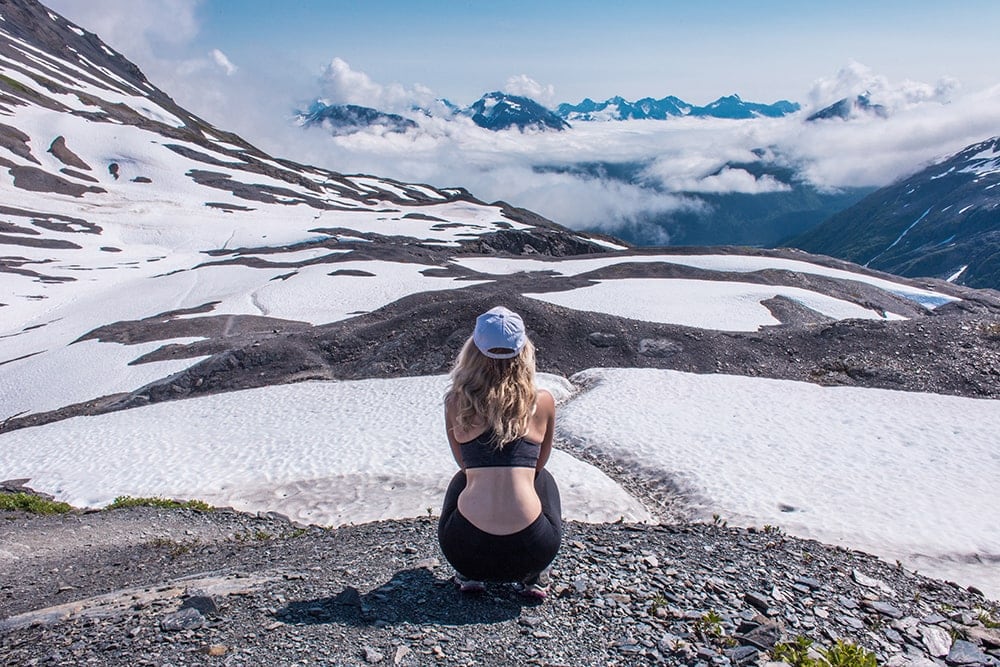
Welcome to our Alaska travel blog! Postcard-perfect mountains, turquoise lakes, and bluish glaciers opened up before us as we arrived on the Kenai Peninsula — the part of Alaska that we all know from those famous, almost kitsch photographs. The part of the land that, in our imaginations, represents Alaska as a whole.
Before we officially entered the Kenai Peninsula, we stopped at the first port town of Whittier on Prince William Sound. The first words we read about this place with 200 residents were: “Whittier is weird — it’s a place like no other on Earth.” To get there, you have to pay about $12 to drive through a railway tunnel, and if you’re unlucky, you might wait up to half an hour because it’s single-lane only.
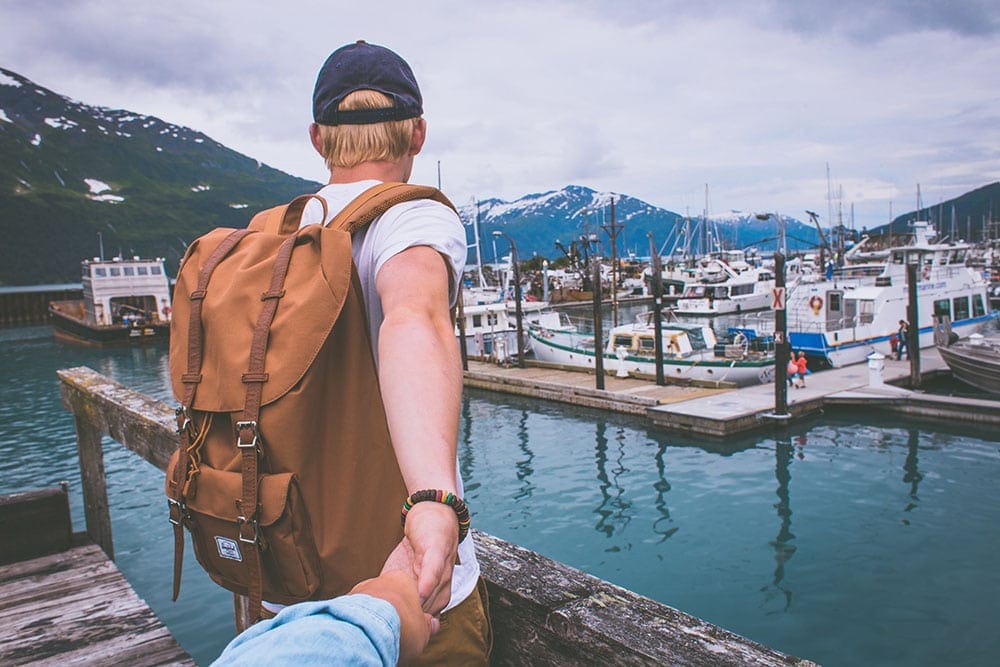
The Quirky Port Town of Whittier
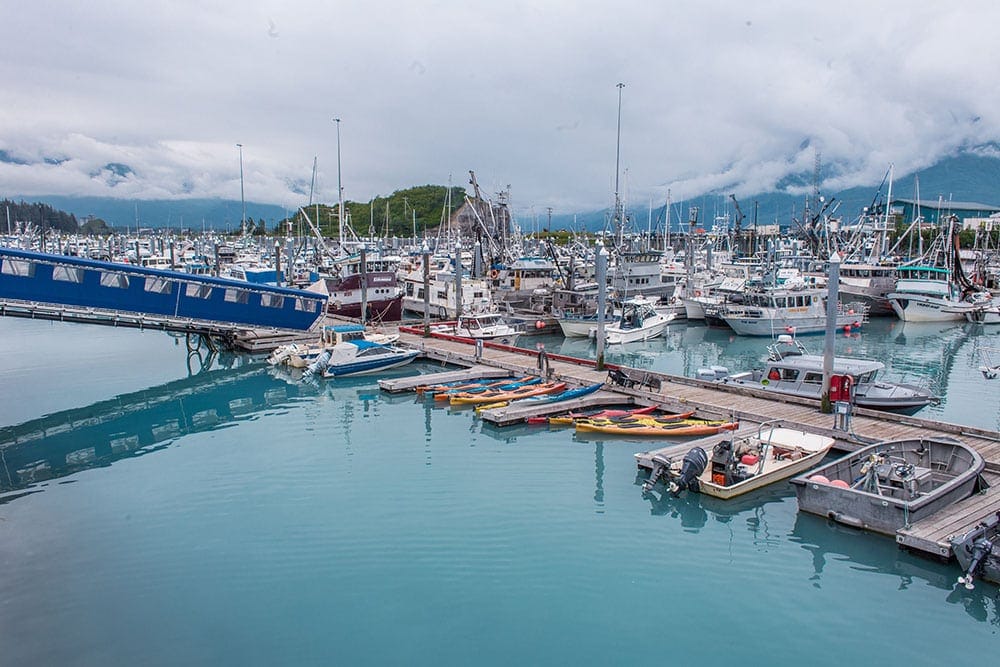
It didn’t seem all that “weird” to us, though. We set off on a short three-hour hike to a glacier, wandered through the miniature community with its charming harbour and unusually blue water, where there really isn’t much to see, and then hurried back.
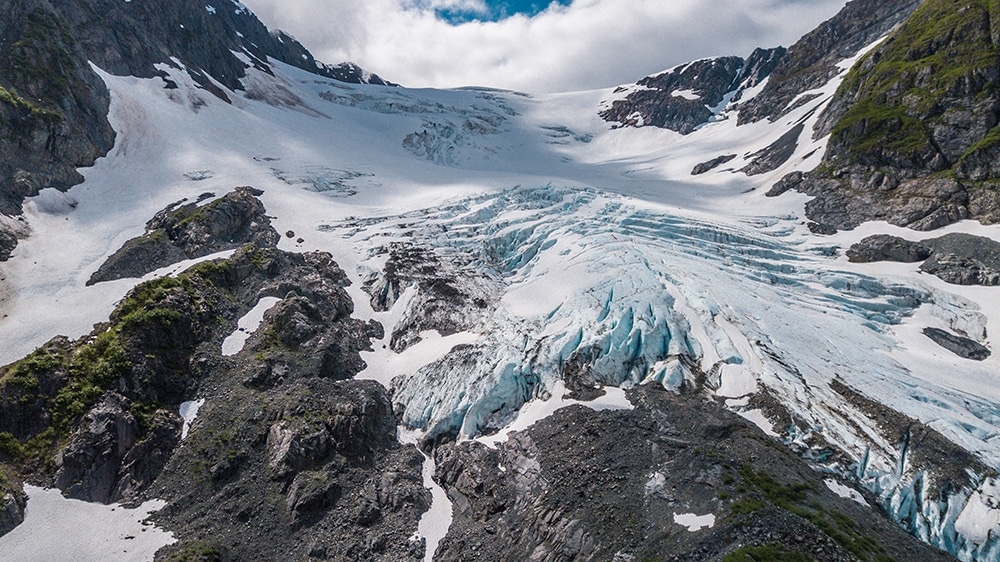
This Is the Main Street?
We set up camp just outside Hope, which we planned to explore the next morning for its “typical rural Alaska steeped in history.” That’s what our paper companion — our guidebook navigating us through this northern land — had promised. We didn’t discover much historical about Hope and started seriously doubting the quality of information our Lonely Planet was giving us. And so began one of our less successful days in Alaska.
They Won’t Rent You a Kayak on the Ocean in Alaska
We headed to Seward, where we wanted to go kayaking among the fjords and glaciers. It’s one of the most promoted experiences here in Alaska, and there’s no way to get there other than with a guided tour. If you’re not an expert kayaker, nobody will rent you a kayak for the fjords. And we’d only sat in one once or twice before. But it costs around $400 per person. We were already prepared to eat roots for the rest of the trip, because we didn’t plan on coming back here anytime soon and missing this would have been a real regret.
Kayaking completely changed our plans. Unfortunately, the nearest available spots weren’t until several days later — Saturday. So we had to change our plans once again and go explore the rest of the Kenai Peninsula, coming back in a few days.
How the Mormons Tried to Convert Us
“Have you heard of the Mormons?” We were sitting in a public park in the City of Kenai after an exhausting journey, grilling freshly caught salmon. Two friendly Mormons joined us for about twenty minutes and told us how they’re sent around the world as missionaries. They’d just spent six months in Whitehorse, Canada, before being transferred here to Alaska.
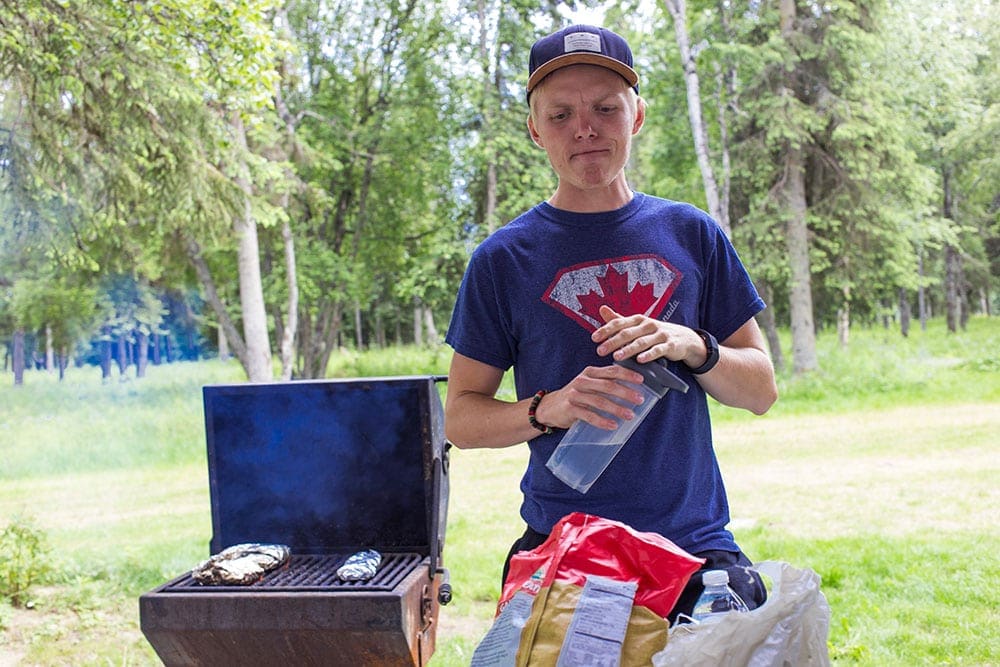
“Do you know the Bible? Well, it’s a bit outdated. We have our own Bible too, and since you’re so nice, we’ll give you one.” The Mormon pulled out a Bible and wrote his number inside. “If you ever need anything on your journey, just call — we have missionaries all across America.” They said goodbye. We kept the card and the Bible. It might come in handy in Utah.
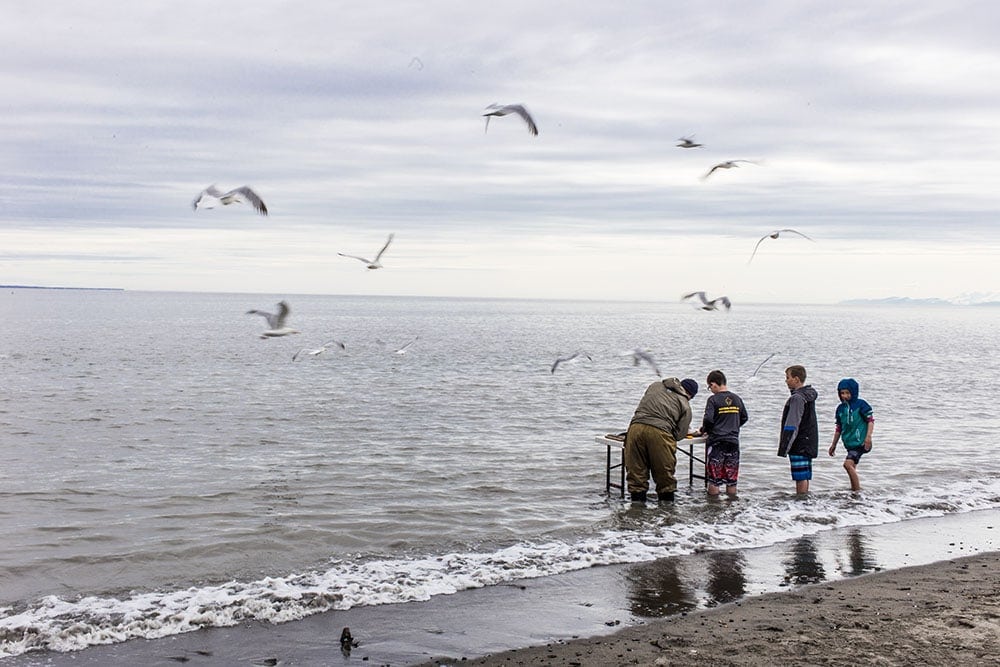
Every Evening We Cruise Through Towns with Other RVs Looking for a Place to Sleep
After booking our kayaks, we decided we wouldn’t sleep in campsites anymore and found a spot in a supermarket car park where we slept in the car. We certainly weren’t alone — we’d already noticed that as soon as eight o’clock hits, RVs and motorhomes start cruising around town looking for a free spot to park up for the night.
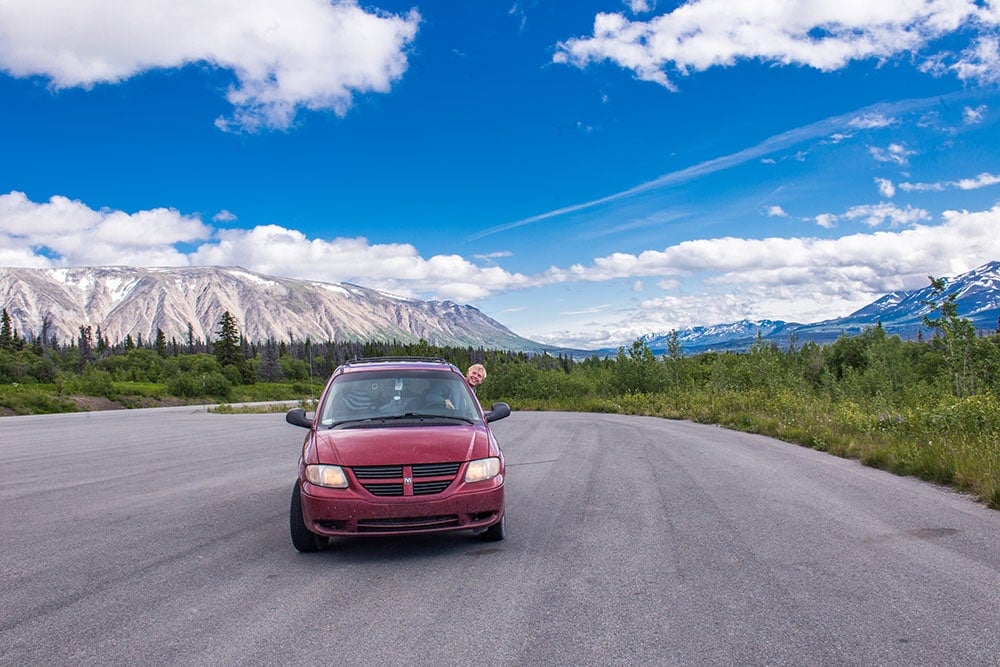
These motorhomes are no joke, by the way. They cost around $300,000 and only get about one mile per gallon. And inside, they look like a hotel. “Compared to that, our bed in Red Chiquita is hardly luxury,” Lukáš commented when we first saw the hotel-grade bathrooms in these huge beasts roaming American roads.

Homer Is a Town of Art and the Spit
Homer is a little town of art. If you wanted, you could spend an entire day wandering through small galleries by local artists. That was our entertainment too. There’s not much else to do here — the surroundings are fairly flat and the weather isn’t the friendliest. Still, it’s worth visiting. There’s a thin strip of land jutting out into the ocean that they call “the Spit,” and at first glance you understand why. You feel like a stronger gust of wind or a bigger wave could sweep it away, and it’s hard to believe this scattered, thin, winding strip has managed to hold on in the water for so long.

When it’s not windy (which happens rarely), it’s pleasant to stroll along. This curious strip is lined with colourful fishing shacks, the air is a mix of fish and salt, and occasionally a sweet breeze drifts over from the local pancake house. People walk around with ice cream as if it weren’t about twelve degrees out. We arrived to perfect weather — sunshine, blue skies, and supposedly the highest temperatures of the summer. But even so, when we forgot our jumper in the car, we had to dash right back.
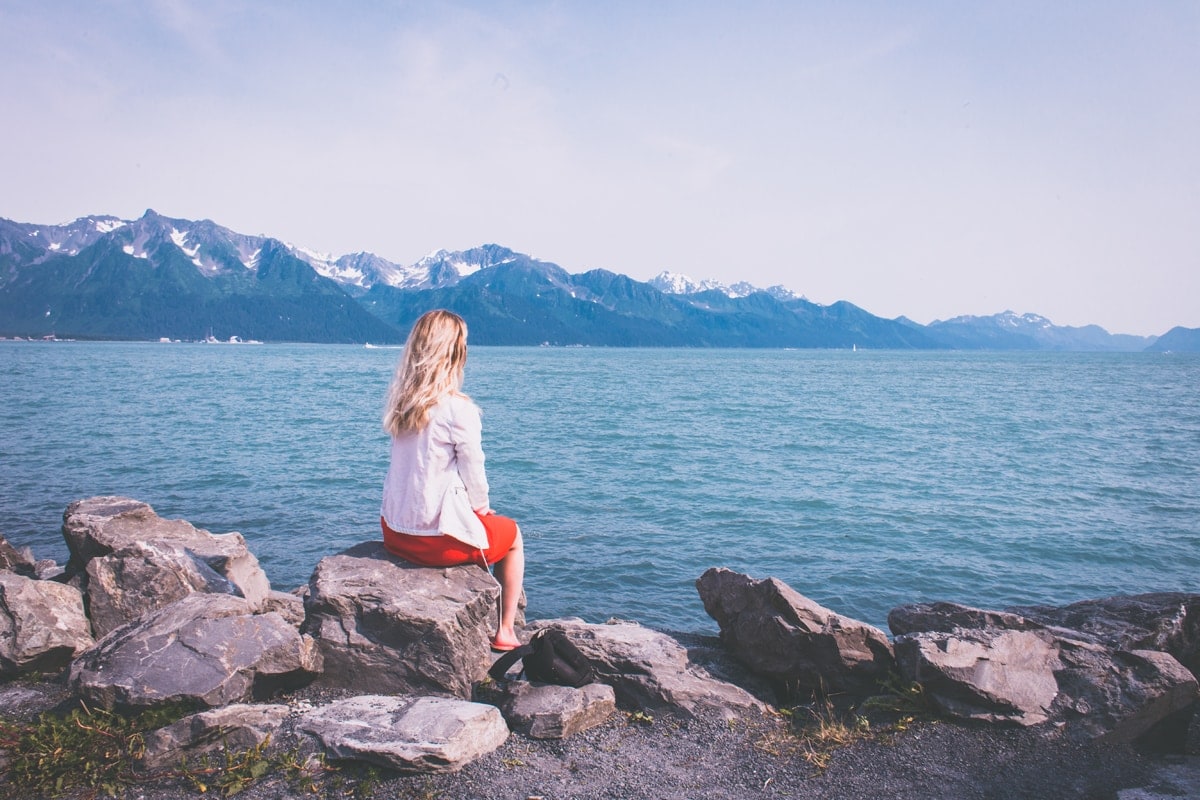
We returned to Seward a day early so we could hike the Harding Icefield Trail, which is supposedly one of the most beautiful hikes in Alaska. But the blue skies had turned into persistent rain, the mountains hid behind clouds, and we spent our day crammed into one of the three cafés in town with other tourists.
We were afraid the next day would be the same and ruin our whole kayaking trip. I couldn’t sleep — every raindrop hitting our car woke me up, and every splash stirred up frustration and sadness inside me.
No Gold Mining Here, but Plenty of Gold Diggers
At seven in the morning, it wasn’t raining. We sat ready for our biggest adventure in the office of the company taking us on the trip. There were only five of us, so we quickly boarded the boat and headed out to the ocean. The boat bounced on the waves, and soon we spotted the first whales. We watched these enormous creatures elegantly surfacing and spouting water. Almost as if they knew they were being watched, they swam around the boat while we stood frozen, mesmerised by this whale performance.
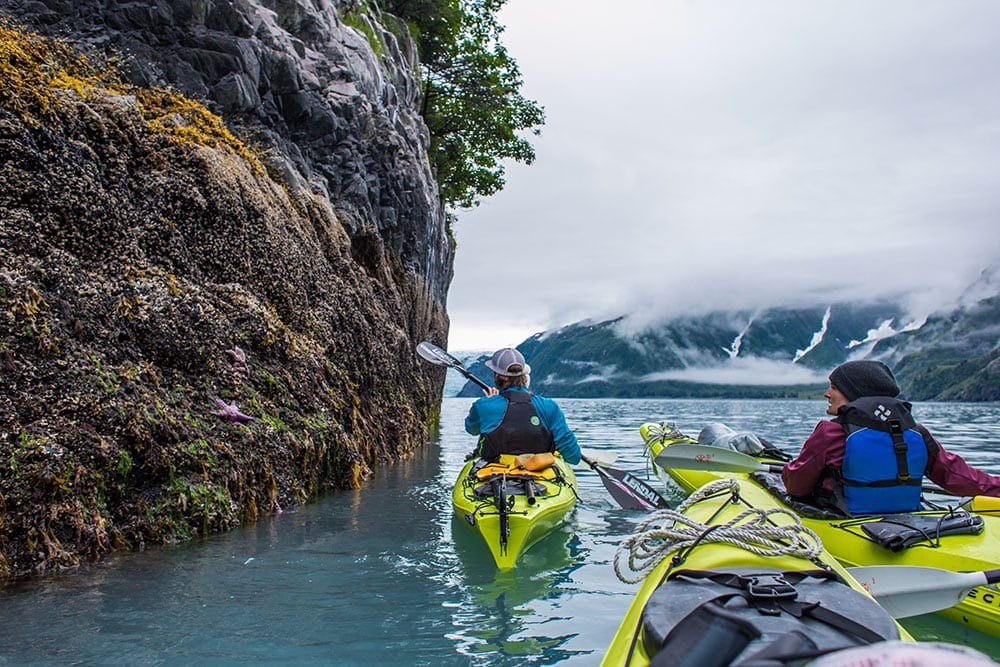
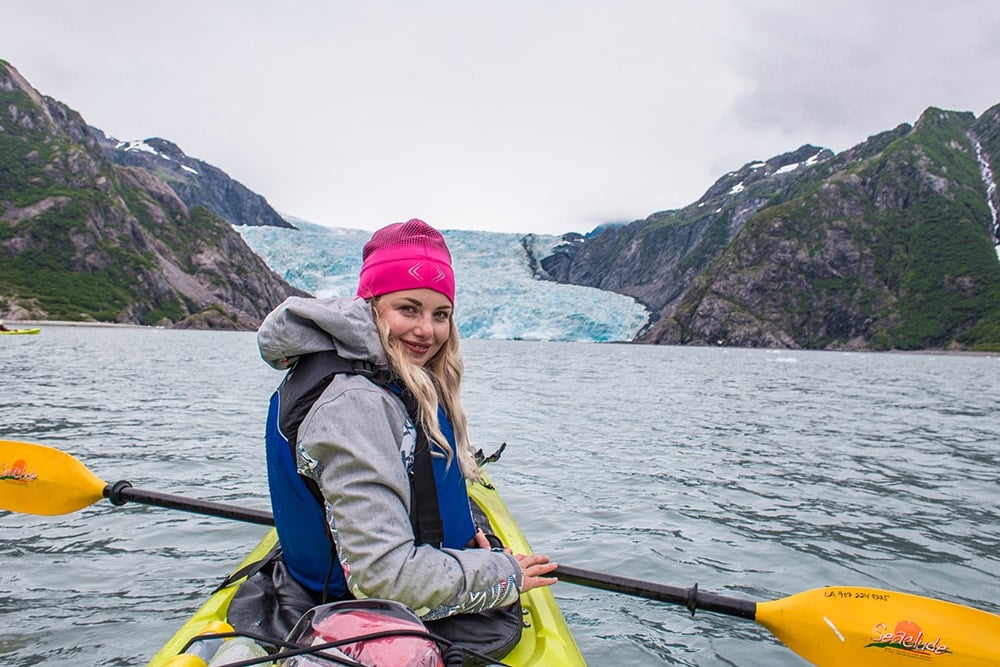
Paddling among small chunks of ice, watching sea lions and sea stars was an incredible experience, even though the sky was overcast and clouds hovered over the mountains. Nobody else around. We often think America has no history because we forget about the indigenous people. And that’s because they left no trace on the land. It remained untouched. But thousands of years ago, they saw it from their canoes just as we saw it on that cold day. This realisation filled me with a feeling of something almost sacred, rocking with five other people in a kayak, quietly observing the mighty power of nature.
The Most Beautiful Hike of Our Lives
We still didn’t leave Seward after that. We hoped the next day would clear up and we’d be able to finish off the Kenai Peninsula with one more experience — the magnificent view of Exit Glacier, the only glacier accessible from the mainland.
“I’m done with this. Let’s go.” I opened my eyes in the morning to dark clouds covering nearly all the mountains around us, the water in the harbour had changed from turquoise to grey as it reflected the sky, and on top of it all, it was starting to rain again.
We were about to leave, annoyed at having lost part of a travel day, but then we decided it was on the way anyway and maybe the weather would be better 20 minutes down the road near the glacier.
The car park didn’t look promising. “But look — it’s breaking up over there.” I pointed above the glacier. Dark clouds were everywhere, except right over our destination, where a patch of blue sky had appeared and sunbeams were dancing on the ice of Exit Glacier.
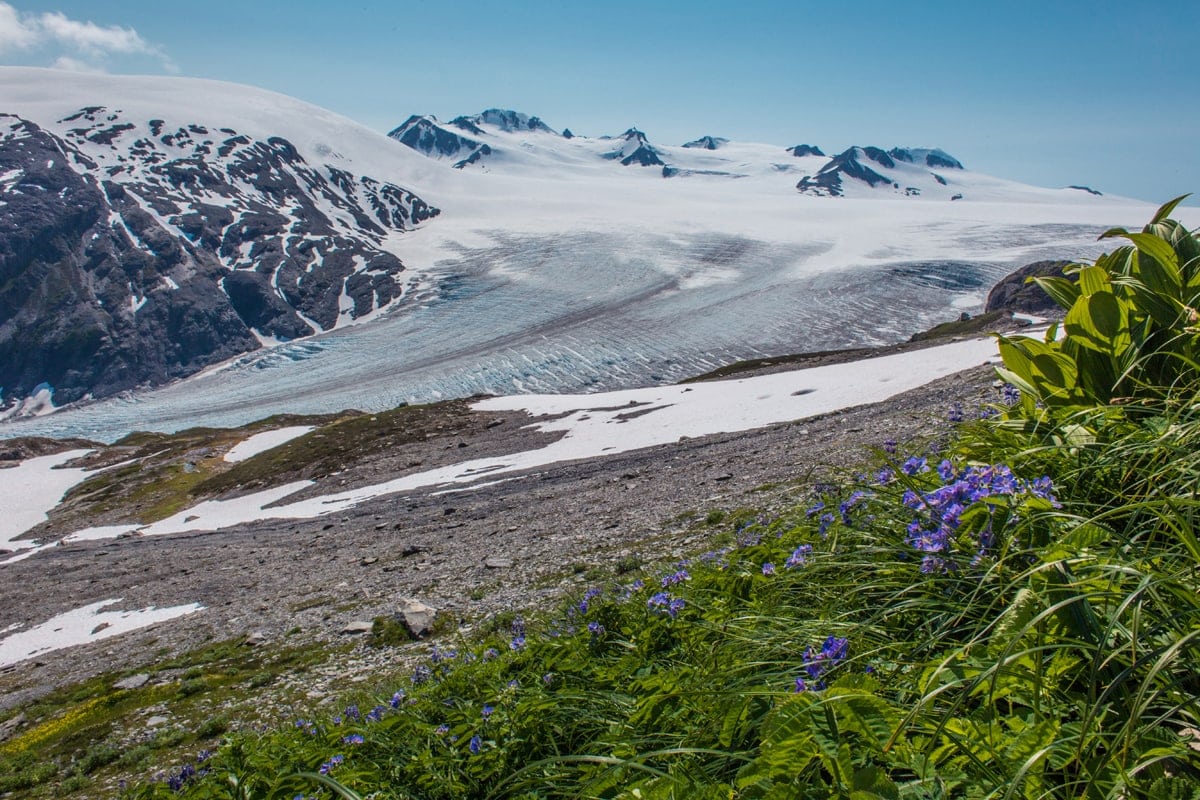
So we set off. We took it at a killer pace. The hike was supposed to take 6–8 hours in total. We did it in 4. By the time we were a quarter of the way up, the sky was already clearing. Before long there wasn’t a single cloud, and we were enjoying blue skies that contrasted with the white glacier and purple wildflowers scattered all around. In the year we’d spent in North America, we’d seen a lot — but nothing as beautiful as this hike. When you reach the top, you’re supposedly treated to a view of what the Ice Age looked like. Harsh and breathtaking. Once again, we confirmed that the best things in life are free.
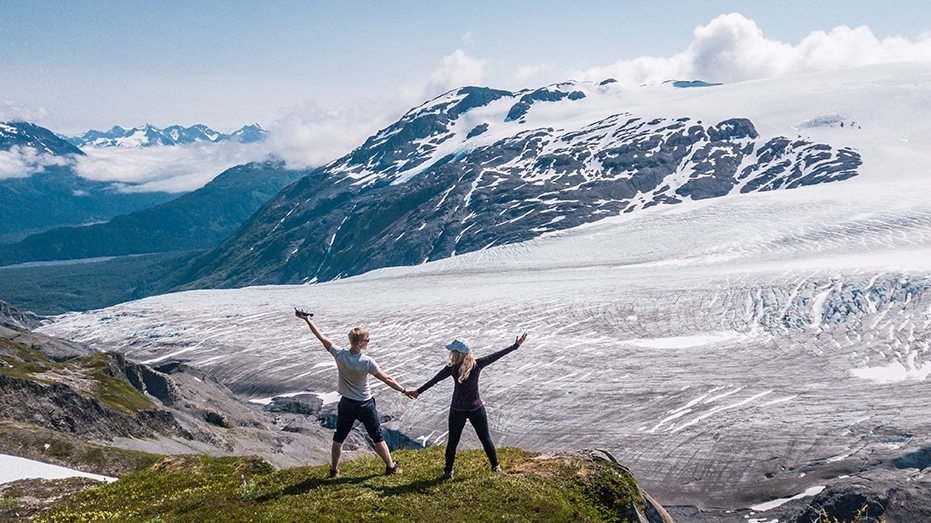
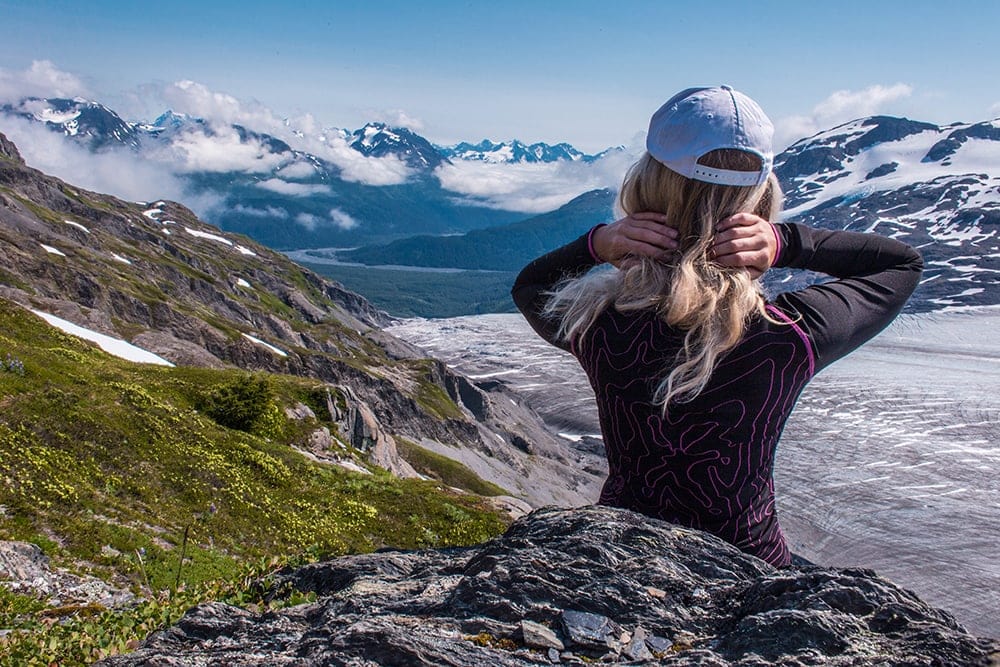
A bonus hike that didn’t make it into the main story — one we did on the way from Homer to Seward:
Planning a Trip to Alaska? Try Our Favourite Guidebook
Tips and Tricks for Your Vacation
Don’t Overpay for Flights
Search for flights on Kayak. It’s our favorite search engine because it scans the websites of all airlines and always finds the cheapest connection.
Book Your Accommodation Smartly
The best experiences we’ve had when looking for accommodation (from Alaska to Morocco) are with Booking.com, where hotels, apartments, and entire houses are usually the cheapest and most widely available.
Don’t Forget Travel Insurance
Good travel insurance will protect you against illness, accidents, theft, or flight cancellations. We’ve had a few hospital visits abroad, so we know how important it is to have proper insurance arranged.
Where we insure ourselves: SafetyWing (best for everyone) and TrueTraveller (for extra-long trips).
Why don’t we recommend any Czech insurance company? Because they have too many restrictions. They set limits on the number of days abroad, travel insurance via a credit card often requires you to pay medical expenses only with that card, and they frequently limit the number of returns to the Czech Republic.
Find the Best Experiences
Get Your Guide is a huge online marketplace where you can book guided walks, trips, skip-the-line tickets, tours, and much more. We always find some extra fun there!


